



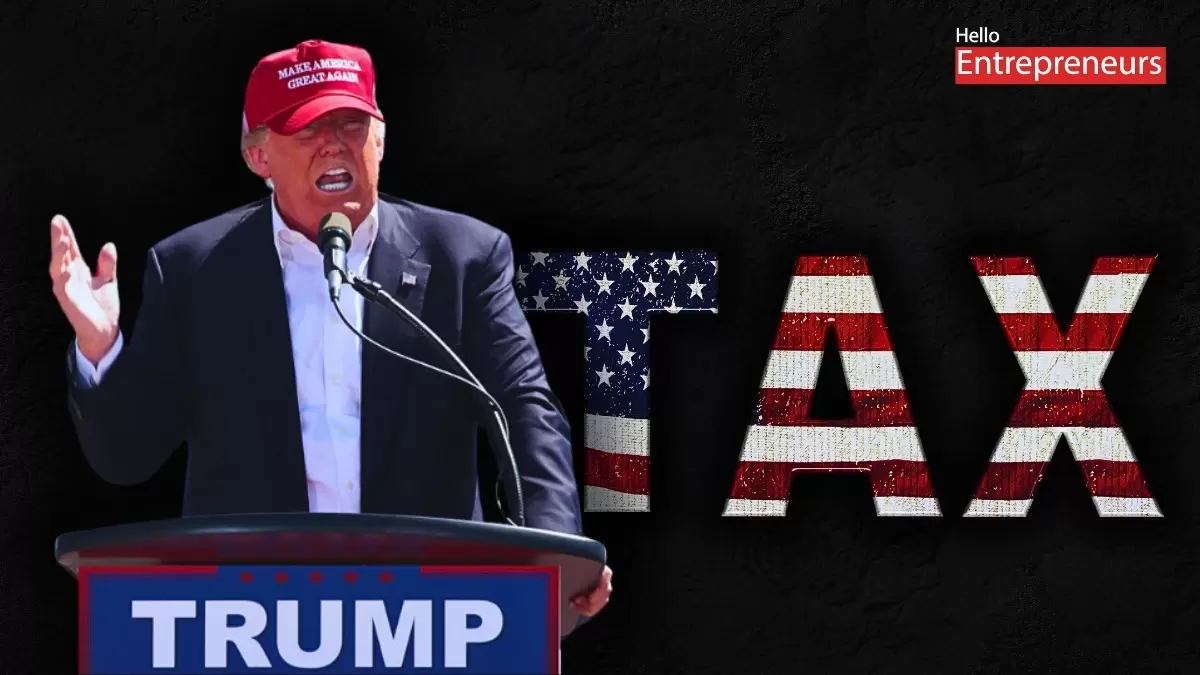
Washington, DC: In a monumental legislative move, the U.S. House of Representatives has passed a sweeping multi-trillion-dollar package designed to enshrine former President Donald Trump’s domestic policy legacy. With a vote that signals Republican dominance over fiscal agenda-setting, the bill proceeds to the Senate, where internal GOP debates and procedural hurdles are expected.
Widely referred to as the Trump 2025 tax reform, the proposed law restructures government aid programs, adds new economic processes that combine fiscal engineering with political philosophy, and expands on essential provisions of the 2017 Tax Cuts and Jobs Act.
“THE ONE, BIG, BEAUTIFUL BILL” has PASSED the House of Representatives! This is arguably the most significant piece of Legislation that will ever be signed in the History of our Country! The Bill includes MASSIVE Tax CUTS, No Tax on Tips, No Tax on Overtime, Tax Deductions when…
— Donald J. Trump (@realDonaldTrump) May 22, 2025
Extension of the Trump Tax Cuts
At the bill’s core is a full-scale extension of the 2017 tax cuts.
The legislation proposes to lock in:
- Lower income tax rates across brackets
- Expanded child tax credits
- Doubling of the federal estate tax exemption
- A permanently higher standard deduction
These changes, which were initially scheduled to terminate by the end of 2025, would continue for far into the next ten years, changing household budgets and long-term revenue streams and significantly influencing the economy’s direction.
Additionally, campaign-era proposals, including tax exemptions on tips and overtime wages, have made their way into the legislation, with validity through 2028.
Elevated SALT Cap and New Tax Provisions
In contrast to earlier Republican doctrine, the State and Local Tax (SALT) deduction threshold was raised from $10,000 to $40,000, a substantial change.
For high-income individuals, this advantage is in line with proposals for targeted tax relief from fiscal conservatives. A controversial clause proposes a dramatic 21% tax on net investment income at elite private universities, an escalation from the current 1.4%. The measure directly targets endowment-rich institutions like Harvard and Stanford.
Spending Realignment: Medicaid, SNAP, and Military
The bill does not stop at tax reform.
It includes over $1T in spending cuts, primarily directed at:
- Medicaid, with potential disqualification of up to 14 million recipients
- Supplemental Nutrition Assistance Program (SNAP), affecting 3 million Americans
Simultaneously, military spending surges with a $150 billion allocation, while immigration enforcement receives a $175 billion boost, much of it earmarked for renewed border wall construction.
Also proposed is a symbolic initiative: Trump savings accounts, granting $1,000 to every child born between 2025 and 2029, seeded by the federal government.
Trump 2025 Tax Reform Spurs Deficit and Revenue Debate
According to independent projections, the bill would increase the federal deficit by $3.8 trillion over the next 10 years. It may surpass $5 trillion if temporary measures are prolonged. Long-term effects on the US economy and fiscal policy may result from this significant growth in the deficit. Anticipating backlash, Republican leaders claim that economic expansion and tariff income will balance the effect. Organisations like Bloomberg Economics have expressed scepticism about the $2.1 to $2.4 trillion that tariffs are expected to generate over ten years.
Conservative scoring strategies may also obscure the full financial impact.
Winners and Losers
The Urban-Brookings Tax Policy Centre shares some encouraging news: over 80% of households will benefit from the tax reform by 2026! That’s a positive step forward. However, it’s important to note that the distribution is not evenly spread.
- Average savings: $2,900 per household
- Top 1% earners: $300,000 average benefit
- Middle-income households: $1,800 average benefit
Critics contend that the reform ingrains inequality, whereas proponents assert that it fosters broad-based growth.
Legislative Outlook
Passage by the Senate is still unclear. Despite the possibility of a simple majority due to budget reconciliation, disputes within the GOP continue over:
- Medicaid and SNAP reductions
- Rollback of Biden-era climate incentives
- Corporate tax preferences
The process is anticipated to proceed quickly, but not without compromise.
Conclusion
This most recent drive for the Trump-2025 tax overhaul is a political manifesto as much as an economic plan. It represents a political ideology focused on targeted alleviation, deregulation, and economic transformation with a nationalistic bent. Whether the Senate reshapes or enshrines it as-is, the bill signifies a pivotal moment in American fiscal history.
“In politics, nothing happens by accident. If it happens, you can bet it was planned that way.” – Franklin D. Roosevelt
Also Read: Economic Uncertainty 2025

