







Operation Sindoor and the subsequent skirmishes between India and Pakistan demonstrated India’s superiority as a professional military power as well its advanced preparedness and coordination between all wings of the armed forces- Army, Navy and Air Force.
From unprovoked firing at the LoC to targeted attacks on India through missiles and armed drones, India could not have thwarted any Pakistani aggression without anticipating Pakistan’s moves and preparing a detailed deterrence plan.
All of this wouldn’t be possible without extensive training and assimilation of warfare and the technologies used to thwart any further aggression from across the frontlines.
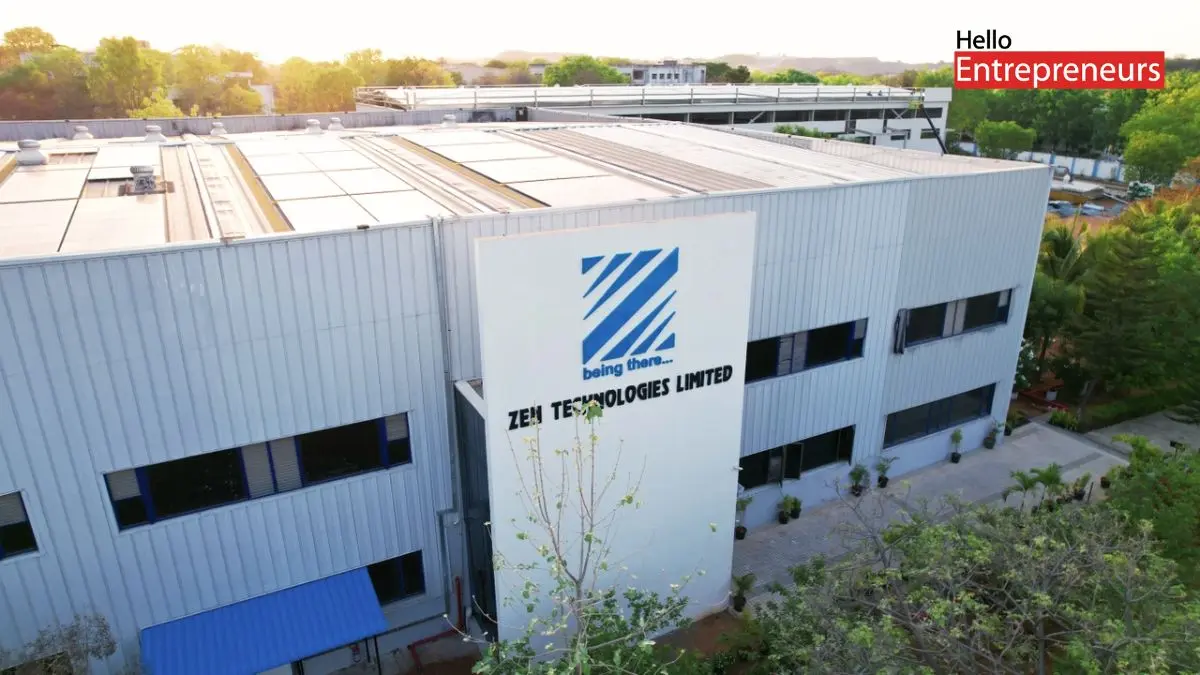
Ashok Atluri understands how crucial training is in warfare. As the Chairman and Managing Director at Zen Technologies, he has seen first hand how important training is for a solider at the frontlines.
He, along with 2 others, founded Zen Technologies in 1993. Back then, the whole concept of stimulated warfare training was alien, even though civilian trainee pilots used stimulation tools to train for their licenses.
Ashok saw an unmet need here, and persevered to develop an advanced weapons stimulator that took 3 years to build. Back then, no one believed that a homegrown company could develop stimulator technologies in-house.
Then came an unexpected opportunity. India’s Pokhran nuclear tests.
The sanctions that followed allowed this Hyderabad-based company to deploy its advanced warfare weapons stimulator for the armed forces.
Since then, the company has earned widespread praise for its emphasis on indigenisation and its ability to adapt its solutions to meet the dynamic nature of warfare.
Warfare Simulations For All Use Cases
Over the years, Zen Technologies has created a formidable portfolio of in-house simulation solutions for various use cases- Machine Guns, Grenades, Anti-Aircraft air defences, Driving stimulators, and most importantly, UAV/Drone piloting stimulator.
Over the years, the company has filed over 150 patents for these systems, and has been granted 75 global patents so far. The most recent one is its patent for the T-90 tank simulator, giving the company a competitive edge and enhanced credibility.
Today, Zen’s simulators have been integrated into several of the Indian Army’s training programs, even as the company doesn’t depend on the government to fund its R&D investments.
Today, almost 30-40% of the company’s revenues come from exports and the company has always owned the IP for its solutions.
From obscurity to popularity
No one bothered about Zen Technologies in the 1990s. All of that started to change when it came out with its IPO in 2004. Though the IPO received a tepid response then, the stock price has zoomed to Rs.1800 in May 2025 from the initial price of Rs.10. Even as analysts say defence stocks are overvalued currently, Zen Technologies remains an exception as its PE ratio of 105.5 is quite reasonable compared to its peers.
The company had recently declared a sharp 189% rise in Q4 net profit from the same period last year, even as the company is working toward fulfilling orders worth Rs.1402 crore, with exports contributing to Rs.437 crore. The company holds an 80-90% monopoly for army simulators in India and is rapidly expanding to drone systems and simulators for the Navy and Air Force as well.
To further strengthen its lead, the company announced the acquisition of two firms for Rs.130 crore. This includes Applied Research International which specialises in simulation and assessment tools for various military and civilian uses along with ARI Labs, which specialises in e-governance tools, along with other assessment tools for the marine and naval industries.
Preparing for the future of conflict
The company has consistently proved its mettle in developing in-house technologies for simulating warfare, even before Aatmanirbhar Bharat was a thing. Now, the company is working toward creating AI-assisted threat detection systems, modular anti-drone platforms and smart firing ranges that can seamlessly integrate with existing military infrastructure.
The company hasn’t relied on government funding to develop its technologies, and has shown how grit, determination and a stubborn zeal to exceed expectations can reap rich rewards in the long run.