



Washington, D.C.: US Shutdown Vote – After 43 days of political gridlock, the longest government shutdown in U.S. history finally ended, but not without a few surprises in the final House vote.
The Final Count?
The House of Representatives voted 222–209 to end the shutdown, breaking a 43-day record of frozen paychecks, stalled flights, and mounting public frustration.
The vote saw six Democrats break ranks to support the funding bill, while two Republicans refused to back their own party’s measure.
The Democrats Who Crossed the Aisle
Six Democrats decided governance mattered more than party theatrics. They are:
- Jared Golden (Maine-2), Marine veteran, centrist voice, and a familiar name on bipartisan legislation.
- Adam Gray (California-13), A pragmatic lawmaker known for voting his district’s needs over party pressure.
- Marie Gluesenkamp Perez (Washington-3), Independent streak intact, reflecting her swing-district voters.
- Don Davis (North Carolina-1), A moderate who often prioritises rural infrastructure and veterans’ issues.
- Henry Cuellar (Texas-28), Longtime centrist with a record of defying the progressive left.
- Tom Suozzi (New York-3), Co-chair of the Problem Solvers Caucus, one of the few still pushing for compromise in D.C.
Together, they became the face of rare bipartisanship in an era allergic to it.
The Republicans Who Said No
Not everyone in the GOP celebrated. Reps. Thomas Massie (Kentucky) and Greg Steube (Florida) voted against the measure.
Massie’s “no” came as no surprise; he’s made a career of rejecting big-spending bills, even those written by his own party.
Steube’s opposition was more specific. He took to X (formerly Twitter) to complain that the bill included a clause letting senators earn from litigation related to the Jan. 6 phone records probe. His words were scathing: “There’s no reason the House should have been forced to eat this garbage to end the Schumer Shutdown.”
So much for party unity.
US Shutdown Vote Ends: Trump Signs, Blames Democrats
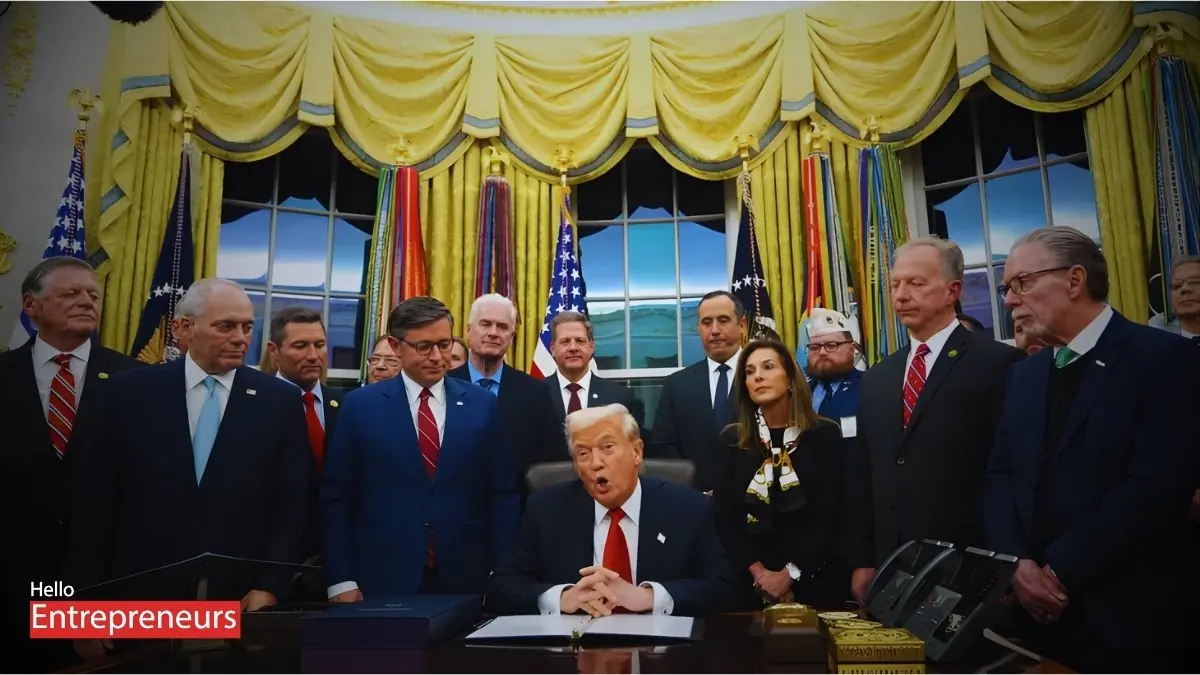
Hours after the vote, President Donald Trump signed the bill, officially ending the record-long shutdown. True to form, he didn’t hold back.
“The Democrats’ shutdown has inflicted massive harm,” Trump said, blaming them for 20,000 cancelled or delayed flights and lost pay for over a million federal workers. He added that it might take weeks to restore operations and months to calculate the damage.
Standing in the Oval Office, surrounded by Republican applause, he declared:
“We will never give in to extortion.”
When Will Government Operations Resume?
Transportation Secretary Sean Duffy said it’ll take roughly a week before major airports return to full capacity. Federal agencies are expected to be back to normal within days, though the ripple effects will linger.
Roughly 670,000 furloughed employees will return to work, while another 670,000 who worked unpaid will finally receive their back pay. The bill also reverses Trump-era firings and protects federal workers from further layoffs until January.
Inside the Funding Bill
The stopgap deal funds the government through January 30, a temporary truce, not a solution. It also:
- Restores food assistance programs and ensures benefits through the fiscal year.
- Adds $203.5 million for lawmaker security and $28 million for Supreme Court protection.
- Keeps federal paychecks flowing but leaves the national debt climbing past $38 trillion.
In short, the lights are back on, but the bills are still piling up.
Economic Ripples and Recovery
The reopening offers a brief reprieve ahead of Thanksgiving and the Christmas spending season. Food aid is back, air travel will recover, and government data reporting will resume, all small victories for an economy battered by political brinkmanship.
As one analyst quipped, “America’s bureaucracy is open for business again, until the next fight.”
India’s Lens on It All?
For India, the U.S. reopening matters more than it seems. Flights, visas, and trade flows all depend on smooth American operations. The shutdown’s drag on the H-1B visa programme, a lifeline for Indian tech professionals, only deepened uncertainty.
Treasury Secretary Scott Bessent later echoed Trump’s remarks on visas, saying the administration’s goal was to bring in skilled workers “to train Americans, then return home.”
Translation: temporary welcome, permanent caution.
The administration also confirmed 175 ongoing investigations into H-1B visa abuse, signalling that the shutdown’s end won’t slow its crackdown on foreign worker programs.
India, naturally, is watching closely. H-1B isn’t just an American policy debate; it’s a corridor of dreams for thousands of Indian engineers.
What Happens Next
The shutdown is over. The dysfunction isn’t.
Both parties now face the same ticking clock, another funding showdown in January. Whether the spirit of bipartisanship holds or crumbles again will say a lot about Washington’s appetite for grown-up governance.
For now, Americans can exhale. The lights are back on.
Also Read: Goldman Sachs’ Bold India Upgrade Signals 14% Nifty Surge

