



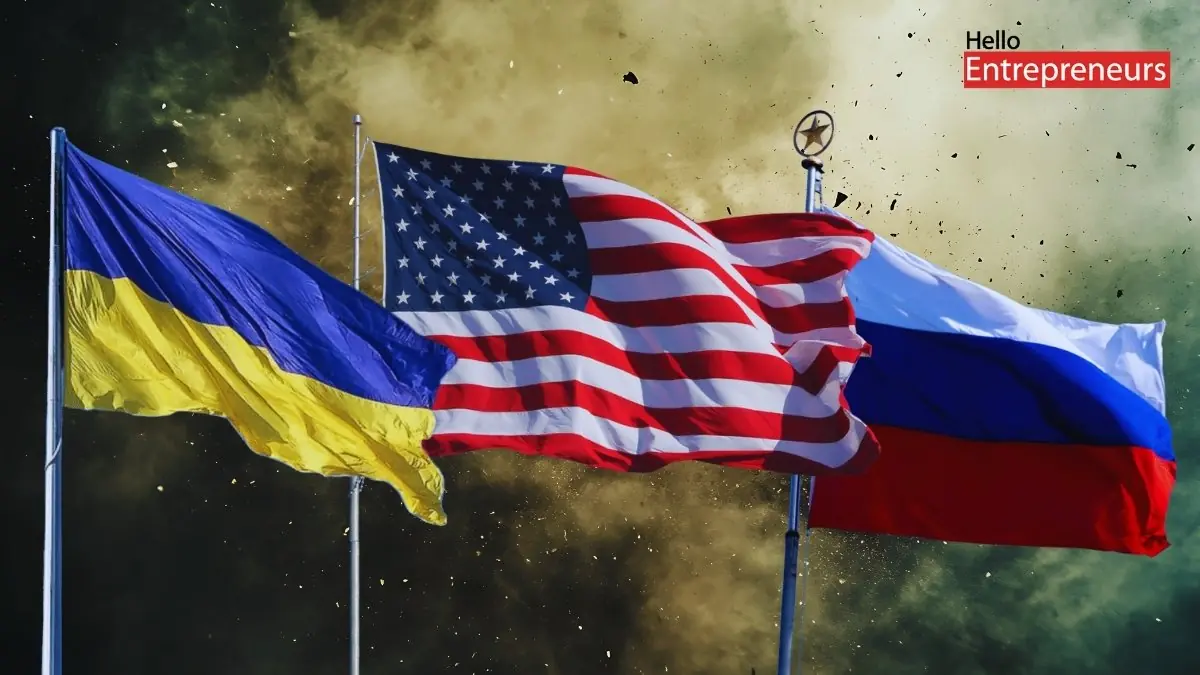
New Delhi: Europe didn’t just get blindsided. It got steamrolled. A surprise US Russia Ukraine peace plan has sent diplomats scrambling as Washington pressures Kyiv to accept terms many in Europe see as outright capitulation.
Europe woke up to a diplomatic earthquake, and the aftershocks are still pulsing. The US Russia Ukraine peace plan, a 28-point proposal pushed by aides to President Donald Trump and Vladimir Putin, demands sweeping concessions from Kyiv. The headline item is brutal. Ukraine would be forced to hand over territory it currently controls. The plan hits early in the body of this story because the focus keyword is US Russia Ukraine peace plan, and frankly, it sets the tone for everything that follows.
Look, nobody in Europe thought Washington and Moscow were cooking up a peace blueprint together. And certainly not one this tilted. The proposal bans any future Ukrainian membership in NATO. It restricts foreign troop deployments. It even proposes using 100 billion dollars in frozen Russian assets for reconstruction projects that would conveniently earn profits for the United States. You can imagine the EU’s collective jaw hitting the floor.
European leaders weren’t consulted. Not warned. Not looped in. Nothing. The news landed while many of them were already mid-flight to South Africa for the G20 summit. Perfect timing, if you enjoy chaos.
A senior European diplomat summed it up in typical Euro understatement: “We’re assessing. The main thing is to remain cool and work for a more reasonable outcome.”
Translation: We’re stunned, annoyed, and scrambling.
The Shock in European Capitals
The underlying fear is simple. Europe sees this as the US leaning hard on Ukraine to surrender to Moscow’s demands. One official called it “capitulation.” You don’t need a masterclass in diplomacy to know that word doesn’t get thrown around lightly.
Three European officials admitted they weren’t even sure Trump fully backed the plan. That uncertainty only deepens the confusion. Is this an official US position? A half-baked idea? A factional tug-of-war inside Washington? Europe is working blind.
Another senior official put it bluntly: “We’re back to square one.” Early-year fears are resurfacing. Many suspected Trump would eventually force Kyiv into a deal on Russia’s terms or withdraw US military support. This plan feels eerily close.
Ukraine Pushes Back, Carefully
Ukraine reacted fast. Security and Defence Council Secretary Rustem Umerov publicly rejected claims that Kyiv had agreed to parts of the plan. He stayed diplomatic but firm: Ukraine studies proposals carefully, expects respect for its position, and sticks to its principles. Sovereignty. Security. A just peace. Straight bat, like a seasoned opener keeping out a nasty spell of short balls.
Europe’s G20 Scramble
The timing couldn’t be worse. France, Germany, Italy, and the UK were all already en route to Johannesburg. Now they must hold a crisis huddle on the sidelines of the G20, juggling jet lag, paparazzi, and a geopolitical fire alarm.
Meanwhile, the US embassy in Kyiv summoned European envoys for a briefing. That’s usually the moment when partners feel included. Not this time. More like being told the train has already left the station.
A Familiar Pattern
This isn’t the first time the Trump administration has sidelined Europe on Ukraine. Several episodes earlier this year had the same pattern: unilateral US proposals, zero consultation, and Europe left scrambling.
Analyst Mujtaba Rahman of Eurasia Group didn’t sugarcoat it. According to him, Europe got complacent dealing with Trump’s team. And this new plan is a brutal reminder that some in Washington still prioritise Moscow over transatlantic relationships.
The Stakes Are Enormous
For Europe, this is about more than Ukraine’s borders. It’s about security across the continent. If Ukraine gets pushed into concessions under pressure, it signals that great-power deals can override sovereignty. For countries on NATO’s eastern flank, that’s a nightmare scenario.
India, watching from afar but always tuned to global power plays, sees a familiar story. Big players draft the script, smaller nations get told their lines. And like every Indian knows, you fight your battles harder when someone else tries to script your surrender.
The Money Angle: Frozen Assets and Future Profits
The most explosive financial element is the proposed use of Russian sovereign assets. Europe wants those funds directed to Ukraine without strings. The US plan reportedly wants reconstruction projects that generate profits for American entities. That’s not just geopolitics. It’s business strategy dressed up as diplomacy.
US Russia Ukraine Peace Plan: What Happens Next?
Europe is trying to slow this down. Not block peace. But force a more balanced proposal. One that doesn’t corner Ukraine or reward Moscow’s aggression.
Whether Washington listens is another question entirely.
Also Read: China’s Disinformation Campaign Exposed in Hard-Hitting US Report?

