



New Delhi: The United States and India just locked in a US-India defense agreement that will echo through Asia for the next ten years. It’s not about symbolism anymore – it’s about hardware, strategy, and an unspoken message to Beijing: two can play the long game.
Ten Years, One Goal: Power and Partnership
U.S. Defense Secretary Pete Hegseth met Indian Defence Minister Rajnath Singh in Malaysia on Friday, signing a 10-year framework to boost military cooperation and tech collaboration. The deal builds on years of cautious courtship between the two democracies, now sealed with a handshake that’s anything but casual.
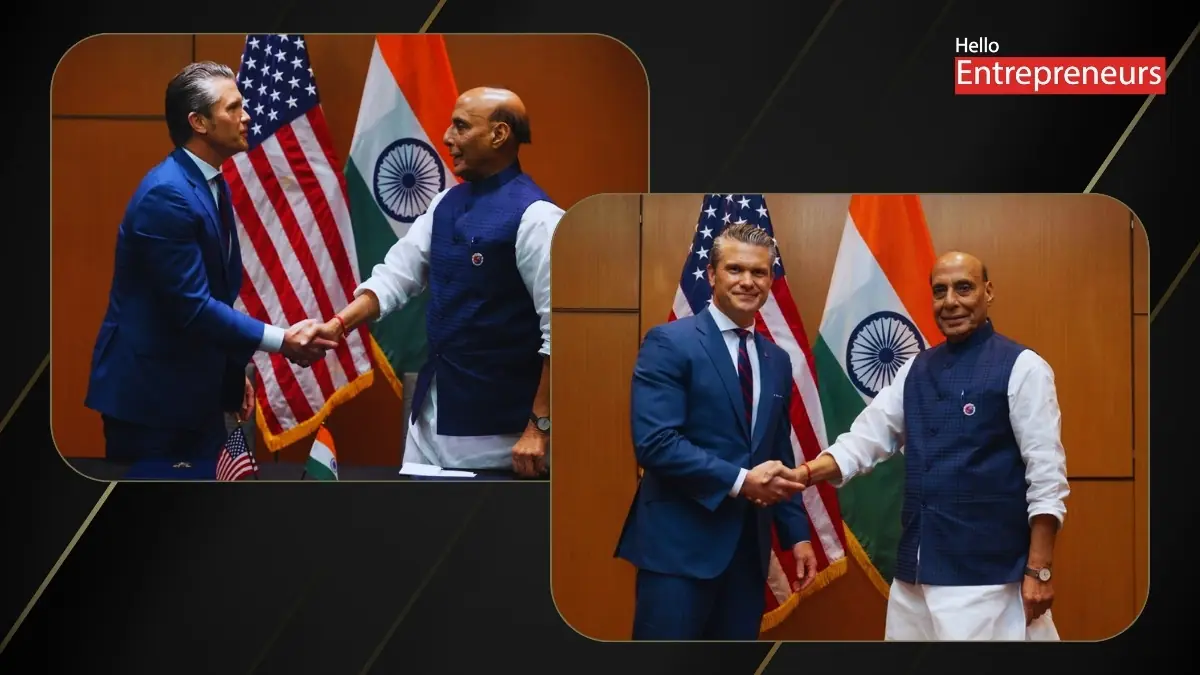
For Washington, this is about keeping the Indo-Pacific open and steady – on American terms. For New Delhi, it’s leverage: access to defense tech, deeper intelligence links, and a strategic cushion against Chinese aggression. Both sides know what they’re buying into.
“This advances our defense partnership, a cornerstone for regional stability and deterrence,” Hegseth wrote on X. Diplomatic tone aside, it’s a flex. Singh, just as deliberate, called it “a new decade of partnership.”
Well, India is done sitting on the sidelines of Asia’s power race.
The China Equation
Every defense deal in Asia has one invisible participant – China. The US-India defense deal is no exception. Washington and New Delhi share the same headache: an assertive Beijing expanding influence by land, air, and sea.
India’s skirmishes in Ladakh and Washington’s patrols in the South China Sea are two sides of the same story. Both countries want the same outcome: prevent Beijing from rewriting the rulebook.
And this partnership isn’t just posturing. India already operates U.S.-made helicopters, aircraft, and missile systems. The next phase could see joint development in cyber defense, AI-based surveillance, and maritime intelligence.
Tariffs, Oil, and Realpolitik
The ink on this agreement dries amid some old friction. President Donald Trump’s 50 percent import tariff on Indian goods hasn’t exactly set the mood for celebration. Nor has his irritation over India’s continued purchases of discounted Russian oil.
Yet both governments know the drill. Defense ties are strategic; trade fights are transactional. India remains the second-largest buyer of Russian crude, and Washington doesn’t love it. But strategy has no friends – only interests. Both capitals understand that balance perfectly.
Kuala Lumpur: Diplomacy with an Edge
Hegseth wasn’t in Malaysia just to sign paperwork. The ASEAN defense ministers’ meeting gave him the perfect stage to test-drive the new era of U.S. assertiveness. On the sidelines, he met China’s Admiral Dong Jun – face to face, not keyboard to keyboard.
He told Dong what everyone in the region already knows: Washington doesn’t want war, but it’s ready if pushed. “The United States does not seek conflict,” Hegseth posted later, “but will stoutly defend its interests.”
Beijing’s response was its usual symphony of restraint and warning. China’s defense ministry reiterated that Taiwan’s reunification is “unstoppable” and urged Washington to “inject positive energy” into global security – a phrase that sounds friendlier than it reads.
Maritime Tensions on ASEAN Waters
Hegseth’s other meetings, with Malaysia and the Philippines, were more straightforward. Maritime security topped the list. The U.S. wants allies to stand firmer against Chinese incursions, especially in the South China Sea – a stretch of ocean that’s become the neighborhood’s favorite argument.
Malaysia prefers quiet diplomacy, raising its objections behind closed doors. The Philippines, by contrast, has been loud and public about Chinese confrontations.
The result: same threat, two playbooks. Hegseth’s message was clear. The U.S. will “work relentlessly to reestablish deterrence” in the region.
That’s Washington’s way of saying: we’re back, and we brought backup.
Trump’s Nuclear Surprise
While Hegseth handled diplomacy in Kuala Lumpur, Trump lit another match back home – announcing plans to restart U.S. nuclear testing for the first time in three decades.
The timing wasn’t ideal. Malaysia’s defense minister reminded everyone that ASEAN is a nuclear-weapon-free zone, pointedly saying the region wants to avoid “anything that can bring great calamity to humankind.”
In diplomatic English, that’s a polite version of “don’t even think about it.”
ASEAN’s secretary-general added that the world “should never see the use of another nuclear weapon.” The group plans to ask Washington for more details at the upcoming ASEAN-U.S. meeting. Translation: everyone’s alarmed, but no one wants to say it too loudly.
India’s Calculated Win
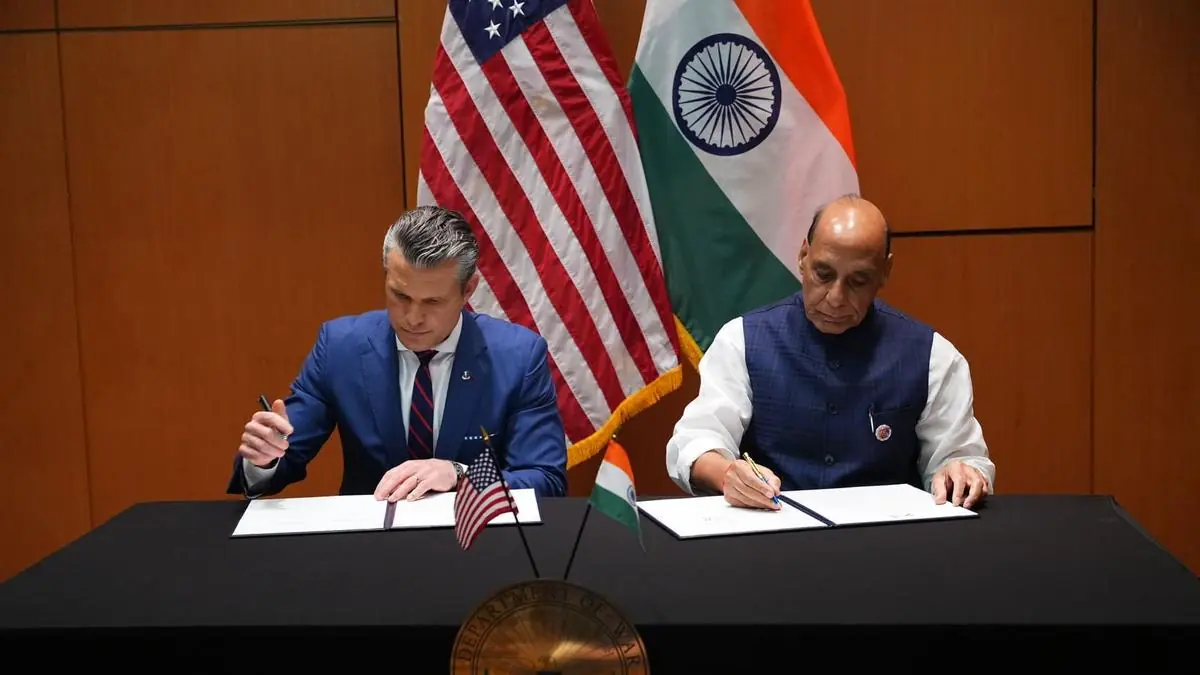
For India, this new defense pact is a major upgrade. It reinforces the country’s role as a balancing force in Asia – independent, assertive, and increasingly indispensable.
With the U.S. partnership locked for a decade, India gets a stable runway to modernize its forces and deepen tech integration without political whiplash from Washington.
The long-term nature of the deal matters; it gives both militaries time to build interoperability, something joint statements rarely deliver.
It also aligns neatly with India’s Make in India defense initiative, where domestic manufacturing is key. The U.S., looking to diversify its supply chains away from China, finds a willing partner in that mission. This isn’t about one country leading the other.
It’s about both building leverage in a region that rewards strength.
The Real Story
Strip away the smiles and photo ops, and you get what this deal really is – a quiet recalibration of power. The U.S. is rebuilding its credibility in Asia. India is anchoring its rise with global partners. Together, they’re redrawing the map of deterrence in the Indo-Pacific. And if that keeps Beijing awake at night, well, that’s probably part of the plan.
Also Read: US-Colombia Tensions Ignite After Explosive Drug War Push

