



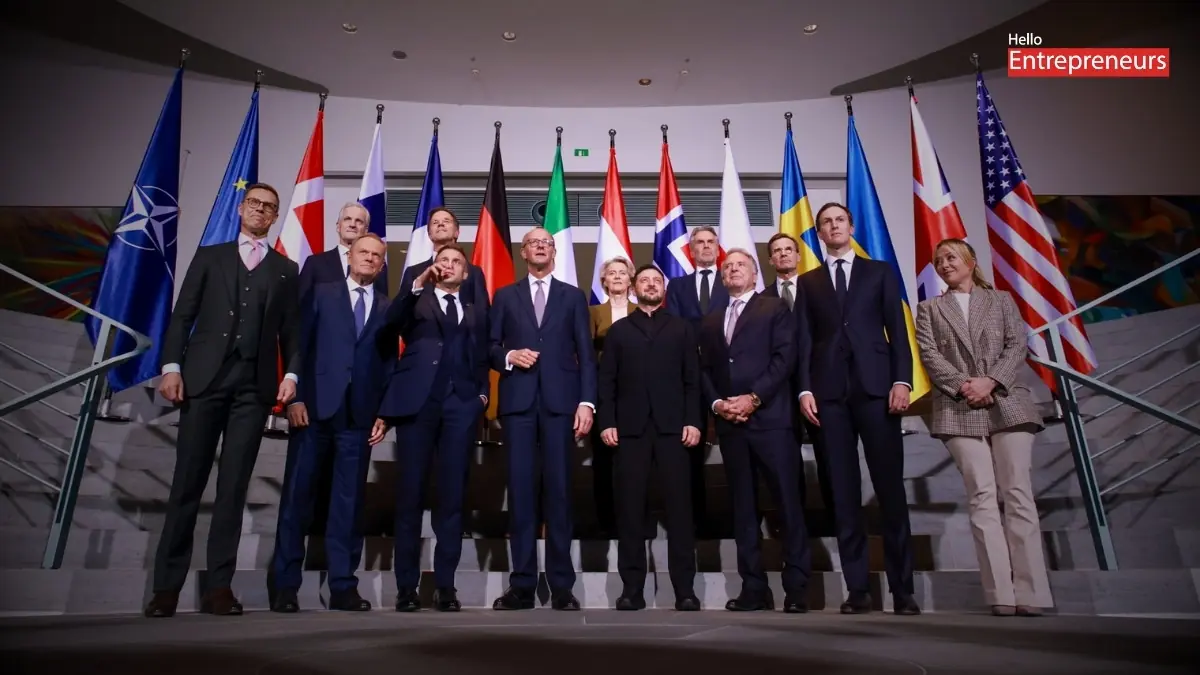
Germany: Europe is holding its breath. After optimistic signals from US-led talks in Berlin, attention has shifted squarely to Moscow and its response to the Ukraine peace proposal.
The diplomatic tempo around the Ukraine peace proposal has quickened. Not dramatically. Not triumphantly. But enough to matter.
After two intense days of negotiations in Berlin involving Ukrainian and US officials, European leaders are cautiously optimistic. American negotiators claim that roughly 90% of the most difficult issues have been resolved. That number sounds impressive. It also hides the real problem. Russia wasn’t in the room.
Now, Europe waits.
Russia Awaits Briefing, Draws Red Lines
In Moscow, officials say they are still waiting for details. Deputy foreign minister Sergei Ryabkov confirmed Russia has yet to receive a formal debrief from US negotiators. He also made one thing crystal clear: territorial concessions are off the table.
That stance already clashes with one of the central disputes in the Ukraine peace proposal. The issue of land remains unresolved. US president Donald Trump has suggested Ukraine give up the parts of Donbas it still controls. Kyiv wants a freeze along current front lines. No surrender. No redraw.
President Volodymyr Zelenskyy has been blunt. “There is no consensus yet,” he admitted, calling the territorial question one of the hardest obstacles left.
US Pushes Forward, Eyes Moscow
Despite the gaps, Washington is pressing ahead. Zelenskyy says a finalised package of peace documents could be ready within days. Once complete, US envoys are expected to present the proposals to the Kremlin, followed by high-level meetings that could take place as early as this weekend.
Five documents are under discussion. Some focus on security guarantees that Zelenskyy insists must be legally binding and approved by the US Congress. He has described them as mirroring Nato’s Article 5. In plain terms, Ukraine wants ironclad protection. No loopholes. No ambiguity.
“If Putin rejects everything,” Zelenskyy warned, “we will face turbulence.” The comment was recorded mid-flight from Berlin to the Netherlands. Not accidental. The metaphor fits.
Europe’s Role Grows Sharper
Across Europe, leaders are lining up behind Kyiv, though not without friction.
In The Hague, Zelenskyy appeared alongside Dutch prime minister Dick Schoof. Both backed the European Union’s plan to use frozen Russian assets to fund a reparations loan for Ukraine. The logic is simple. Russia caused the damage. Russia pays.
Schoof called the loan the “preferred option” but acknowledged serious legal concerns, especially in Belgium, where Euroclear holds many of the frozen assets. His position was pragmatic. Risks must be shared across all EU member states. No single country should carry the burden alone.
Zelenskyy didn’t sugarcoat Ukraine’s situation. Without the loan, he said, Ukraine faces serious financial challenges. Standing strong gets harder without sustained support.
Frozen Assets, Hard Choices
The EU proposal would channel profits from frozen Russian assets into long-term support for Ukraine. Leaders are expected to debate the plan at this week’s European Council meeting.
Zelenskyy’s message to Europe was direct. These funds “can and must be fully used” to defend against Russia’s aggression. He added a sharper edge. Russian elites, he said, disregard human life but pay close attention to financial losses. That makes frozen assets a powerful lever.
For India and other non-European observers, the precedent matters. This is about accountability in modern conflict. Wars no longer end at borders. Neither should consequences.
Peacekeeping and Security Guarantees
Another pillar of the Ukraine peace proposal is security on the ground. Discussions are under way about a European-led multinational force to help maintain peace if a deal is reached.
Schoof said security guarantees discussed in Berlin have become “very strong.” Participation, however, would require parliamentary approval in the Netherlands. No shortcuts.
Zelenskyy outlined a flexible structure. Some countries could provide troops. Others would handle logistics, intelligence, or air defence. According to him, many nations are ready to help. The challenge is coordination, not willingness.
Accountability Takes Centre Stage
While negotiations continue, Europe is laying legal groundwork for the future.
In The Hague, leaders signed a treaty establishing the International Claims Commission for Ukraine. The body will assess war damages and decide on reparations owed by Russia. It follows the earlier creation of a Register of Damages, which has already logged over 80,000 claims.
EU foreign policy chief Kaja Kallas was blunt. “If you start a war, you will be held to account,” she said. The message isn’t just for Moscow. It’s for every would-be aggressor watching.
Zelenskyy echoed that sentiment in the Dutch parliament. Sanctions, he argued, must remain until occupation ends, prisoners are freed, and abducted children are returned. War crimes, he said, cannot be brushed aside or quietly forgotten.
Energy, Winter, and Leverage
Zelenskyy also warned that winter is becoming a weapon. Russia continues to target Ukraine’s energy infrastructure, aiming to turn cold into pressure. He thanked the Netherlands for support ranging from Patriot systems to F-16 aircraft and drones.
The subtext was clear. Diplomacy alone isn’t enough. Defence still matters. Preparation matters more.
Russia’s Ceasefire Conditions
From Moscow, the signals remain cautious at best. Kremlin spokesman Dmitry Peskov said any Christmas truce proposed by Ukraine would depend on a broader peace deal. Russia, he said, doesn’t want a pause that gives Kyiv time to regroup.
“We want to stop this war,” Peskov said, “achieve our goals, secure our interests.”
What those goals are hasn’t changed. That’s the problem.
Ukraine Peace: Europe Waits, Pressure Builds
With US officials praising European support and Kyiv showing flexibility without surrender, pressure is now squarely on Russia. Even if Moscow rejects the Ukraine peace proposal, it will be harder for Washington to blame Europe or Ukraine.
That matters. Especially as US-European relations remain delicate.
For now, Zelenskyy continues his European tour. Finland hosts an Eastern Flank Summit. EU leaders prepare for tough votes. Lawyers draft frameworks for accountability.
And Moscow? Still waiting. Still calculating.

