







Mumbai: Warrior Dividend: The checks are real. The name is new. The money was already spoken for.
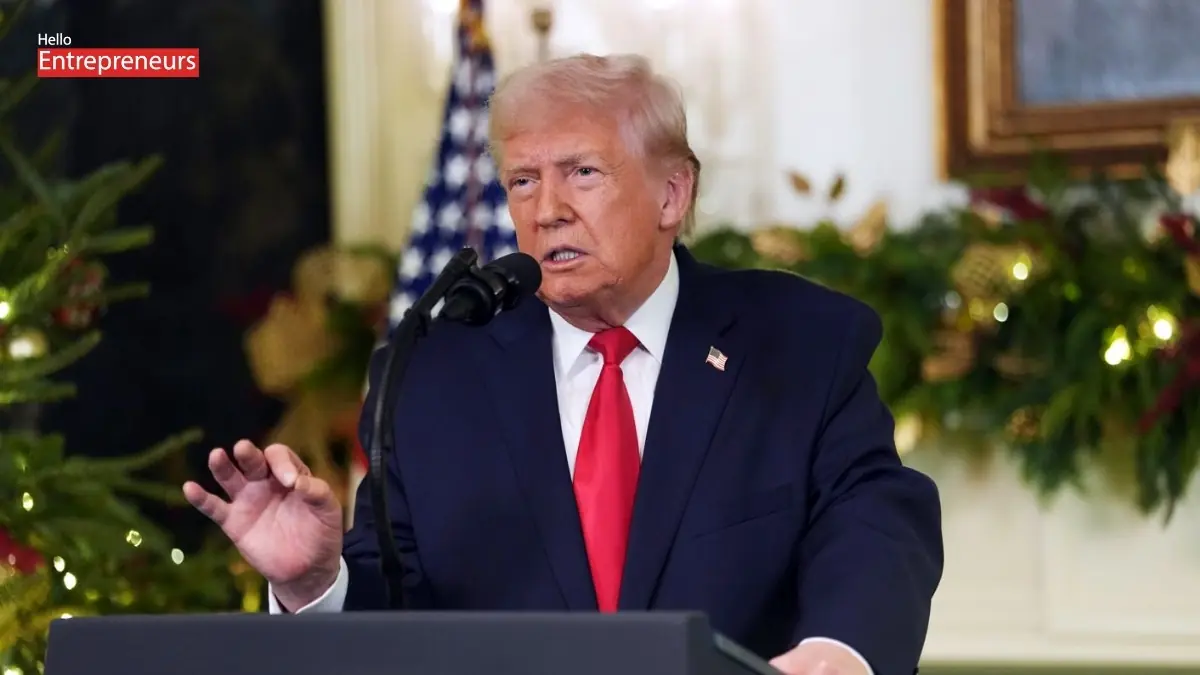
President Donald Trump went on television and told America that troops were getting a holiday surprise. Nearly 1.45 million service members. A flat $1,776 each. A nod to 1776, because of course it was. He called it the “warrior dividend,” said the checks were already moving, and let the moment hang.
Pause there.
Because what actually happened matters more than how it was announced.
Warrior Dividend: The Dividend That Isn’t New
This was not a fresh appropriation. It was not a windfall discovered behind a Pentagon sofa cushion. It was housing money.
Congress had already approved roughly $2.9 billion to supplement the Basic Allowance for Housing. Reconciliation funds. Boring name. Necessary purpose. The Defense Secretary directed $2.6 billion of it to be paid out as a one-time supplement to eligible troops, grades E-6 and below, including active duty and reserve components.
About 1.28 million active-duty members qualify. Add another 174,000 reservists.
Nothing illegal here. Nothing hidden either, if you read the fine print instead of the chyron.
What changed was the wrapper.
Why Housing Became the Headline Anyway
Military housing has been quietly malfunctioning for years. Not collapsing. Not exploding. Just failing in small, expensive ways.
A RAND report earlier this year put it plainly. BAH generally works. Until it doesn’t. When housing markets spike or pivot fast, the allowance lags. When rents sprint, the math jogs. Most service members manage. A meaningful minority do not.
That minority is loud in private and invisible in press releases.
So the supplement helps. It really does. It plugs a gap before new BAH rates kick in. Those rates, incidentally, rise an average of 4.2 percent starting January 2026.
Which raises a quiet question. If this money was meant to stabilize housing costs, why sell it as a bonus?
Because bonuses sparkle. Subsidies don’t.
Congress Notices the Rebrand
Some lawmakers were not impressed.
Senator Elizabeth Warren and Representative John Garamendi released a report flagging roughly $2 billion that had been redirected away from Defense and Homeland Security accounts for border enforcement. The list included funds meant for barracks, maintenance hangars, even schools on military bases.
Against that backdrop, renaming housing support as a dividend felt less like generosity and more like narrative control.
Congress writes checks. Administrations decide how loudly to announce them.
Those are not the same thing.
Training for a War You’re Not Allowed to Simulate
While Washington debates labels, special operations forces are running into a different wall. Regulation.
The war in Ukraine has wrecked old assumptions about drones and electronic warfare. GPS gets jammed. Radios go quiet. Autonomous systems fill the gaps. Some Russian drones now rely less on signals and more on onboard processing, identifying targets by shape and movement.
That is the future, like it or not.
Training for it inside the United States is a problem. Civil authorities restrict GPS jammers and electronic warfare tools for obvious reasons. The result is a paradox. Troops are expected to fight in environments they are not allowed to fully rehearse.
Army officials at the John F. Kennedy Special Warfare Center have asked the FAA, the FCC, and others for limited carve-outs. Temporary airspace. Controlled windows. Enough to practice without breaking the law.
They hope for progress within a year.
Hope is not doctrine.
Taiwan’s Very Loud Signal
Overseas, subtlety was not the goal.
The Pentagon announced eight pending arms sales to Taiwan worth roughly $11 billion. Missiles. HIMARS. Howitzers. Loitering munitions from Anduril. Support services. Network infrastructure.
Reuters called it the largest U.S. weapons package ever for the island. That is not hyperbole.
Lawmakers can object. Few are expected to. The timing followed a quiet visit by Taiwan’s foreign minister to Washington. Quiet on the calendar. Loud in effect.
The Senate has already advanced a defense policy bill that includes $1 billion for Taiwan’s security in 2026. Drone cooperation provisions follow close behind, with deadlines measured in months, not years.
Beijing will not miss the message.
Venezuela and the Sound of Escalation
Then there is Venezuela.
President Trump announced that U.S. forces would stop sanctioned oil tankers moving to or from Venezuelan ports. The next day, Nicolás Maduro ordered naval escorts for some vessels heading toward Asia.
According to the New York Times, none of the escorted ships were on the U.S. sanctions list. That detail matters. So does the optics. Warships escorting oil tankers tend to concentrate attention.
Foreign policy analysts at the Council on Foreign Relations now rank Venezuela as the most likely high-impact conflict involving the U.S. in 2026.
That ranking did not come from nowhere.
Pulling Back the Camera
Here is the connective tissue.
Money is moving faster than policy. Training is lagging behind technology. Messaging is outrunning mechanics.
The warrior dividend helps troops. That is not in dispute. But it also reveals a habit. Rename the necessary. Oversell the mundane. Wrap structural fixes in patriotic ribbon.
Big platforms get applause. Support systems get rebranded. Housing, training space, maintenance. These are not glamorous. They are decisive.
You don’t win future wars with slogans. You win them with boring competence, paid for honestly, practiced legally, and explained without theater.
Checks clear either way. Reality does not care what you call them.