



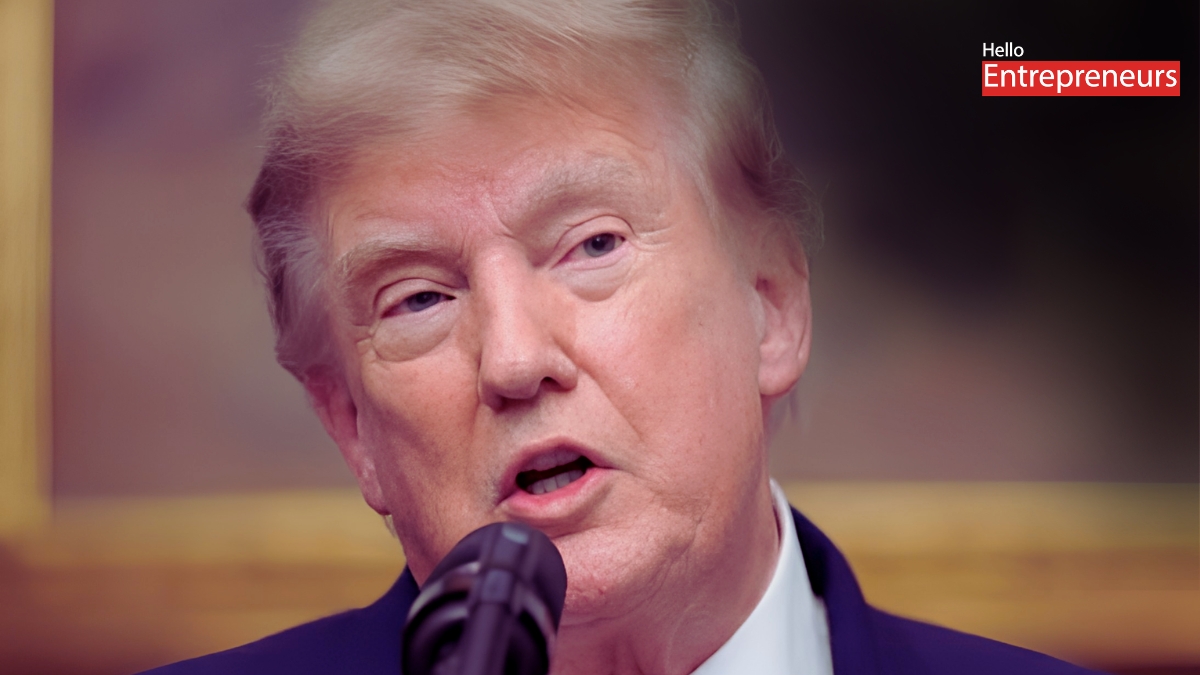
Donald Trump’s been turning up the heat on Iran lately, and he’s not holding back. At a rally in Myrtle Beach, he called the Strait of Hormuz “American territory”—which is a bold statement—especially with tensions running high between the US and Tehran.
He told the crowd, “They want to make a deal so badly, we don’t even know if we want [a deal] because I view the Strait of Hormuz as American territory right now.” Trump insisted Iran mustn’t get its hands on a nuclear weapon. “We cannot let them have a nuclear weapon, or you will see some very bad things,” he said. He claimed the US had already stopped Iran from developing one, but nobody’s been able to back that up.
Earlier the same day, Trump met reporters at Joint Base Andrews and said the US had “total control” of the Strait of Hormuz, linking it to a blockade on Iran’s ports and shipping. “We have total control of that entire region having to do with the Strait of Hormuz,” he said, claiming US control stretched onto the nearby land, according to several outlets.
This isn’t the first time he’s pushed that message. Not long ago, Trump posted an AI-generated image on Truth Social showing the waterway labeled as “NEW U.S. TERRITORY.” Iranian officials fired back, calling the idea delusional, and critics piled on. The Guardian reported the US is keeping up the blockade and that peace talks have stalled, while Reuters noted shipping traffic through Hormuz has slowed to a trickle compared to before the conflict.
Iran’s leaders want everyone to know they’re not buying Trump’s claim. Deputy Foreign Minister Kazem Gharibabadi made it clear—the Strait “has been Iranian, is Iranian, and will remain Iranian.” He said the waterway would only open or close by Iran’s say-so. He also mocked Trump’s map, saying Tehran either expects reality to correct him or they’ll do it themselves.
Iranian parliament speaker Mohammad Bagher Ghalibaf went further. He said the strait won’t fully open until Washington lifts its blockade, releases frozen assets, drops the oil embargo, and stops military ops. And just to drive the point home, an Iranian-linked social media account posted its own map labeling California as “new territory of the Islamic Republic of Iran”—a clear tit-for-tat.
Despite Trump’s statements, the legal status of the Strait hasn’t changed. It sits between Iran and Oman, and international maritime law lets ships pass through straits like Hormuz. According to the UN Convention on the Law of the Sea, vessels should be able to move freely.
The strait matters—a lot. It’s one of the big energy chokepoints. The US Energy Information Administration said 20 million barrels of oil went through Hormuz each day in 2024, which is about a fifth of the world’s oil consumption. If the strait stays blocked or even gets disrupted, it’s going to mess with oil prices, shipping routes, insurance costs, and fuel bills across Asia and other regions. Reuters mentioned Saudi Aramco started selling oil from outside Hormuz, signaling traders are prepping for uncertainty.
Now, Trump’s remarks have added another layer to this mess—territorial claims on top of sanctions, naval blockades, nuclear tensions, and stalled talks. The US says it’s in control; Iran says it’s still their turf. With neither side backing down and nothing moving diplomatically, the standoff’s only getting sharper, and global shipping and energy markets are feeling the squeeze.

