



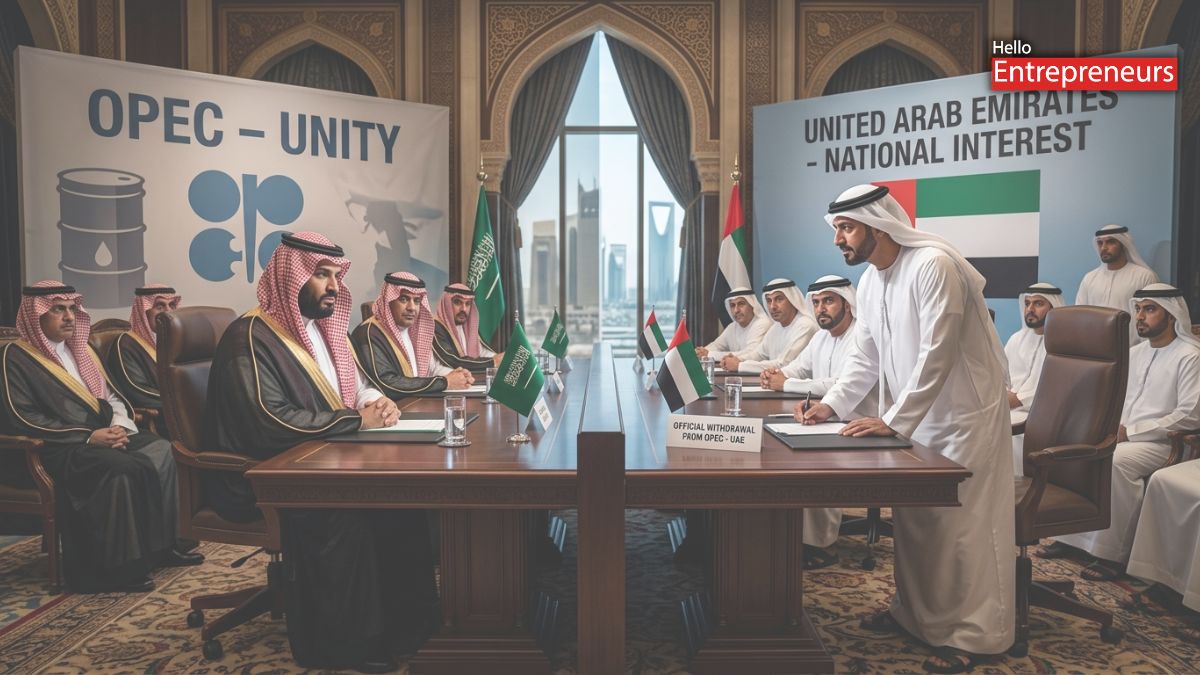
Abu Dhabi: The Organization of the Petroleum Exporting Countries (OPEC) and the broader OPEC+ alliance suffered a setback after the United Arab Emirates (UAE) announced its withdrawal from the cartel on May 1. This comes at a time when the US-Iran war has wreaked havoc to the region’s main energy exports, with the war now in its third month.
This decision has come after years of simmering tensions over oil production, with the Saudi-led OPEC forcing the UAE to keep nearly 30% of its oil capacity (about 1.5 million barrels per day) idle to meet OPEC’s price caps.
The Trump Factor: A Policy Win
This move has been seen as a major victory for Donald Trump, who has long seen OPEC as a cartel that continues to ‘rip off the rest of the world. By exiting OPEC, the UAE is distancing itself from the bloc that has been dominated by the Saudis and has Iran as a founding member. It signals a move that brings it closer to Donald Trump and Israel, making it one of the few countries in the region that actually recognizes the Jewish state.
Why the UAE Walked Away
The UAE’s decision has been rooted in long held restrictions by the OPEC that forced Abu Dhabi to curtail oil production in order to keep prices stable. The UAE had invested in expanding its production to 5 million barrels per day and it wanted to increase production accordingly.
The UAE has been in a position to survive on oil prices at about $50 per barrel, as it has successfully diversified its economy. For Saudi Arabia, there has been a vested interest in keeping the oil prices higher to about $80-90, as it hasn’t been able to get over its addiction to oil.
Besides, the UAE didn’t get along well with Saudi Arabia, as the Kingdom splurged on fancy infrastructure to compete with Dubai.
Saudi Arabia’s Mounting Worries
For the Saudis, the UAE’s exit has come at a time when Arab unity has been paramount, with the entire region’s oil infrastructure becoming collateral damage to the US-Iran war. The UAE was one of the few members, along with Saudi Arabia that had the capacity to influence global oil prices. Abu Dhabi has also been sulking at not getting regional support due to the war, even as it has repeatedly flouted OPEC norms to extract more oil, even before the war.
The UAE wanted support to attack Iran in cooperation with the Saudis, but that proposal did not work. The Iranians continue to be hostile towards the UAE, partly due to its closeness with Israel.
With the UAE out of OPEC, the Saudis are now in a weaker position to dictate oil prices, even as everyone in the region expects the war to end soon, considering the immense economic losses that have cripped the oil-dependent region.