



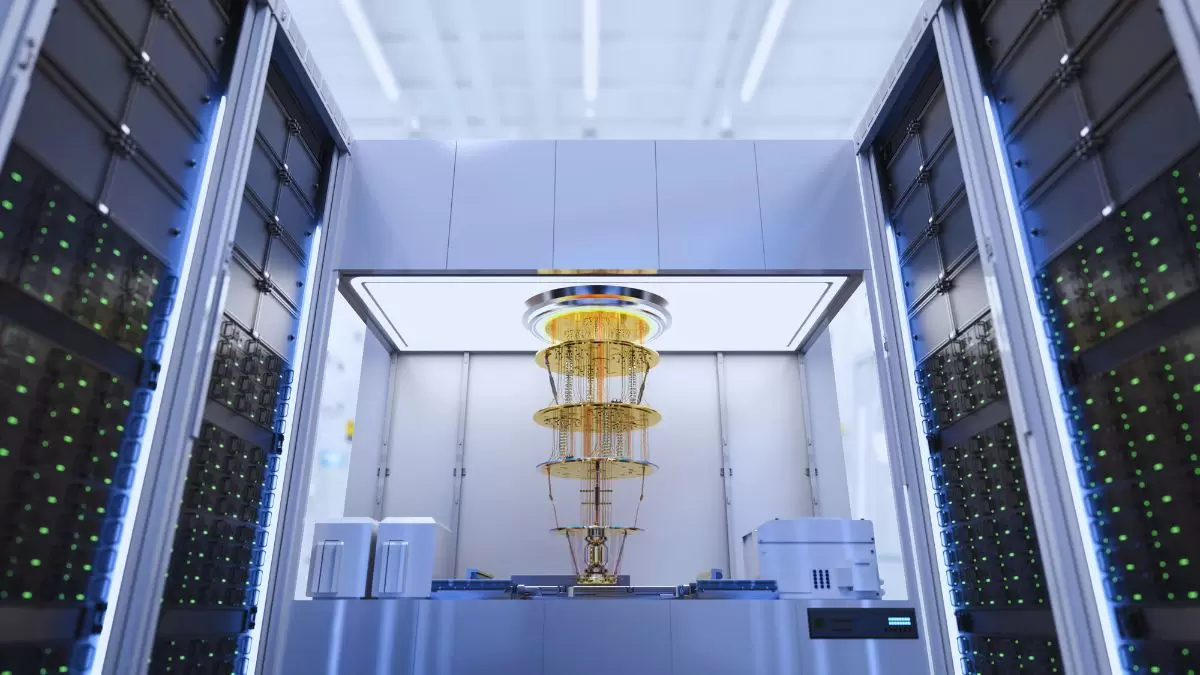
Remember when “AI” was that mysterious buzzword only researchers cared about — and now it’s rewriting your pitch decks? Quantum computing is next. Only this time, the stakes are even higher, the science is even stranger, and India… is all in. In 2025, the Indian government isn’t tiptoeing around frontier tech — it’s pouring ₹6,003 crores into quantum computing under the National Quantum Mission (NQM) and another ₹2,000 crores into AI development through the IndiaAI initiative. Not for optics. For strategy.
Because in this global tech race, hesitation is a luxury we can’t afford.
Quantum: A Business Problem in Disguise
Quantum computing sounds like a physics class you skipped — until it starts solving the business problems your team’s been “ideating” on for months. Need to simulate millions of drug compounds in minutes? Optimize a 300-city supply chain? Detect financial fraud before the fraudster finishes their coffee? Quantum can do that — eventually — and faster than anything on classical systems.
Better yet, it’s teaming up with AI. That’s right — quantum-classical hybrids are already accelerating AI training, unlocking new modeling capabilities, and making your current analytics look like… well, spreadsheets from 2005.
India’s Quantum Computing Playbook:
Bold, Structured, Funded
Let’s talk specifics. India’s National Quantum Mission isn’t just a fancy name. It’s building scalable quantum systems with 50 to 1000 qubits over eight years. It’s launching Thematic Hubs (T-Hubs) nationwide, which are focused on computing, materials, sensing, and communication.
It plans to build India’s first homegrown quantum computer within the next three years. Not in some sci-fi future — in your next market cycle. And if you’re a founder or startup thinking, “Cool, but not my lane,” think again.
The NQM is offering ₹10–50 crore grants to quantum-focused startups. Yes, if you’re building, there’s government money with your name on it.
As NITI Aayog CEO BVR Subrahmanyam put it:
Quantum technologies will play a defining role in securing critical infrastructure, strengthening defense capabilities, and safeguarding our digital sovereignty.
However, leadership in this domain will require more than technological prowess—it demands a bold vision, strong policy frameworks, and an ecosystem that fosters cutting-edge research, talent development, and large-scale deployment.
In other words: India’s not just funding quantum — it’s betting on it.
Meanwhile, Quantum Computing Globally…
IBM is rolling out 1,000+ qubit processors. Google is claiming “quantum supremacy” (yes, they really call it that). Microsoft’s tinkering with exotic qubits. And startups like IonQ and PsiQuantum are raising billions to build the backbone of the next computational era.
If you think this is just Silicon Valley cosplay, you’re missing the bigger picture.
Real-World Magic — Not Hype
Here’s where quantum starts to sound like magic — but it’s all math:
- Pharma: Accelerated drug discovery
- Logistics: Complex routing solved in seconds
- Climate: More accurate models for sustainability strategies
- Finance: Risk modeling and fraud detection
- Healthcare: Personalized medicine based on real-time quantum data
These aren’t “what-ifs.” They’re “how-soons.”
The Call to (Quantum) Action
So here’s the pitch: whether you run a startup, a legacy company, or an entire fund, start paying attention. Quantum won’t replace classical computing —it’ll supercharge it. And those who adopt early will hold the keys to optimization, prediction, and resilience at an entirely new level.
You don’t need to be a physicist. You need to be smart enough to see what’s coming — and bold enough to move before it’s obvious. Because when quantum gets real (and it’s getting there fast), you don’t want to be the last person Googling “what is a qubit?”