



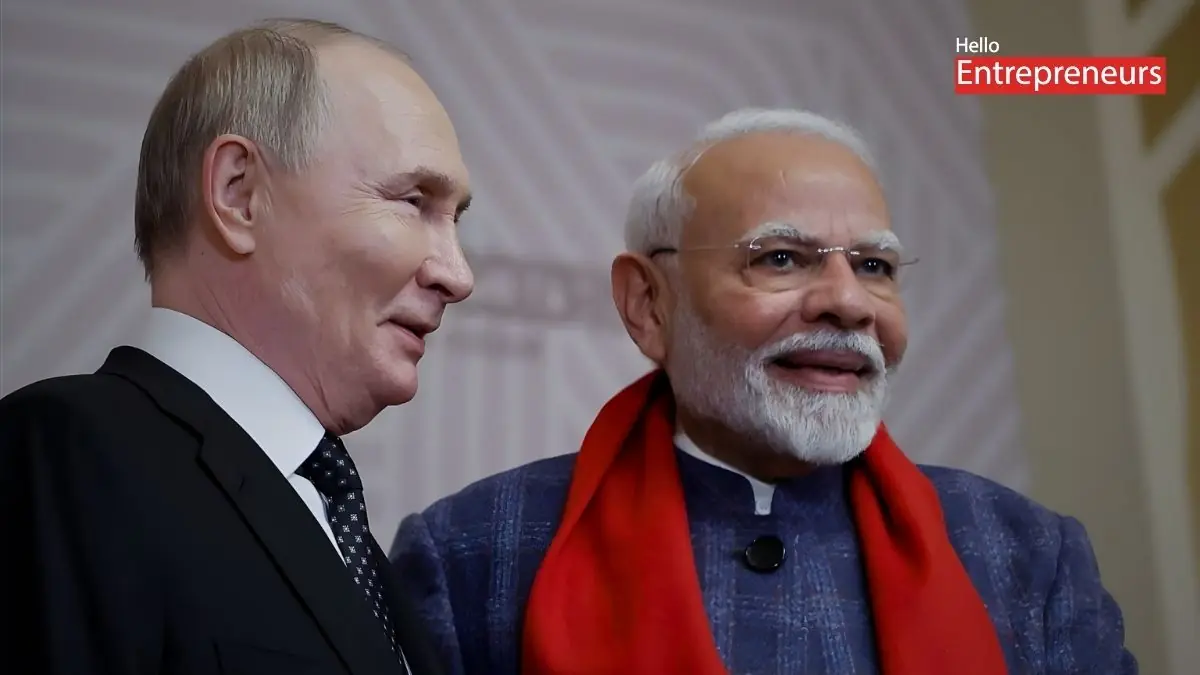
Mumbai: New Delhi and Moscow aren’t old friends by accident. They’ve survived wars, sanctions, shifting alliances and now Trump-era tariffs. And once again, the India Russia partnership is back in the spotlight as Vladimir Putin lands in Delhi to recalibrate a relationship the world keeps trying to disrupt.
The India Russia partnership has always operated on its own frequency. Two countries with very different worldviews, yet bound by decades of energy, defence and diplomatic cooperation. Now, with global pressure rising and Western capitals frowning at every handshake, both sides want to prove the relationship is still strategic, relevant and, frankly, nobody else’s business.
Putin’s return to India after nearly four years isn’t ceremonial. It’s tactical. Oil, arms and Donald Trump’s tariff barrage are all on the agenda. And if that sounds like a heavy mix, that’s because it is.
The Summit That Still Matters
The annual India Russia Summit was never meant to be a charm exercise. It was designed as a mechanism to lock in long-term coordination between two partners who trust each other when things get noisy. Twenty-five years after Putin set it up, it remains one of Delhi’s most consistent diplomatic fixtures.
This time, the weight is higher. Washington is breathing down India’s neck over Russian oil. Europe refuses to touch Moscow. And Russia itself is steering through sanctions, isolation and a messy war in Ukraine. Still, Modi and Putin are choosing to sit down and talk, not something every leader does with Moscow these days.
The message is simple: partnerships evolve. They don’t evaporate.
Oil: The Barrel That Won’t Leave the Room
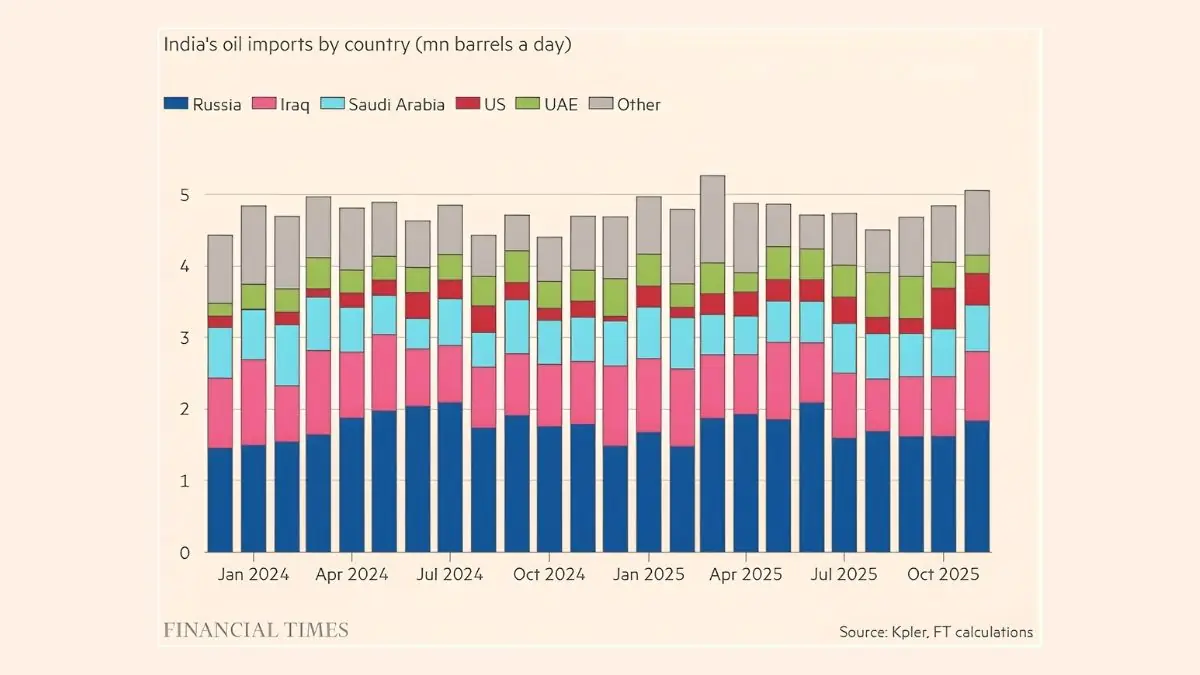
Ever since the Ukraine invasion, India has become Russia’s biggest buyer of seaborne crude, soaking up nearly $140 billion worth of discounted oil. Predictably, Western policymakers hated the arrangement. Trump hated it more. He accused Modi of “funding Putin’s war machine” and slapped a punitive tariff hike on Indian goods, taking Washington’s total tariff wall to 50 percent.
In true Trump fashion, the punch landed loudly but not cleanly.
Sure, India scaled back some Russian purchases. Reliance even announced it would stop processing Russian crude. But let’s be honest, nobody in the oil business turns away a good discount unless they absolutely must. Analysts like Sumit Ritolia are right: a complete halt is unlikely. Not when the economics remain irresistible.
Nayara Energy’s refinery in Gujarat, part-owned by Rosneft, continues buying Russian crude. And despite being slapped by UK and EU sanctions, it hasn’t been targeted by the US yet. The math speaks for itself.
Still, oil isn’t the only thing on the table. It’s just the loudest.
The Defence Equation: Old Trust, New Stakes
If oil keeps the partnership alive, defence makes it meaningful.
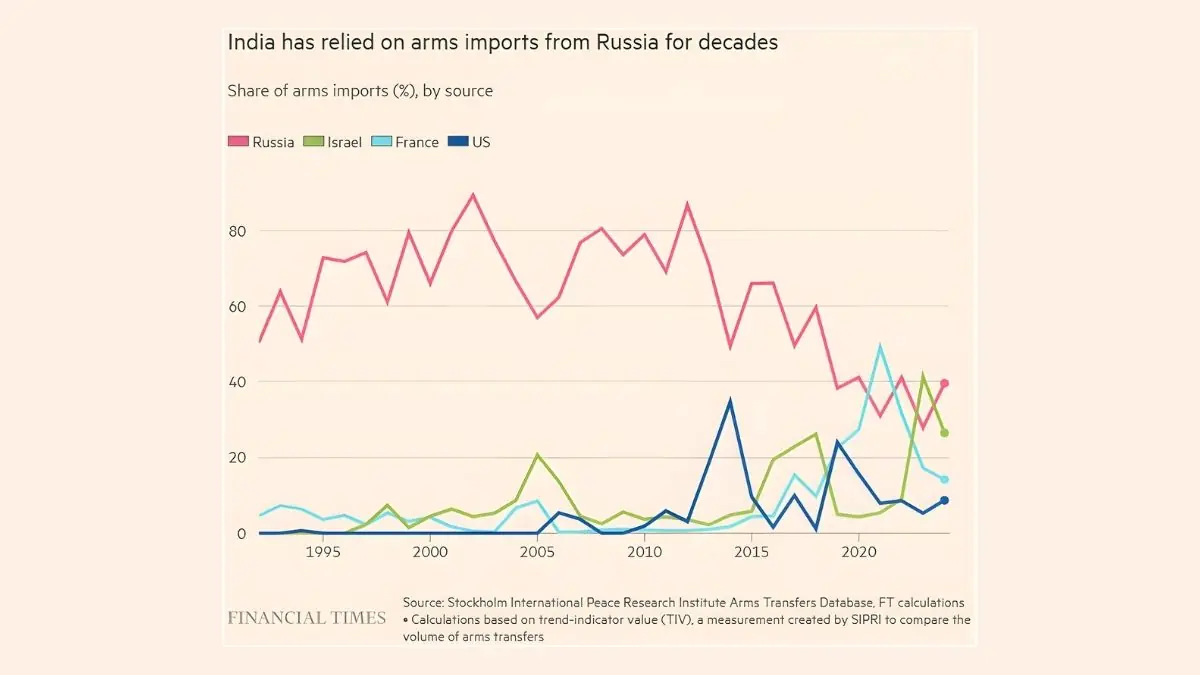
Peskov, Putin’s spokesperson, confirmed that fighter jets and missile systems are high on the agenda. New Delhi has relied on Russian hardware for decades. Even as India diversifies with French Rafales, Israeli tech and US platforms, Russia remains a crucial supplier, and the only one that offers deep tech-transfer without moral lectures.
The S-400 air defence system already proved its worth during India’s latest conflict with Pakistan. More units are in discussion. The Su-57 stealth fighter is also on the radar, though India will calculate that one carefully.
And then there’s naval power. India’s interest in leasing another nuclear attack submarine from Russia has stalled because of the Ukraine conflict, but it hasn’t died.
The two countries also jointly produce the BrahMos missile, still one of India’s most powerful export-ready weapons. The Philippines has already signed up. Others are interested. Russia’s approval for every sale reminds the world that defence cooperation between the two isn’t transactional. It’s foundational.
Just this week, Russia’s parliament ratified a pact allowing troop, ship and aircraft access to each other’s territory. That’s not symbolism. That’s interoperability.
The Currency Trap Nobody Predicted
Washington’s sanctions didn’t just squeeze Moscow. They created a bizarre financial logjam inside India. Russian oil profits couldn’t be repatriated because of US and EU restrictions. So billions of rupees piled up in Indian banks with nowhere to go.
Russia even drafted a list of sensitive goods, electronics included, that it wanted to buy in exchange. This is what happens when global politics intrude on global trade.
You end up improvising.
India and Russia both know this arrangement isn’t sustainable. So yes, financial mechanisms will be on the table in Delhi. They have to be.
A History That Still Casts a Shadow
Every time someone claims India is moving away from Russia, old history politely disagrees.
In 1971, when India stood with Bangladesh’s liberation movement, the Soviet Union stood with India. When the US backed Pakistan, Moscow dispatched nuclear submarines to the Bay of Bengal. That moment carved a certain respect between the two sides. Something that doesn’t fade just because newer partnerships exist.
India’s foreign policy isn’t emotional. But it does recognise loyalty.
That’s why Delhi never joined the West’s anti-Russia sanctions. That’s why it keeps channels open even when Europe rolls its eyes. And that’s why Putin’s visit still matters.
Why Trump Complicates Everything?
Let’s be honest, America today is India’s most important strategic partner. Defence cooperation is growing. Tech corridors are booming. Trade with the US is double that with Russia.
But Trump complicates everything.
He’s unpredictable. He’s tariff-happy. And his worldview doesn’t always recognise India’s strategic autonomy. When he nuked tariff rates on Indian goods in August, he sent a clear signal: alliances don’t shield you from shockwaves.
Former diplomat Ajay Bisaria put it bluntly. The volatility of Trump’s White House is pushing India to value its relationship with Russia even more. It’s geopolitical insurance.
Why India Won’t Pick Sides?
India refuses to choose between the US and Russia because choosing would be strategically stupid. The US is crucial for technology and the Indo-Pacific balance. Russia is vital for energy security, defence hardware and diplomatic insulation at the UN.
Both matter. Both will continue to matter.
Delhi isn’t apologising for this balance. Nor should it.
What Modi and Putin Need From This Visit?
For Modi, stability in oil supply, clarity on defence projects and smoother settlement mechanisms are priorities. For Putin, India is one of the last major economies still willing to work openly with Moscow. He needs reliable markets, political recognition and long-term projects, nuclear, military and energy.
Rosatom’s chief joining the delegation is significant. Russia has already helped build India’s civil nuclear capability. Talks about expanding the six-reactor plan will be serious.
Bottom line: neither side sees this as a courtesy call. It’s business.
India’s Own Strategic Reality
India today is navigating a geopolitical minefield with confidence. It buys from Russia. It partners with America. It trades with Europe. And it manages this without bending to pressure.
The world can dislike that. India isn’t losing sleep over it.
Delhi’s stance is simple: it’ll buy what it needs, align where it must, and stay sovereign always.
This partnership with Russia may evolve, but it isn’t fading. As Defence Secretary R Singh said, Russia has stood with India “through fair and foul weather.” That kind of consistency counts, especially when global politics is a circus.
Also Read: The Putin India Visit 2025 Sets a Fierce Geopolitical Tone

