



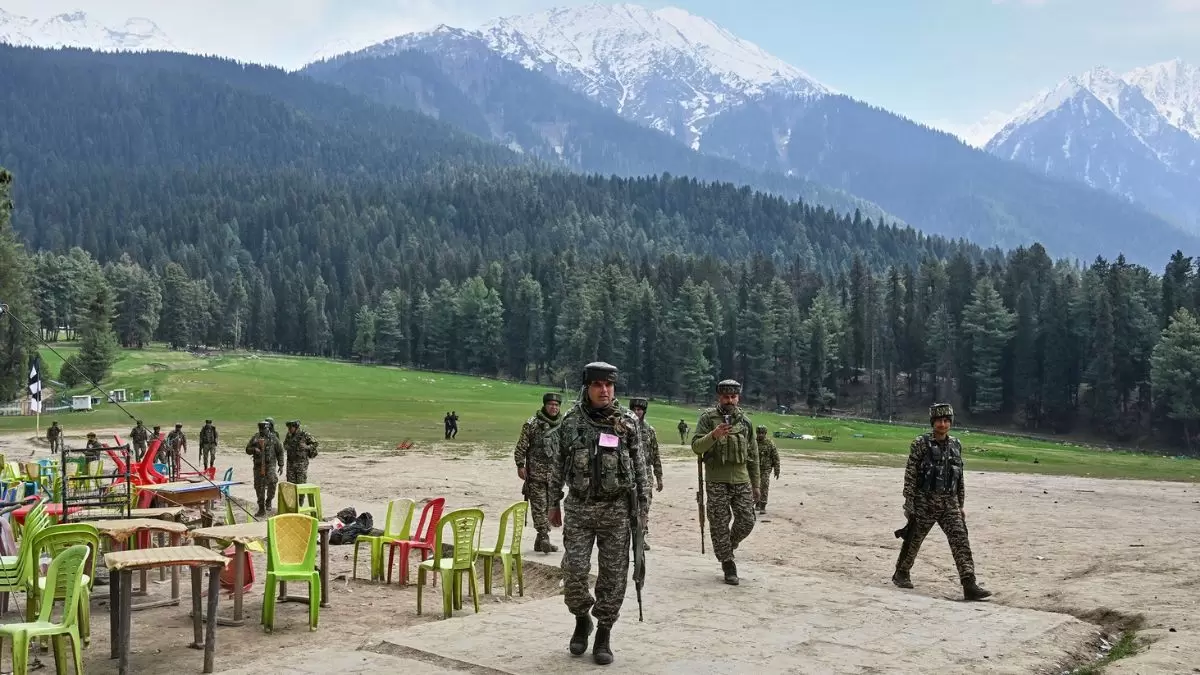
New Delhi: The surprise strike on Pakistan’s terror hideouts have made the world sit up and take notice. Ever since the Pahalgam attack on April 22, where 28 were killed, India has taken firm steps to ‘punish’ Pakistan for its unwavering proxy support to terrorist organizations.
The Indus Water Treaty, a World Bank-mediated agreement between India and Pakistan, had never been revoked even as two wars and countless skirmishes were fought since it was signed in 1960.
“Bharat ka paani, Bharat ke haq mein bahe ga (India’s water will now flow for India),” PM Modi declared as the treaty was revoked. Pakistan sees this as a big threat, as the country is dependent on the Indus for its agriculture and business use. Experts fear a 21% deficit in water for Pakistan due to its suspension.
India has already stopped the flow of the Chenab from the Bagihar and Kishanganga dams in Kashmir, and more is likely to follow.
Pakistan has called this ‘An Act of War’, while the government hasn’t made any official statement on the suspension yet.
Suspension of Airspace to Indian carriers
In retaliation, Pakistan closed its airspace to Indian civilian flights, forcing multiple flight cancellations and re-routing of flights to avoid Pakistani airspace.
Air India’s flights are now forced to stop at Vienna for refuelling, as its Europe and America flights from North India have to take the detour necessitating a refuel and losses due to it. Many international flights from North India have been cancelled as a result, and air traffic has been diverted to Mumbai as a result.
In response, India has also suspended civilian flights from Pakistan to use its airspace until May 23. As a result, many international airlines have suspended flights to and from Pakistan.
War preparedness
The Ministry of Home Affairs is conducting mock civilian drills in 244 districts to ensure war preparedness. India is taking no chances here, as the political environment has gone from bad to worse.
World leaders have expressed concern, with UN Secretary-General Antonio Guterres urging India and Pakistan to exercise restraint
Tensions between India and Pakistan are at their highest in years.
I strongly condemn the awful terror attack in Pahalgam on 22 April.
It is essential – especially at this critical hour – that India and Pakistan avoid a military confrontation that could easily spin out of…
— António Guterres (@antonioguterres) May 5, 2025
US Secretary of State Marco Rubio, tweeted,
I am monitoring the situation between India and Pakistan closely. I echo @POTUS‘s comments earlier today that this hopefully ends quickly and will continue to engage both Indian and Pakistani leadership towards a peaceful resolution.
— Secretary Marco Rubio (@SecRubio) May 6, 2025
How will this work out?
Considering the unpredictabiltiy of the situation, everyone across the world is watching these events with caution. No one wants war, but the quick escalation can cause serious damage to both India and Pakistan’s water security and economies. The biggest fear is Pakistan’s response to Operation Sindoor, and how it can affect the fragile economy and geopolitics of the region.

