



New York: One year after reclaiming the Oval Office, Donald Trump finds himself battling voters, allies, and reality itself. The noise is loud. The numbers are louder.
Twelve months ago, Donald Trump walked back into the White House promising strength, speed, and supremacy. Today, as his second presidency hits the one-year mark, the scoreboard looks rough. Half the country thinks he has made the economy worse. Just over a third think he has improved it. That is not a rounding error. That is a warning sign.
According to the latest Wall Street Journal poll, 50 percent of American voters say the economy has deteriorated since Trump returned to power in January 2025. Only 35 percent credit him with improvement. His approval rating remains stubbornly weak, stuck in territory that no amount of capital letters on Truth Social can rescue.
For a president who sold himself as the ultimate dealmaker, this is an uncomfortable anniversary.
Trump’s second presidency was pitched as a reset. Lower costs. Stronger growth. Faster wins. Instead, public confidence in economic stewardship has slid.
Voters are not parsing bond yields or quarterly revisions. They are reacting to lived experience. Prices feel high. Jobs feel uncertain. Optimism is thin.
That sentiment is now firmly reflected in polling. From an Indian perspective, this matters. The US economy remains a gravity well for global markets.
Weak confidence in Washington ripples through trade flows, investment sentiment, and currency volatility worldwide. When Americans feel uneasy, emerging markets feel it too.
If domestic numbers sting, foreign policy has turned combustible.
Trump has reignited tensions with European allies, threatening steep tariffs unless they back his demand to acquire Greenland. Yes, Greenland. He argues the move is essential for US national security and preventing Chinese or Russian influence in the Arctic.
Denmark and its allies disagree. Loudly.
European troops from Germany, France, and Sweden have already increased their presence in the region. NATO unity is strained. Diplomatic patience is thinning. Trump remains unmoved, insisting that anything short of US control is unacceptable.
He has even leaked what appear to be private messages from NATO Secretary General Mark Rutte and French President Emmanuel Macron on social media. Casual diplomacy, meet public spectacle. Back home, Trump’s immigration agenda is colliding with raw emotion.
Federal immigration agents surged into Minnesota as part of his promised mass deportation campaign. The operation triggered protests that escalated after the fatal shooting of Renee Good, a 37-year-old mother of three, earlier this month.
Demonstrations erupted across Minneapolis and St Paul. Trump responded in typical fashion, claiming without evidence that protesters were “professional agitators” and calling for jail or deportation.
The optics are grim. Armed agents. Crowded streets. Grief turning to rage. For many Americans, this feels less like law enforcement and more like open confrontation.
Perhaps the most unsettling shift of Trump’s second presidency is not any single decision. It is the pace. Events that once would have paralysed a presidency now slide by with barely a pause. Military strikes. Diplomatic threats. Domestic unrest. Social media leaks. Americans absorb it, scroll past, and move on. That numbness is new. And dangerous.
Political analysts warn that constant disruption has reset expectations. Shock no longer shocks. Crisis no longer pauses governance. Reality, as one observer put it, has become optional.
Trump’s “America First” promise originally appealed to voters weary of endless wars. The execution has gone the other way.
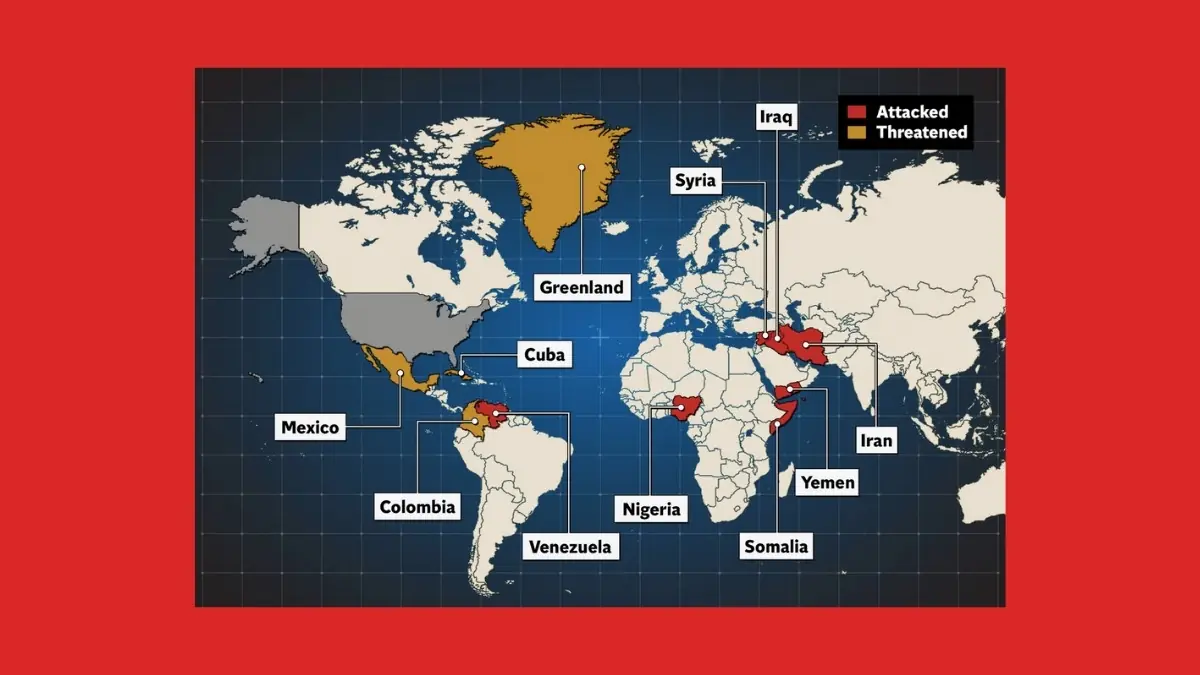
In his first year back, Trump has authorised military action across Somalia, Iraq, Yemen, Iran, Venezuela, Syria, and Nigeria. According to think tank New America, US strikes in Somalia alone have reached 135, more than the combined totals of multiple previous presidencies.
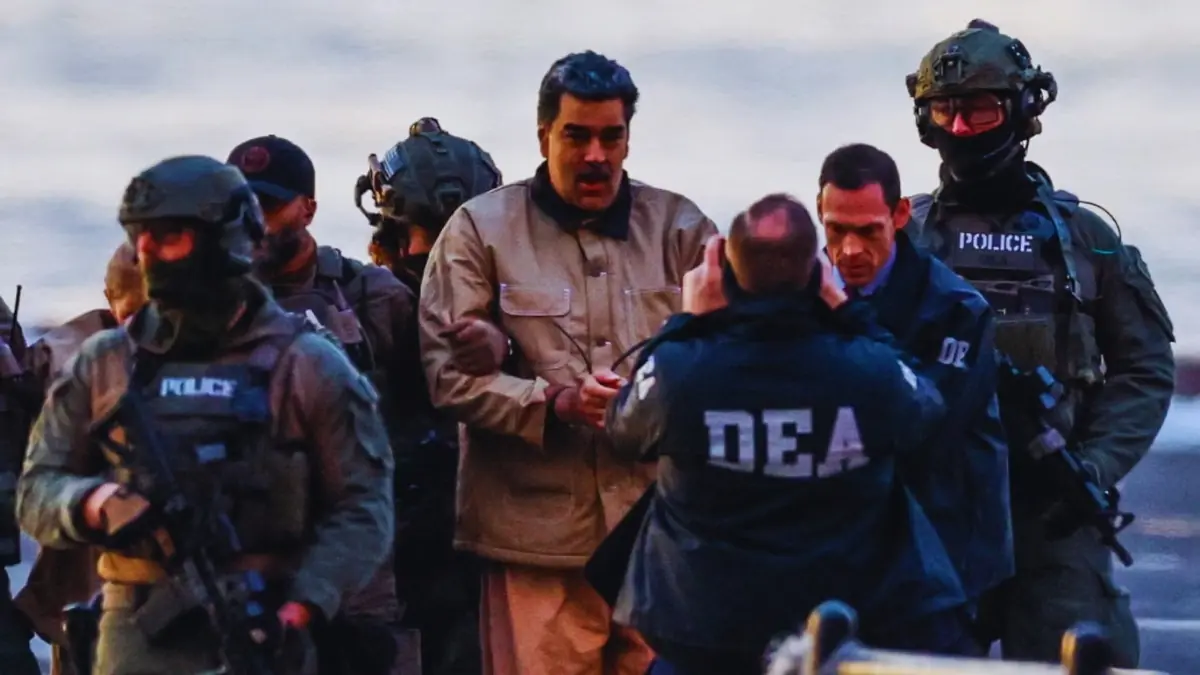
In Yemen, US forces launched more than 1,100 strikes in a 52-day campaign. In Iran, American bombers hit nuclear facilities at Fordow, Natanz, and Esfahan following Israeli strikes. In Venezuela, US special forces captured President Nicolás Maduro and took control of oil sales.
Supporters call it strength. Critics call it chaos. Allies call it exhausting.
From New Delhi’s vantage point, this matters. An unpredictable Washington complicates strategic planning. Stability is a currency. Right now, the US is burning through it.
Trump’s ambitions have not stopped at Greenland.
He continues to flirt with the idea of annexing Canada, referring to it as a potential “51st state.” While ruling out military force, he has threatened economic pressure through tariffs and trade leverage.
Mexico, Cuba, and Colombia have also found themselves in his rhetorical crosshairs. Warnings fly. Ultimatums follow. Specifics remain fluid.
The pattern is familiar. Pressure first. Clarity later. Sometimes never.
Later today, Trump departs for the World Economic Forum in Davos. His remarks will be watched closely, not just for policy signals but for tone.
Will he project confidence? Confrontation? Conciliation?
Global investors, policymakers, and rivals will be listening for hints about tariffs, alliances, and escalation. At a moment when US credibility feels fragile, every word counts.

