



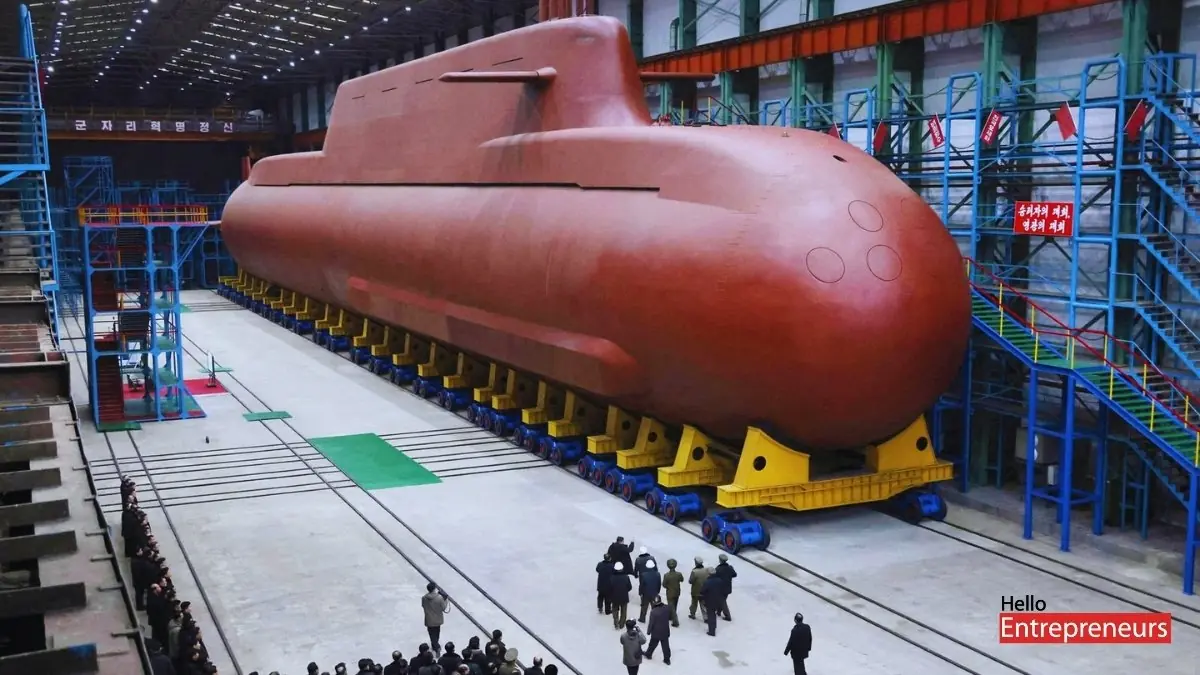
Delhi: North Korea is not whispering anymore. It’s showing metal, mass, and intent, straight from a shipyard floor.
Every few months, Pyongyang finds a new way to remind the world that it hasn’t gone anywhere. This time, the reminder is heavy, cylindrical, and designed to vanish underwater.
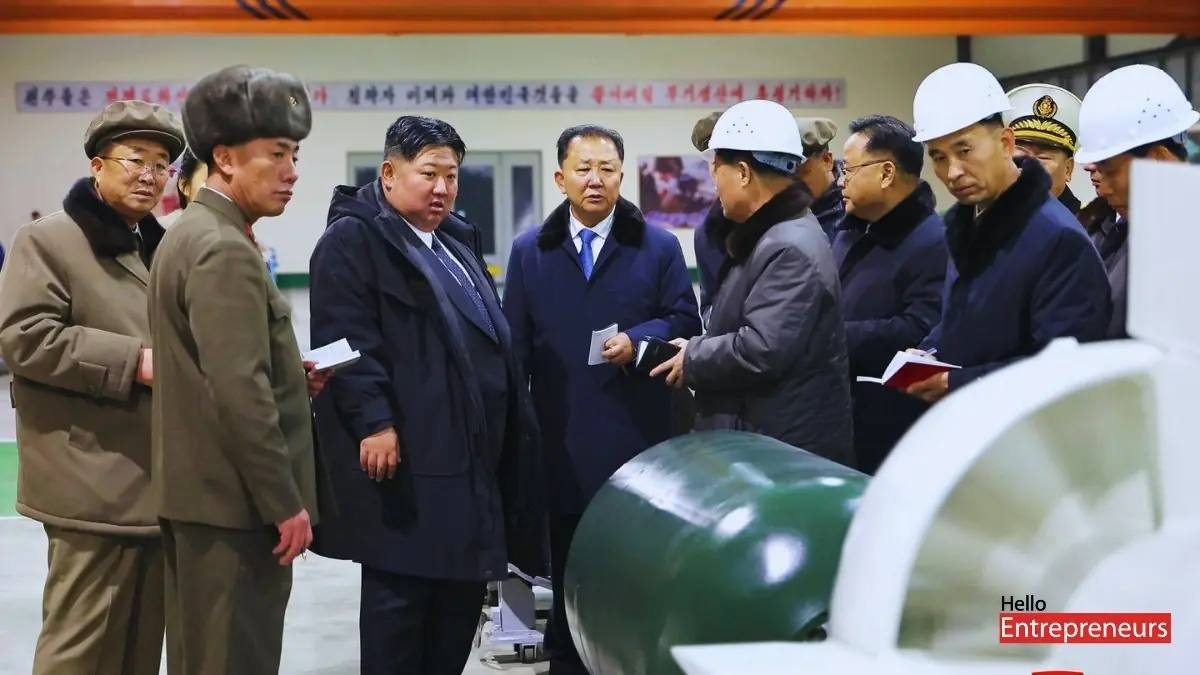
State media images released by the Korean Central News Agency show what appears to be a largely completed nuclear-powered submarine. The vessel, described as an 8,700-ton-class nuclear-propelled submarine, was inspected by Kim Jong Un himself. No launch. No ceremony. Just steel and a leader pointing at it.
That alone says enough.
For North Korea, the nuclear-powered submarine is not a side project. It is a statement. Quiet, deliberate, and meant to linger.
What the Images Actually Tell Us?

The latest images matter because of what they reveal and what they no longer hide.
Back in March, state coverage showed only fragments. Lower hull sections. Partial angles. Enough to tease, not enough to confirm. This time, the hull looks close to whole. Long. Continuous. Purpose-built.
Experts looking at the images say the submarine appears near completion. That suggests something important. You don’t finish a hull like that unless major internal systems are already in place. The engine, almost certainly. Possibly the reactor too.
KCNA, predictably, offered no timelines. No technical breakdown. No confirmation of readiness. North Korea prefers silhouettes to spec sheets. Still, the progression is visible. And intentional.
Kim Jong Un’s Words Were the Real Payload
Kim Jong Un didn’t just inspect the submarine. He narrated it.
According to KCNA, he called the project’s completion an “epoch-making” step in strengthening North Korea’s nuclear deterrent. Big words. Chosen carefully.
In Kim’s world, deterrence is survival. A nuclear-powered submarine fits neatly into that worldview. It can stay underwater for long stretches. It can move unpredictably. It is harder to pre-empt, harder to neutralise, harder to ignore.
Then came the jab southward.
Kim denounced South Korea’s US-backed interest in acquiring its own nuclear-powered submarine, calling it an offensive act that infringes on North Korea’s security and maritime sovereignty. In other words, if Seoul can chase this capability, Pyongyang will sprint.
It’s an old argument. Familiar. Almost rehearsed. External threat equals internal escalation.
Why Nuclear Propulsion Changes the Equation?
A submarine is one thing. A nuclear-powered submarine is another creature entirely.
Conventional submarines need to surface or snorkel. They leave traces. Nuclear-powered ones don’t have that problem. They can stay submerged for months. They can loiter. They can wait.
For North Korea, which lives under constant surveillance, this matters. A lot.
Add nuclear weapons into the mix, and the logic hardens. A North Korea nuclear-powered submarine could serve as a second-strike platform. That’s the phrase strategists care about. It means retaliation remains possible even after a first blow.
That alone reshapes deterrence math. Not dramatically overnight. But enough to make planners uncomfortable.
How Close Is Pyongyang to Reality?
This is where caution creeps in.
KCNA did not say when Kim Jong Un visited the shipyard. It did not say when the submarine would be finished. It did not say when, or if, it would sail.
North Korea has shown impressive progress before, followed by long silences. Building a nuclear-powered submarine is brutally complex. Reactor safety. Noise reduction. Crew training. All of it takes time. And experience.
Still, the images suggest North Korea is further along than many expected. A near-complete hull is not a mock-up. It’s a commitment.
Sanctions have slowed Pyongyang. They have not stopped it.
The Regional Ripples Are Inevitable
This development won’t sit quietly.
South Korea will read Kim’s comments as both threat and justification. Seoul’s interest in nuclear-powered submarines has been framed as defensive, a response to North Korea’s expanding arsenal. Pyongyang sees it as provocation. That loop feeds itself.
Japan, too, will be watching closely. A stealthy North Korean submarine operating in regional waters complicates maritime security and early-warning assumptions.
The United States already tracks North Korean missile programs obsessively. Submarines add a layer of uncertainty that no satellite fully solves.
Why This Matters Beyond Korea?
From India’s vantage point, this story isn’t remote.
India operates nuclear-powered submarines and understands exactly what they bring to the table. Endurance. Credibility. Quiet leverage. Seeing another state, especially an isolated one, inch toward that capability matters.
It speaks to a broader shift. Advanced military technologies are no longer confined to a small, predictable club. Proliferation pressures are real. And they are spreading underwater now.
For India, which balances deterrence with restraint in a crowded maritime neighbourhood, North Korea’s progress is a reminder. The undersea domain is becoming more contested. And less forgiving.
A Pattern, Not an Outlier
The submarine doesn’t stand alone.
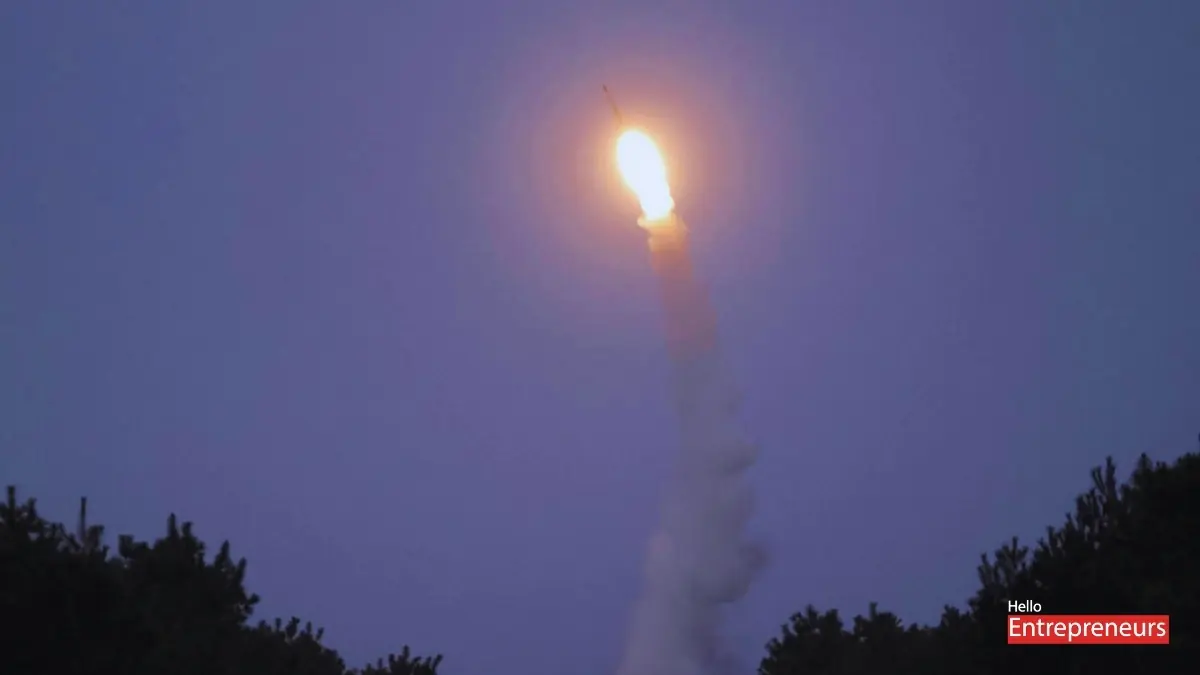
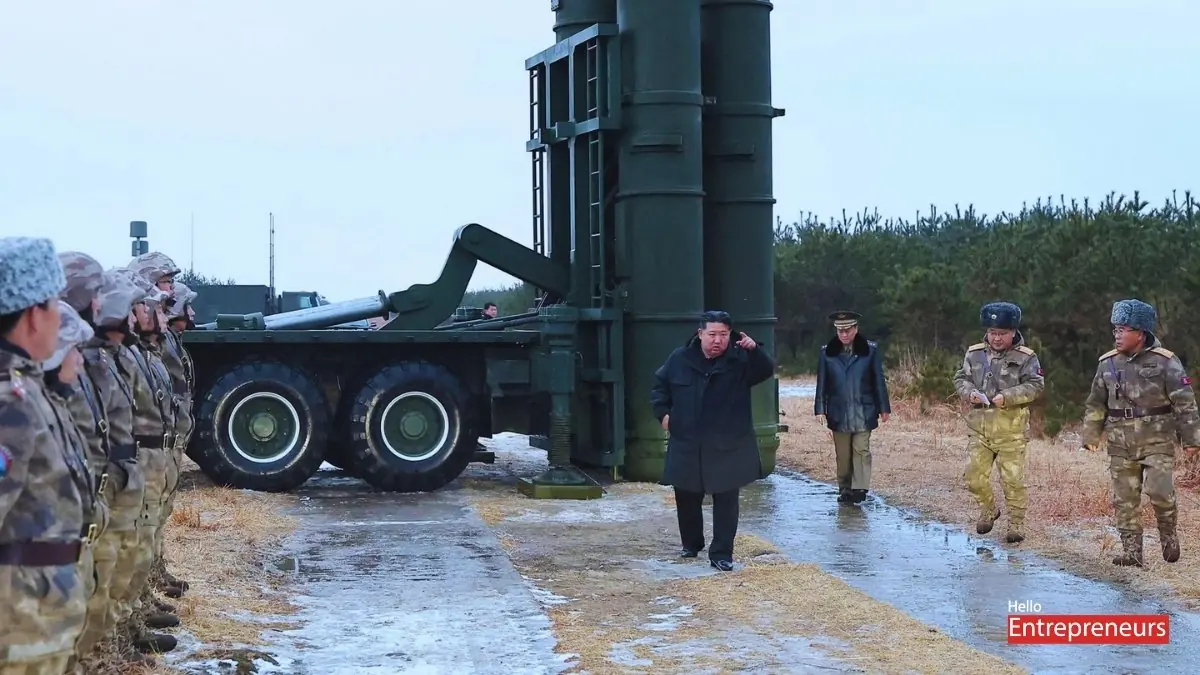
In recent years, North Korea has tested solid-fuel missiles, submarine-launched ballistic missiles, and other advanced systems. Each test fits a pattern. Build redundancy. Reduce vulnerability. Increase bargaining power.
The nuclear-powered submarine is the next logical step. Not flashy. Not loud. Just persistent.
Kim Jong Un is not chasing novelty. He’s building insurance.
What Happens Now?
There are still gaps. Big ones.
What weapons will the submarine carry? How quiet is it? How reliable is the reactor? How seasoned are the crews who will operate it?
Those answers may never come cleanly. North Korea thrives on ambiguity. It keeps adversaries guessing, debating, recalculating.
But the intent is no longer ambiguous. The images were released for a reason. They were meant to be seen. To unsettle. To signal resolve.
And they have done exactly that.