



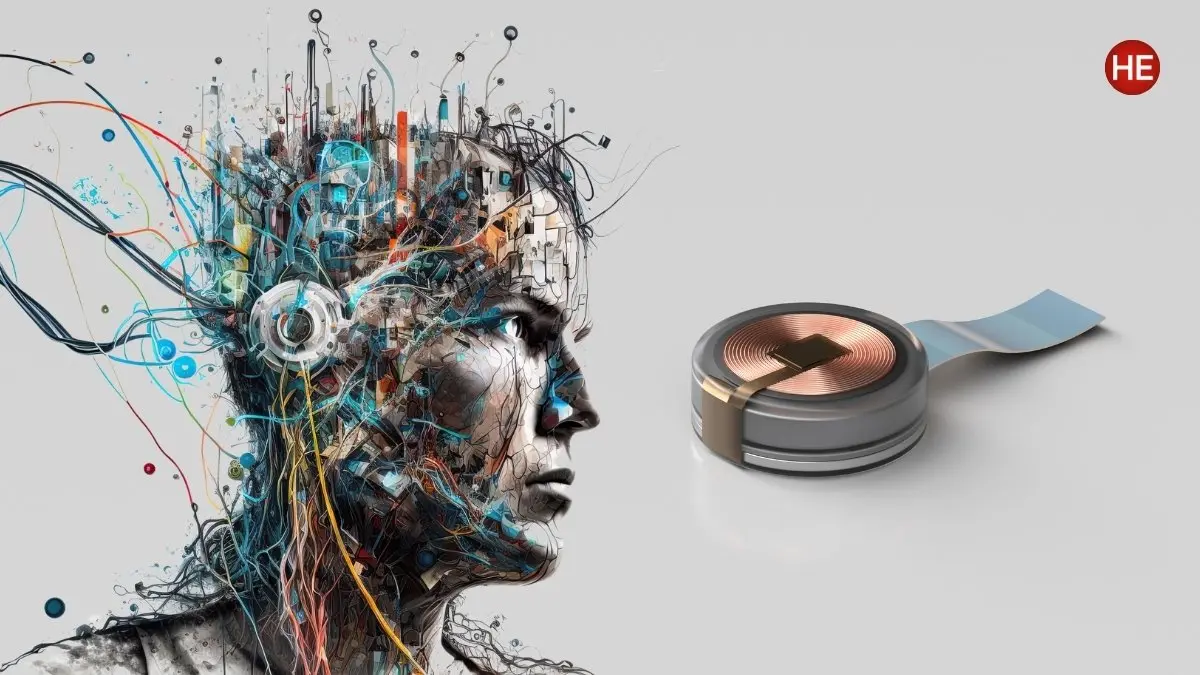
New Delhi: Eighteen months ago, Noland Arbaugh became the first human being to live with Elon Musk’s Neuralink brain chip. Today, he laughs about being “technically a cyborg,” but the transformation is anything but a joke.
A swimming accident in 2016 left Arbaugh paralyzed below the shoulders. He could think and speak, but every other bit of autonomy was stripped away. “I just had no purpose… staring at walls,” he says. Fast forward to 2025: he studies neuroscience, schedules his own interviews, and even plays Mario Kart with his dad, controlling it all through thought alone.
The Surgery That Changed Everything
In January 2024, surgeons at Phoenix’s Barrow Neurological Institute drilled into Arbaugh’s skull and let a Neuralink-designed robot get to work. In under two hours, the robot embedded a chip and threaded more than 1,000 ultra-fine electrodes into Arbaugh’s motor cortex, the brain region that controls movement.
These electrodes pick up brain signals, process them, and send wireless commands to digital devices. Translation: think about moving a cursor, and it moves. No hand needed.
On his very first try, Arbaugh broke a world record for BCI (brain-computer interface) cursor control, beating the 2017 benchmark for speed and accuracy. “It was very, very easy to learn how to use,” he recalls.
Unlike rival devices that still rely on clunky wires sticking out of the skull, Neuralink’s chip is wireless. Arbaugh recharges it every five hours with a coil sewn into his baseball cap. Yes, he literally powers up his brain implant by wearing a hat.
A Crowded Race, Musk-Style Hype
Neuralink isn’t the first or only player in the BCI game. Scientists have been at this for 50 years. Around 80 people worldwide have received similar implants from companies like Synchron (which uses blood vessels instead of brain surgery) and Blackrock Neurotech (whose implants are still wired).
What makes Neuralink different is scale and swagger. Its chip boasts 1,000+ electrodes versus the dozens found in most competitors. That means denser data and smoother control. But there’s also a tradeoff: Neuralink goes straight into the brain’s movement hub, making it more invasive than Synchron’s “go through the vein” approach.
Critics worry Musk is rushing. After all, this is the man who promised Teslas would drive themselves “next year” every year since 2016. But Musk insists Neuralink is moving slower than he’d like, precisely to avoid catastrophe. “We’re very cautious with the Neuralinks in humans,” he told staff.
A Second Life, Powered By Thought
Arbaugh uses the chip for about 10 hours a day. He games, reads, studies, and handles his social media. He’s back in community college, chasing a neuroscience degree. He’s also building a paid speaking business.
“I feel like I have potential again,” he says. “I guess I always had potential, but now I’m finding a way to fulfil it.”
His daily rhythm is unrecognizable from the years he lost to paralysis. Before Neuralink, he’d stay up all night, sleep all day, and avoid bothering people. Now he laughs about being “so busy all the time.”
The Risks No One Forgets
Being first isn’t just glamorous; it’s risky. Weeks after surgery, some threads in his brain pulled back, reducing chip performance. Arbaugh deliberately kept quiet until Neuralink figured out a fix. “Revealing that then would’ve been rash… I love this thing,” he says.
The consent forms that his mother read before surgery listed every imaginable disaster. She couldn’t get past the first page. Still, his family backed him. “I hadn’t been excited about anything in years. They just wanted to help me chase it.”
Neuralink covers his surgery, device, and all travel costs. He isn’t paid to be a lab rat, though the company has compensated him for talks. For Arbaugh, that was enough. “Even if it didn’t work, even if it went terribly wrong, I knew it would help someone down the road.”
Public Face Of A Private Trial
Most trial participants prefer anonymity. Not Arbaugh. In February 2024, he wheeled onto a stage packed with Neuralink employees, grinning under his red Texas A&M hat. “Hello, humans,” he said, and became a public figure overnight.
The attention hasn’t been gentle. His X account was hacked. A fake police tip brought armed officers to his home. But Arbaugh has no regrets. “I wanted to show people this was safe. I think it’s one of the biggest leaps in tech in a long time.”
He insists Neuralink never censors him. No NDAs. No gag orders. “They encourage me to say whatever I like.”
Musk, The Inevitable Shadow
Of course, this is Musk’s project. That means added scrutiny, hype, and memes. Arbaugh has spoken to him three times and sounds distinctly unimpressed: “Cool dude… super impressive, but at the end of the day just another guy.”
Still, Musk’s presence makes Neuralink impossible to ignore. Investors have poured in hundreds of millions. Regulators in the U.S., UK, Canada, and UAE have opened doors. The company is already trialing “Blindsight” for restoring vision, and working on robotic arms that patients could control, or even feel, through the chip. Musk promises people will one day “inhabit an Optimus robot.” Sounds insane, but then again, so did landing rockets.
Global Critics, Global Stakes
Neuralink isn’t without detractors. Former staff complain of Musk’s trademark burnout culture, long hours, and high turnover. Animal rights activists accuse the company of cruel monkey testing. Neuralink denies abuse, saying it works “as humanely as possible.” Arbaugh backs them, calling the claims exaggerated.
But here’s the bigger point: if Neuralink works, it could redefine disability. A paralyzed man controlling his life with thought? That’s not hype, that’s visible proof. And Arbaugh is proof that people will volunteer, even at great risk, because the payoff is freedom.
Why This Matters In India
Here’s where it gets interesting for us. India has 26 million people living with disabilities. Wheelchairs are still absent in most railway stations. Prosthetics cost lakhs, often out of reach. If Neuralink, or an Indian equivalent, were ever made affordable, the impact here would dwarf anything in Silicon Valley.
Imagine BCIs at AIIMS, Apollo, or even district hospitals. Imagine Indian engineers, already world leaders in chip design, building low-cost brain implants. Forget sci-fi: this is the kind of leap Bharat needs.
And yes, we’d do it cheaper. Musk may make the headlines today, but India has the people who can make it practical tomorrow!
Watch the latest update from the Neuralink team. pic.twitter.com/mQzpTehqov
— Neuralink (@neuralink) June 27, 2025
Arbaugh’s Reality Check
For now, Arbaugh is content with small wins. Playing Mario Kart with his dad. Reading textbooks for class. Running a business. Living with purpose.
“I definitely didn’t expect this to ever happen,” he admits. “But I see now, technology is going to solve more than medicine ever could.”
Maybe that’s the real lesson of Neuralink’s first patient: the future won’t just be about curing disease with drugs. It’ll be about wiring brains to machines, and seeing what happens.
And if you think that sounds terrifying, so did flying, so did heart transplants, so did the internet.
Also Read: AI’s Data Appetite Poses a Real Threat to Your Privacy

