



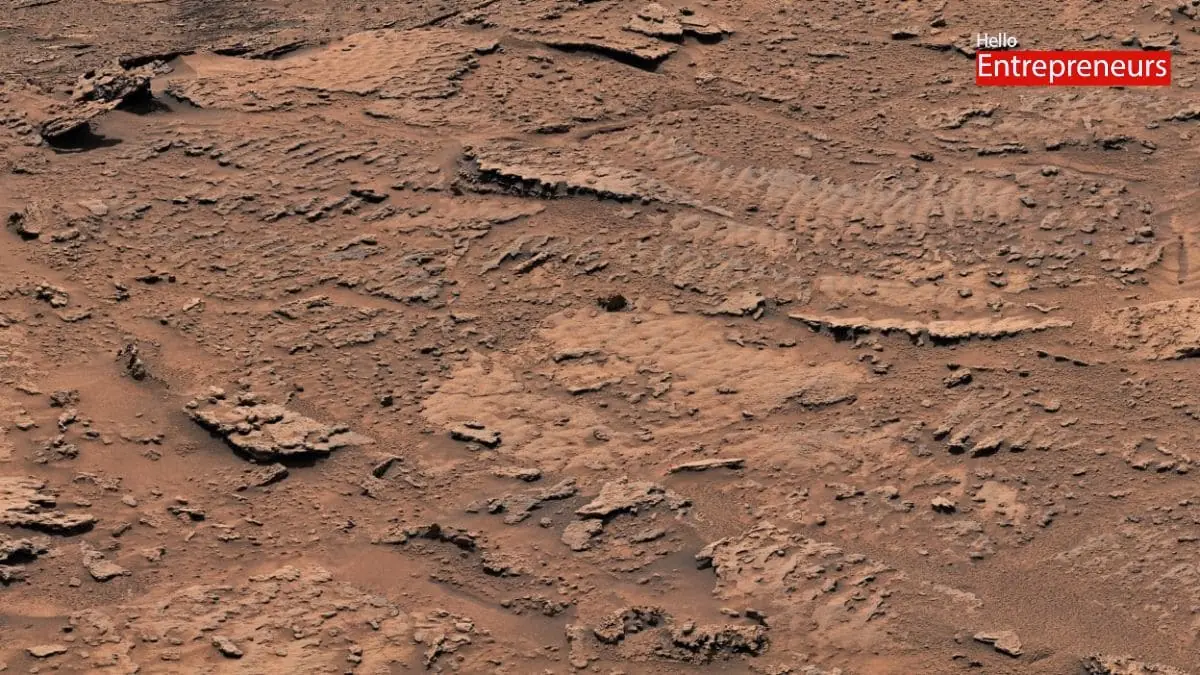
New Delhi: NASA Curiosity Rover has captured the first-ever detailed images of a section of Mars that scientists believe offers strong evidence of the planet’s watery past. NASA, the Red Planet, once had flowing rivers, lakes, and possibly even an ocean. However, over time, Mars lost its surface water and became the desert people see today.
The latest images taken by Curiosity reveal striking features crisscrossing low ridges arranged in a distinctive boxwork pattern that spans several miles of a Martian Mountain. These formations, scientists say, offer dramatic evidence of ancient groundwater activity.
Exploring an area previously only seen from orbit, the Curiosity rover has found dramatic new evidence of ancient groundwater. The rover is using its drill to snag samples of rock that will give geologists new clues to how this area formed. https://t.co/2qQR169QeE pic.twitter.com/zZJzaMwW8H
— NASA Mars (@NASAMars) June 23, 2025
NASA shared the images and accompanying video in a blog post on Monday, highlighting their significance in understanding Mars’s climate history. The boxwork ridges are located on Mount Sharp, a mountain composed of many layers formed during different periods of the ancient Martian climate. As the Curiosity rover climbs this mountain, it is essentially exploring Mars’s environmental history layer by layer in search of signs that water once existed and whether it could have supported microbial life.
The rover is currently investigating a layer rich in salty minerals, specifically magnesium sulfates. These minerals typically form as water evaporates, suggesting that this part of the mountain was created during a time when Mars’s climate was becoming increasingly dry.
Remarkably, despite the drying conditions, the presence of boxwork patterns indicates that groundwater still existed at the surface, leaving behind physical changes that are visible even today. NASA, these new findings add to growing evidence that Mars once had conditions suitable for life and help researchers better understand the planet’s complex geological and climate history.