



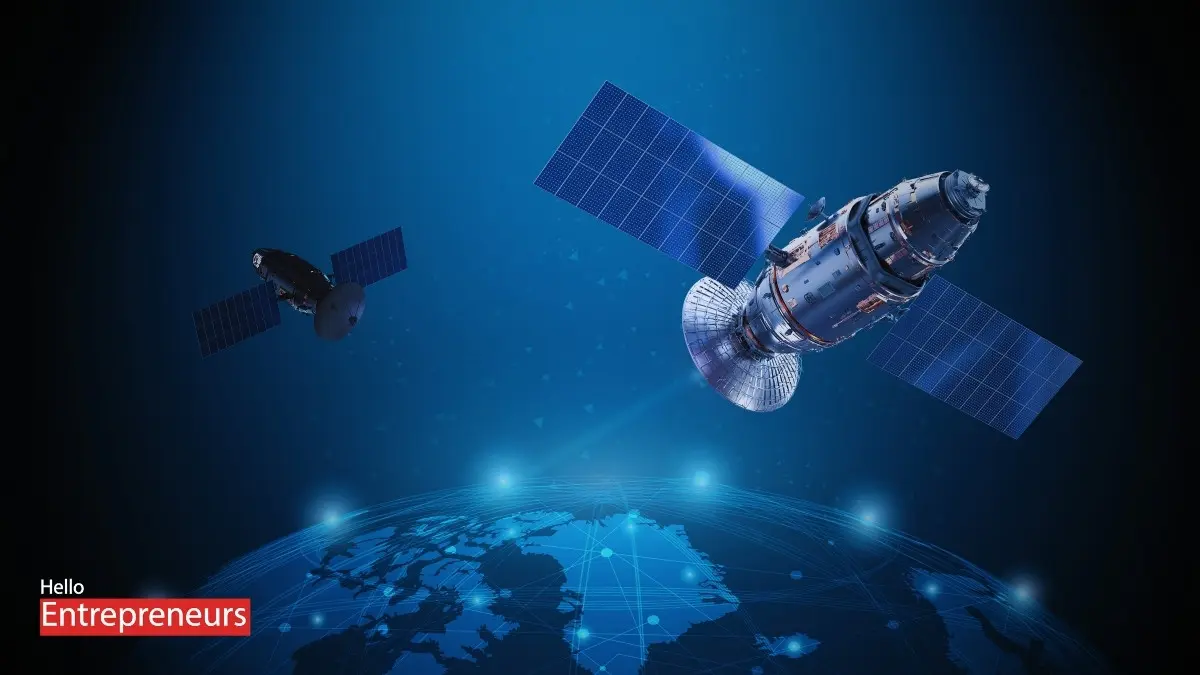
Mumbai: A quiet revolution is brewing, above our skies and behind locked lab doors. One of the world’s most seasoned defense giants, Lockheed Martin, has set its sights on something both ambitious and eerily futuristic: a satellite that can track and kill a hypersonic missile in flight. And they want it up and tested by 2028.
It’s not every day you hear talk of space-based interceptors outside science fiction, but the urgency isn’t imagined. Global military strategy is evolving fast, and the threats now move faster than ever. For Lockheed Martin, this isn’t about prestige; it’s survival in a defense sector where billion-dollar decisions hang on split-second timing.
A Cold War Dream, Reheated with Modern Firepower
If the phrase “missile-killing satellite” feels like déjà vu, you’re not wrong. America flirted with this very idea back in the 1960s. That first attempt, codenamed BAMBI (yes, seriously), was scrapped by 1963 due to costs. Then came Reagan’s “Star Wars” push in the 1980s, which introduced the now-defunct Brilliant Pebbles system, a constellation of satellites meant to shoot down enemy missiles mid-flight.
Fast-forward to today, and things have gotten far less theoretical. Russia and China have already fielded hypersonic weapons, ultra-fast, highly maneuverable missiles that don’t follow predictable arcs. These aren’t your grandfather’s nukes. These are engineered to outwit nearly every defense system designed so far.
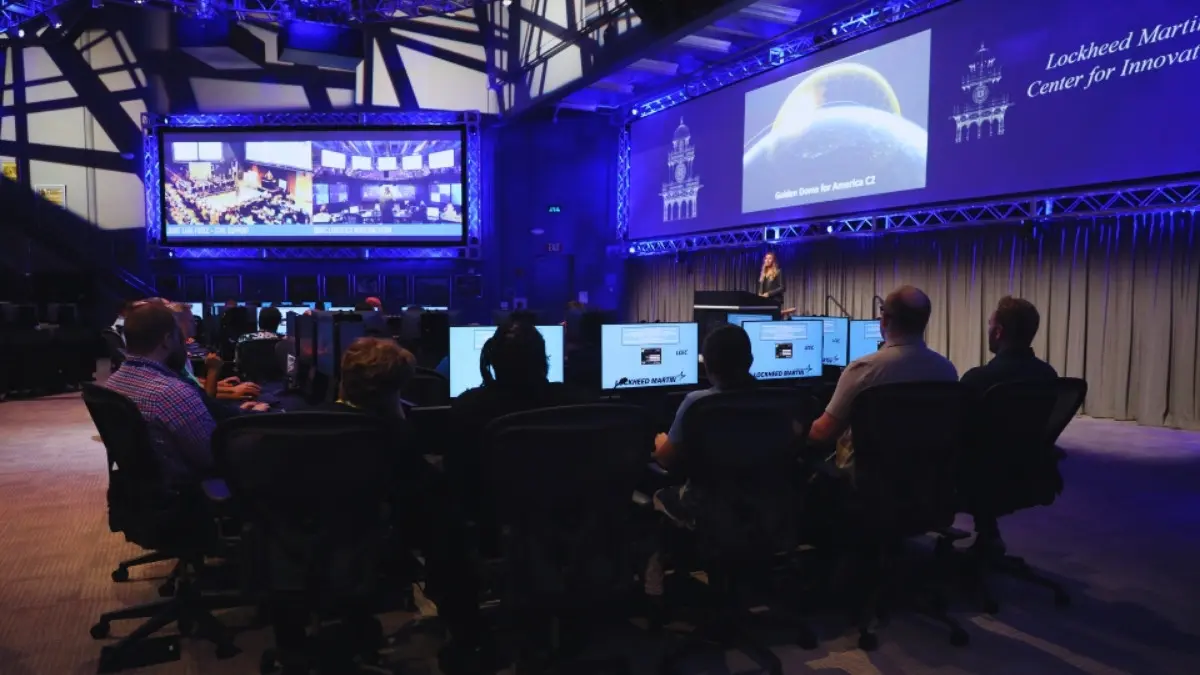
What’s different now? For starters, the tech has caught up. Lockheed’s new “prototyping hub,” revealed just this week, allows the company to digitally test futuristic space-defense concepts without waiting on slow, physical builds. According to Amanda Pound, who leads advanced program development at Lockheed, the company is eyeing “a fielded on-orbit demonstration” within three years. “The capability is there,” she told reporters on Monday. “We’re ready to support.”
But let’s not sugarcoat it. This isn’t just a tech challenge, it’s a geopolitical and industrial one too.
The Golden Dome: Unfinished but Unavoidable
Lockheed’s satellite plans aren’t floating in isolation. They’re part of a broader vision called the Golden Dome, a U.S. missile defense shield that’s still taking shape. The term might sound poetic, but it reflects something quite literal: a future where multiple layers of tech, from sea-based radars to high-flying kill vehicles, interlock to protect American soil.
As of now, the Pentagon is still sketching out the full blueprint. General Michael Guetlein, recently tapped to lead the effort, is expected to issue more formal guidance within the next couple of months. The goal? Give defense contractors enough direction to act, without choking innovation with red tape.
Despite the uncertainty, space-based interceptors are widely expected to be a key component of the final plan. After all, stopping a missile in space, before it enters any country’s airspace, is the holy grail of modern defense.
Still, that vision doesn’t come cheap or easy. Cost debates continue to swirl, and not everyone’s convinced space is the best arena to play missile tag. But with adversaries actively testing and even using hypersonics in real combat, doing nothing no longer feels like an option.
Enter SpaceX: The Upstart Shadow
Now, any conversation about America’s space defense today would be incomplete without mentioning SpaceX. The Elon Musk-run juggernaut isn’t just building rockets; it’s now building a reputation in defense, too. With lower launch costs and rapid deployment capability, SpaceX has surged ahead in the race to blanket the skies with satellites.
In fact, some believe SpaceX has the upper hand in the Golden Dome competition, on paper, at least. But inside Washington, Lockheed still commands deep trust. Its track record, connections, and experience in integrated defense systems keep it very much in the game.
And here’s the kicker: Lockheed doesn’t see this as a one-winner race.
Pound offered a rare moment of candid realism, saying, “Based on the sheer numbers they’re asking about, it’s going to take more than just one big prime. It might take multiple of us, as well as a lot of the rest of the industry.”
It’s the kind of humility you don’t always hear from defense titans, and perhaps that’s exactly what will keep Lockheed in the race.
Ground, Air, Space, and Everything in Between
Even as it reaches for the stars, Lockheed hasn’t forgotten its roots. Company executives were quick to emphasize the power of integration, tying together various defense layers, not just focusing on that one silver bullet in orbit.
From Terminal High Altitude Area Defense (THAAD) to PAC-3 interceptors, from space-based missile tracking to next-gen command-and-control systems, Lockheed is stitching together a quilt of overlapping capabilities. They’ve also opened the door to smaller tech partners through the new prototyping lab, hoping to speed innovation by breaking away from the traditional contractor silo.
You could say Lockheed’s not just selling missiles anymore. They’re selling coordination.
One Eye on the Sky, One Eye on the Clock! Lockheed Martin
Three years. That’s the window Lockheed Martin has given itself to put something in orbit that can take down a hypersonic missile. No easy feat, but then again, national defense doesn’t reward easy.
Whether the Golden Dome becomes a functional fortress or another over-budget dream remains to be seen. But the race has clearly begun, and as the world watches, and worries, Lockheed Martin is betting big that it can turn history’s near-misses into tomorrow’s milestones.
And if they succeed? We might just enter a future where the next major conflict never happens, because it never has the chance to reach us.