



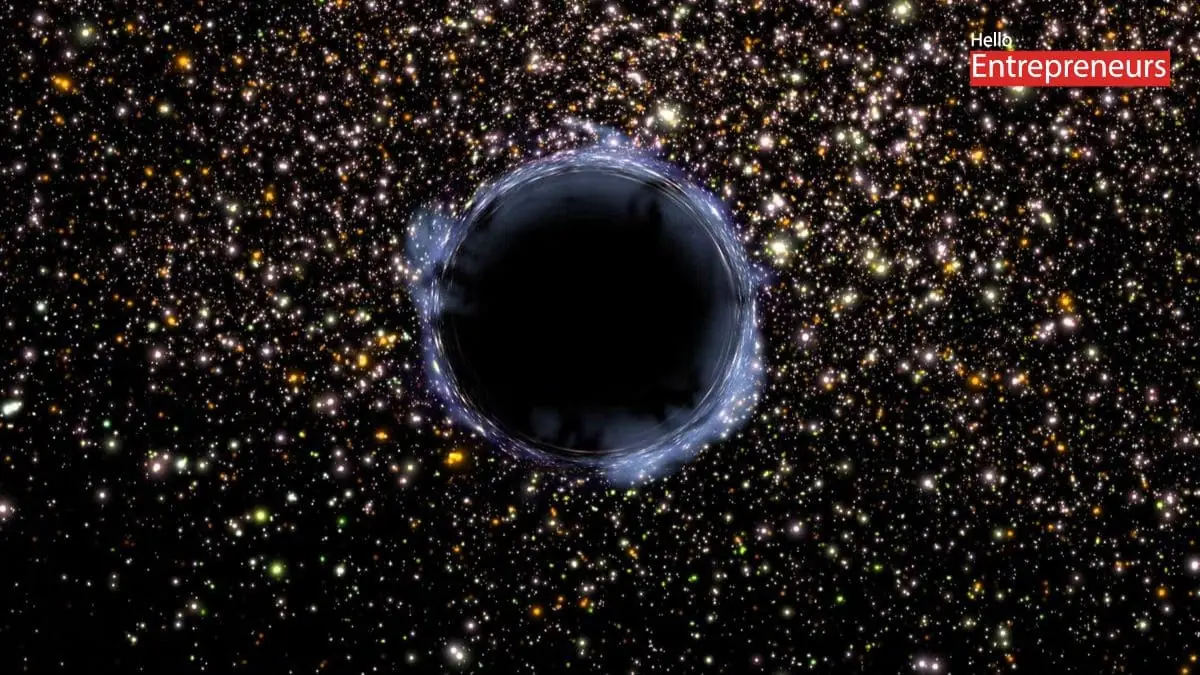
New Delhi: The wonders of space continue to amaze scientists and space lovers alike. A discovery using NASA’s James Webb Space Telescope has generated new excitement and curiosity among the scientific community. It suggests that the universe might be contained within a vast black hole, prompting researchers to reconsider their understanding of the universe and its origins.
In a new study, researchers at Kansas State University found a surprising pattern in how galaxies spin. Using images from the James Webb Space Telescope, they studied 263 ancient galaxies, some of which were observed 300 million years after the Big Bang. They discovered that about 60% of these galaxies spin clockwise, challenging the previously held belief that galaxy Spain was random.
The fact that many galaxies spin in the same direction is a significant discovery. It could mean the universe has more order than was initially thought. This finding may lead scientists to new ideas about how the universe was formed. It also suggests that something might have caused many of these galaxies to spin in the same direction.
However, the hypothesis that our universe might be located inside a black hole could profoundly alter how people perceive space. It presents challenges to theories about the origins. If potential scientists would need models to explain how the universe came to be in this situation.
This discovery also highlights the importance of continued exploration of specifications. As people improve tools like the James Webb Space Telescope, people get closer to amazing discoveries about the universe. The search to understand how the universe works pushes scientists to learn more and question what people know about reality.
One possible limitation of the study is observational bias, such as the Doppler effect, which can alter how people perceive the movement of the galaxy. This might mean that scientists will need to use the James Webb Space Telescope to get more accurate results. If this is correct, the way galaxies appear might not prove to be a real pattern in the universe. It could simply be an indication of how challenging it is to make accurate space observations.

