


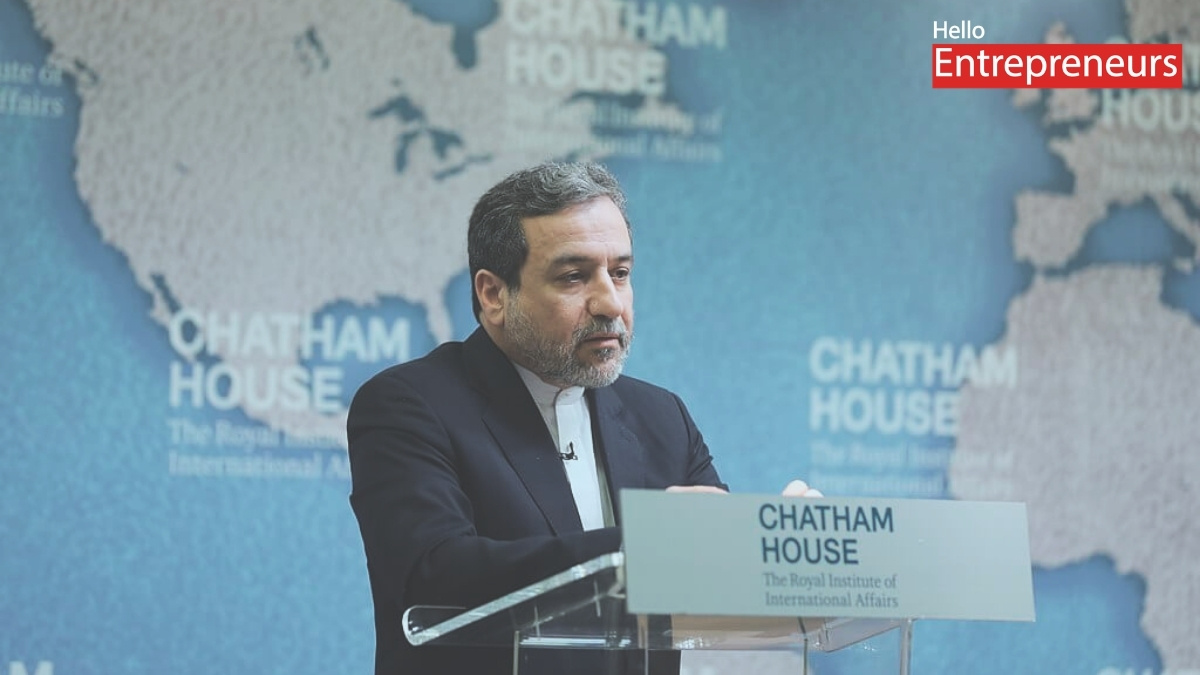
New Delhi: Meanwhile, as the crisis in West Asia escalates, Iran has publicly blamed the United Arab Emirates for “fueling military operations” in its conflict with the United States and Israel, further complicating regional diplomatic relations and adding to the threats to global shipping.
Abbas Araghchi, Iran’s foreign minister, said this at the meeting of foreign ministers of the BRICS group in New Delhi on Thursday, accusing the UAE of being an “active partner” in the attacks against Iran. Reuters quoted Araghchi as saying Abu Dhabi was directly involved in military operations and that the dispute had been linked to other differences within the BRICS grouping over the conflict.
The UAE hasn’t officially commented on the latest allegations, but earlier this week, reports suggested that Abu Dhabi had refused allegations of coordination with the Israeli leadership during the conflict.
The sensitivity of the situation stems from its location at the head of the Strait of Hormuz, one of the world’s most important sea lanes for trade. Traffic on the waterway is extensive, accounting for much of the world’s crude oil transportation, and any unrest in the area is a cause for immediate concern to global shipping lines and the energy markets.
Iran, at the same BRICS meeting, flagged potential future modifications to international shipping routes through the Strait of Hormuz. DPI stated that Iran is preparing a new “protocol” that may incorporate a “financial mechanism” related to navigation and maritime security services in the Gulf region. In Iranian authorities’ records, Iran has provided “free of charge” security-related support to vessels navigating through the strait in the past.
The comments are coming as tensions at sea in the Gulf are rising. During the BRICS meeting, India expressed concern over disruptions to “safe, unimpeded maritime flows,” and External Affairs Minister Subrahmanyam Jaishankar talked of the need for secure maritime trade routes for economic stability, Reuters reported.
The attacks came as a concern to India as its own commercial ship was attacked off the coast of Oman earlier this week. After the incident, the Ministry of External Affairs announced that none of the ship’s crew members were injured. The ship was attacked as tensions escalated around the Strait of Hormuz and shipping routes, the reports said.
Maritime security agencies were on high alert for military activity in the region around the strait, as another vessel was seized near UAE waters, according to the Associated Press.
The Strait of Hormuz is vital to international energy trade, so that’s why the world is watching. A few days are enough to affect crude oil prices, freight insurance premiums, and shipping schedules, even with a minor disruption. Oil markets were already volatile this week when traders responded to concerns about the potential for further escalation of the conflict and the possible curtailment of maritime shipping and travel.
Meanwhile, Iranian media reports indicated that Chinese naval ships had still been transiting the Strait of Hormuz since May 13 as part of arrangements made with Tehran. The development underscores Iran’s potential efforts to control shipping entries, suggesting that Tehran is trying to balance its trade relations with a few partners amid growing tensions in the region.
Also, diplomatically, the situation is not easy for the BRICS countries. The public accusations come amid a multilateral meeting aimed at highlighting cooperation among emerging economies, and Iran and the UAE have recently joined the larger BRICS grouping.
But divisions over the West Asia conflict have already hampered efforts to reach a consensus on joint statements over the crisis, Reuters reports.
The developments have strategic and economic significance for India. India imports over 85% of its crude oil needs, much of which comes via the shipping ports of the Gulf. Please note that a long-term disruption of Hormuz could have a significant impact on freight costs, domestic fuel prices, and the stability of the freight supply chain across various sectors.
However, the immediate external interest in the war centers on maritime security and diplomatic standoffs, and on whether the conflict is a localized event or spreads into a more regional war involving more Gulf states.
Currently, governments, shipping companies, and energy markets are keeping a close eye on the Strait of Hormuz, knowing that any disruptions in the area can significantly impact energy markets and global trade in a matter of days.

