



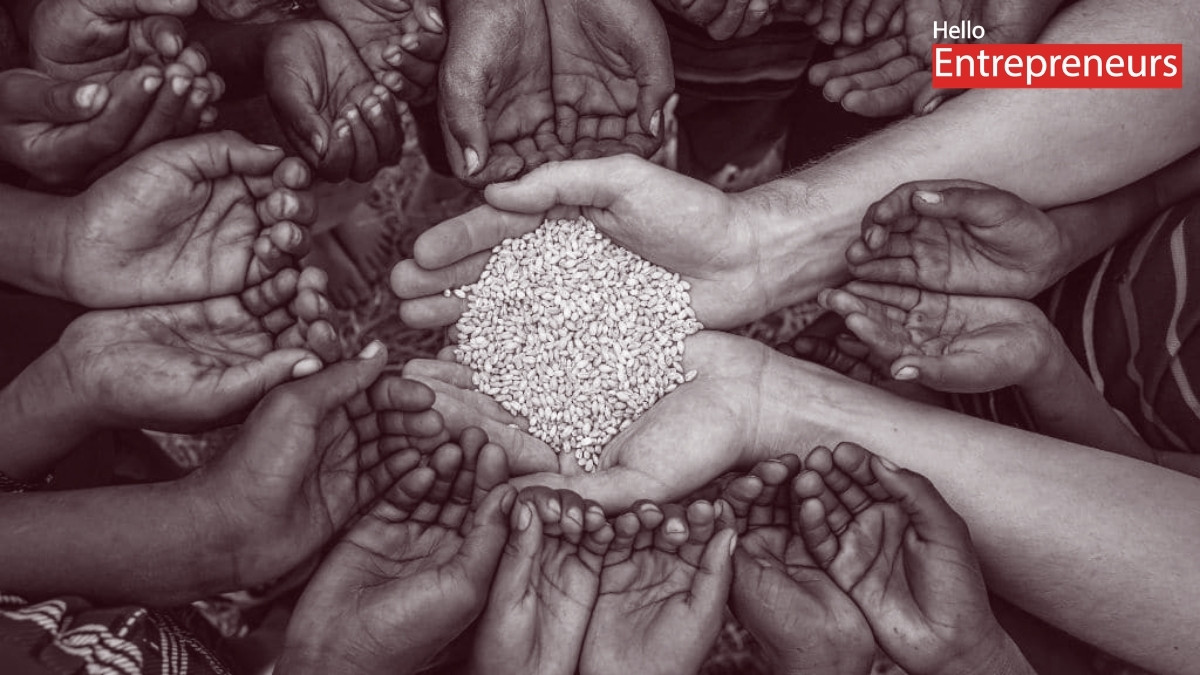
New Delhi: A major disruption in the global fertilizer supply chain, driven by ongoing conflict in the Middle East and severe strain in the Strait of Hormuz, is now putting global food production under pressure. Industry estimates suggest the situation could affect output equivalent to nearly 10 billion meals per week.
Experts say the blockage of this key shipping route has already cut nitrogen fertiliser production in the region by more than 50%, creating immediate stress on global agriculture at a crucial time, with the 2026 spring planting season underway in many parts of the world.
The critical choke point
The Strait of Hormuz sits at the centre of global energy and food supply chains. It handles around 30% to 35% of global urea exports and 20% to 30% of ammonia exports, both essential for nitrogen-based fertilisers used in farming.
Since late February 2026, shipping traffic through the strait has dropped by more than 95%, sharply disrupting normal trade flows.
Natural gas is another key pressure point here. It accounts for close to 90% of fertiliser production cost, and with gas output disrupted and prices rising as much as 70%, production across several facilities has slowed or stopped.
In Qatar, the Ras Laffan Industrial City has already declared force majeure and halted urea production after regional attacks disrupted operations.
Impact on global agriculture
The timing of the disruption is particularly difficult, coming right during peak planting season in the Northern Hemisphere.
According to experts from the Food and Agriculture Organization (FAO), even small cuts in nitrogen usage can lead to large drops in crop yields. In more extreme cases, global production could fall by up to 50% in a single season if shortages persist.
Prices are already moving fast. Nitrogen fertilisers like urea have jumped around 28% in just three weeks, while some US markets have seen spikes of nearly 70% in a month.
Farmers are also adjusting on the ground. With both fertilizer and fuel costs rising, many are shifting crop choices, moving away from input-heavy crops like corn and leaning more towards soybeans and other lower-cost alternatives.
Humanitarian concerns rise
The United Nations World Food Program (WFP) has warned that if the crisis continues through June 2026, as many as 45 million additional people could be pushed into acute hunger.
The impact, however, will not be equal.
In developed economies like the US and UK, the pressure will likely show up as higher grocery bills. But in import-dependent regions such as sub-Saharan Africa, South Asia (including India and Bangladesh), and parts of Latin America, the risk is much sharper, with concerns about actual food availability.
India is being closely watched in this context. As the world’s second-largest fertilizer user, it depends on the Gulf for nearly 70% of its urea imports. Even with government subsidies crossing ₹2 lakh crore, anxiety is rising among small farmers ahead of the key Kharif planting season.
Outlook
The biggest question now is how long the disruption in the Strait of Hormuz will continue. Unlike crude oil markets, fertilizer markets do not have meaningful strategic reserves, making them more exposed to sudden shocks.
Some analysts expect trade flows to stabilise by mid-year if tensions ease. Others warn that even if supplies recover, the effects on prices and food inflation could continue for months due to delayed impacts on farming cycles.
For now, global food security is increasingly linked to a narrow maritime route, and what happens there is already beginning to ripple far beyond energy markets, into the everyday cost of food for millions.

