



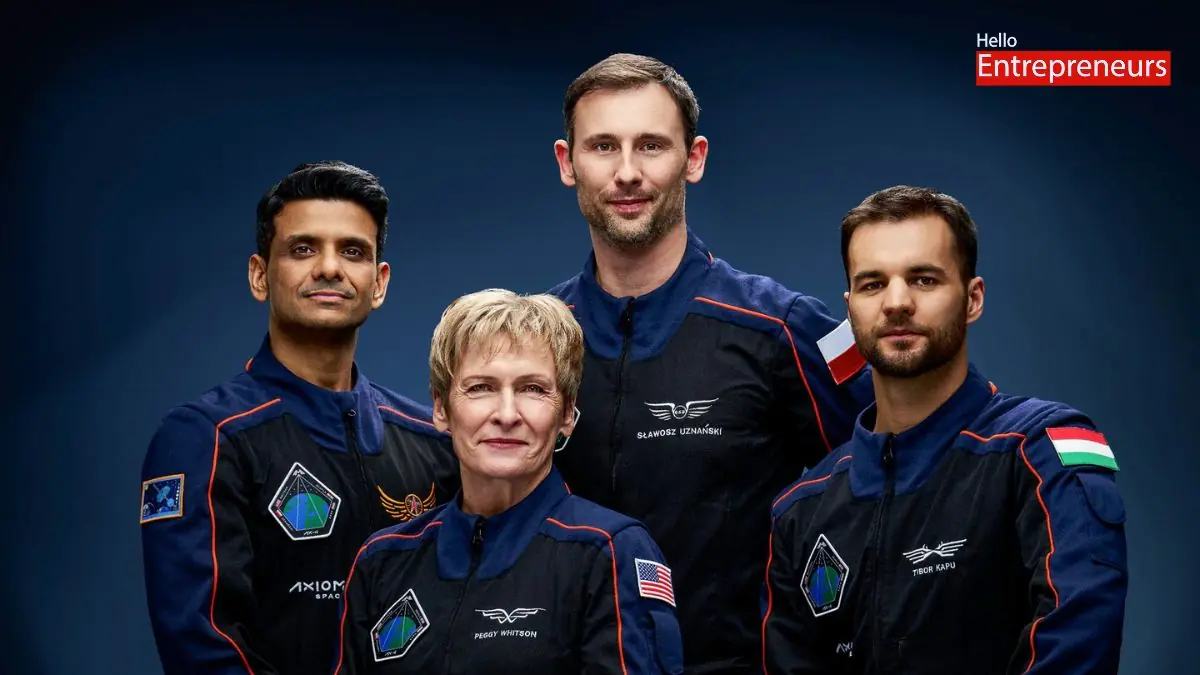
New Delhi: Shubhanshu Shukla becomes the first Indian astronaut who goes into NASA’s Axiom-4 mission. This Axiom-4 mission was launched at 2:31 am Eastern Time, 12:01 pm IST Wednesday, and India’s Group Captain Shubhanshu Shukla, with three of his crewmates, soared into space. Axiom-4 designated pilot Shubhanshu Shukla is only the second Indian to reach space and the first to serve in a critical operational role aboard an International Space Station mission.
The mission lifted off aboard a SpaceX Falcon-9 rocket from Launch Complex 39A at NASA’s Kennedy Space Center in Florida. The crew will now travel to the orbiting laboratory on a new SpaceX Dragon spacecraft. The targeted docking time is approximately 7:00 am Eastern Time, which corresponds to around 4:30 pm IST on Thursday, June 26.
For this mission, NASA is responsible for integrated operations, which begin during the spacecraft’s approach to the space station, continue during the crew’s stay aboard, as the orbiting laboratory conducts science, education, and commercial activities, and conclude once the spacecraft departs from the station.
As of now, while the launch and separation of the Dragon capsule have been successful, the journey to the ISS is not a straight line. Over the next 24 to 28 hours, Dragon will execute a series of engine burns using its onboard thrusters. These raise and adjust its orbit, allowing it to phase into alignment with the space station’s path.
While India sent its first astronaut to space, Wing Commander Rakesh Sharma, four decades ago, Shukla’s mission represents a significant leap forward. He’s not merely flying to space; he’s serving as the pilot on one of the most research-intensive commercial missions the ISS has ever attempted.
Shubhanshu Shukla’s responsibilities include monitoring critical flight systems, executing manual docking procedures as needed, and supporting crew safety during launch and re-entry. His extensive preparation spans months of training with Axiom, NASA, ESA, and SpaceX for this mission, as well as Russia’s Gagarin Centre as part of the Gaganyaan program, building on over 2,000 flying hours as a test pilot.

