



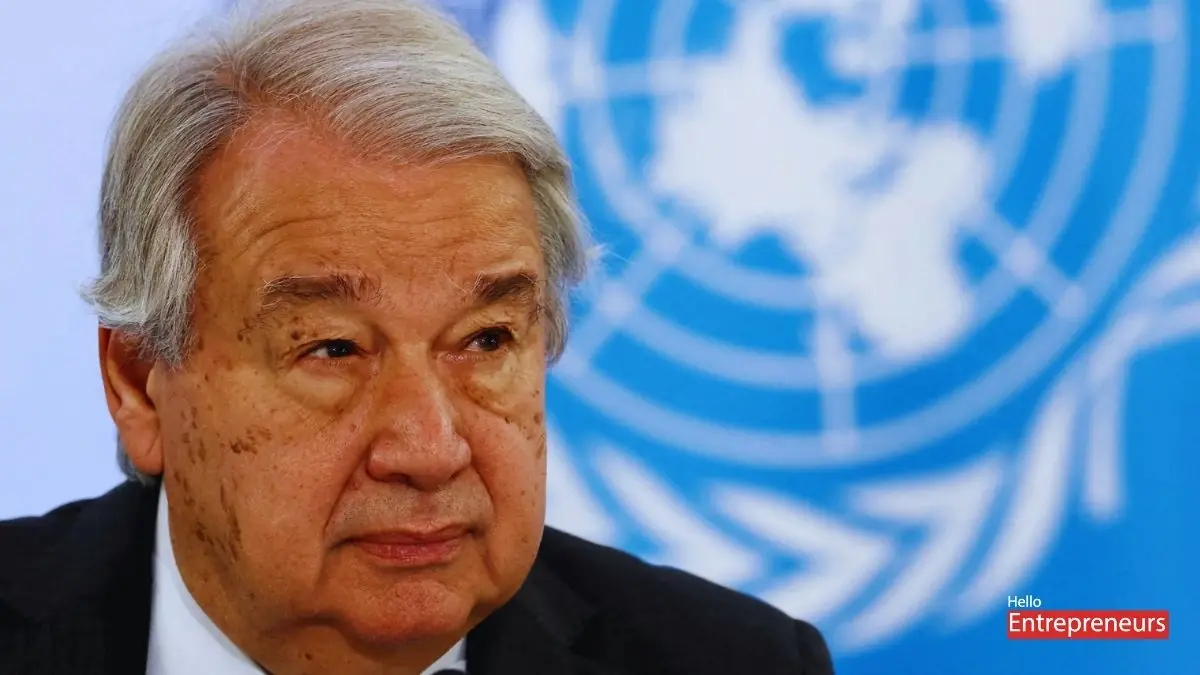
New York: Eighty years after the United Nations first met with hope in its voice, its secretary general is back at the same podium with a warning. Global cooperation, António Guterres says, is under attack by forces that no longer believe in playing together.
In January 1946, delegates from 51 countries gathered in London’s Methodist Central Hall for the United Nations’ first General Assembly. Fresh from a devastating world war, they focused on one overriding goal: disarmament, especially the elimination of atomic weapons.
Fast forward eight decades. The building is the same. The mood is not.
Speaking at the 80th anniversary of that historic meeting, UN Secretary General António Guterres warned that the world is sliding into a global cooperation crisis, driven by militarisation, climate denial, digital manipulation and a weakening commitment to international law.
Look around, he suggested, and the evidence is everywhere.
Guterres did not mince words. He spoke of “powerful forces lining up to undermine global cooperation” at a moment when nations need it most.
The original promise of the UN rested on a simple idea: problems that cross borders need shared solutions. War, hunger, disease, climate, technology. None of them respect passports.
Yet today, cooperation is being treated like a luxury item. Optional. Negotiable.
Instead of trust, countries are doubling down on weapons. Instead of dialogue, they are retreating into blocs. Instead of rules, raw power is back in fashion.
For India, a country that has long argued for strategic autonomy while championing multilateral forums, the warning lands close to home. New Delhi relies on global stability for trade, energy security and climate resilience. A fractured system raises costs for everyone, especially emerging economies.
One statistic from Guterres’ speech cuts through the noise.
Global military spending reached $2.7 trillion last year.
That figure is not abstract. It is over 200 times the UK’s current aid budget. It is equivalent to more than 70 percent of Britain’s entire economy. And it keeps climbing.
This surge comes at a time when many governments publicly claim they cannot afford climate action, humanitarian relief or development finance. Apparently, missiles still make the cut.
Guterres avoided naming specific countries, but the message was clear. The world is drifting into a new arms race, one that feels disturbingly casual about the consequences.
For countries like India, which balances defence modernisation with development needs, this imbalance is familiar. Guns get funded fast. Schools and hospitals wait.
In 1946, the fear was nuclear annihilation. That fear has not vanished. It has simply been joined by threats that earlier generations could not imagine.
Guterres pointed to cyberspace as a new battlefield. Algorithms that reward falsehoods. Platforms that amplify hatred. Digital tools that help authoritarians tighten control without firing a shot.
Democracy, once threatened by tanks, now faces pressure from code.
India’s own debates around misinformation, social media regulation and electoral integrity echo this concern. Digital power, unmanaged, can quietly hollow out institutions long before anyone notices.
Then there is the climate crisis. The slow-motion emergency that keeps accelerating.
“As the planet broke heat records, fossil fuel profits continued to surge,” Guterres said. The sentence lands hard because it is fact, not rhetoric.
Extreme heat, erratic monsoons, floods and droughts are already reshaping life across South Asia. India feels this directly, from water stress to agricultural volatility.
Yet global action remains timid. Targets are announced. Deadlines are pushed. Meanwhile, profits flow.
The global cooperation crisis is visible here too. Climate breakdown cannot be solved by one country acting alone. But collective action keeps getting postponed by short-term interests.
Adding to the strain is money. Or rather, the lack of it.
The UN is facing chronic funding difficulties, largely driven by decisions from its biggest historical donor, the United States.
Washington has announced it will allocate just $2 billion to UN humanitarian assistance, a fraction of previous contributions. The message that came with it was blunt: adapt, shrink or die.
Soon after, the US announced withdrawals from multiple UN agencies and its key climate treaty.
The impact is immediate. Experts warn the funding cuts will shrink and weaken the global aid system. The UN itself says shortfalls threaten to cripple peacekeeping operations.
For conflict zones and disaster-hit regions, this is not bureaucratic drama. It is life and death.
Critics increasingly describe the UN as impotent. Slow. Overstretched. Politically constrained.
Guterres does not deny the problems. But he rejects the funeral narrative.
He argues reforms are already under way to make the UN “more agile, more coordinated and more responsive.” Less talk. More delivery.
Whether those reforms can succeed without sustained funding and political backing remains the open question.
India, which has consistently called for UN reform, especially of the Security Council, will watch closely. A weaker UN helps no one. A reformed, credible UN still matters.
This was not a farewell speech. Guterres steps down at the end of 2026, but his warning is aimed squarely at the present.
Global cooperation is not collapsing overnight. It is eroding. Quietly. Budget cut by budget cut. Treaty by treaty. Norm by norm.
That erosion creates a vacuum. And history shows vacuums rarely stay empty.
Strong nations fill them with force. Smaller nations pay the price.

