



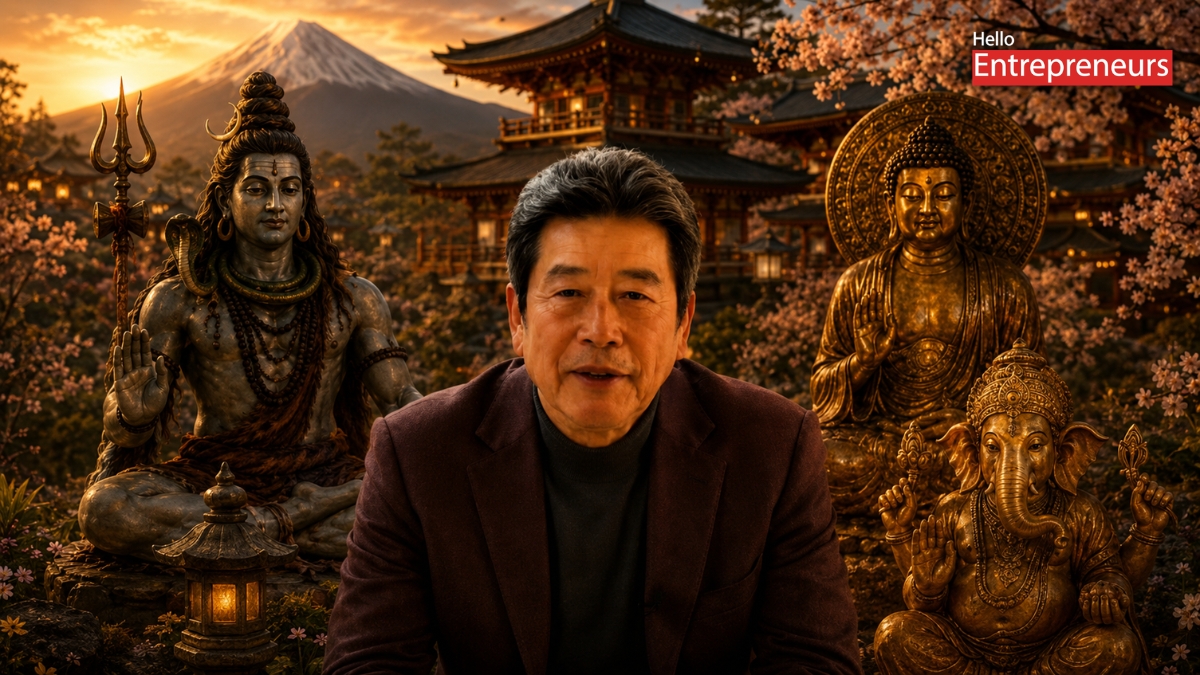
New Delhi: Another lesser-known link between India and Japan is getting the attention: some of Japan’s deities originate from ancient India’s religious history. The linkage was also emphasised by Yasukuni Enoki, a former Japanese Ambassador to India, who talked about the rich cultural ties between the two nations.
Enoki was Japan’s ambassador to India from 2004 to 2007. Delivered at a lecture on India-Japan cultural relations, he said that Indian religious concepts had significantly affected the Japanese culture for many years. His observations on the presence of deities from India in Japan have also been published in Embassy of Japan in India.
One of his popular quips was that over 80% of the Japanese gods were originally Indian. It needs to be taken as his explanation of the religious and cultural background of various Japanese gods and goddesses, but not as a verification of the number of gods that are worshipped in Japan. The quote is actually recorded by the Japanese Embassy and a few of these deities were brought to Japan with Buddhism.
The start of this journey was primarily Buddhist teachings being introduced to Japan in the 6th century. Central Asia and China were the essential transiting routes for Indian religious concepts and practices to reach Japan. Their names, shapes and functions changed over the years and they became incorporated into Japanese Buddhist traditions.
For instance, Saraswati, goddess of knowledge, music and learning from the Indian mythology, is known in Japan as Benzaiten. The goddess Lakshmi became identified with good luck and wealth, and became known as Kisshoten. Taishakuten is another important deity in Indian religions, known as Indra in Japanese. Brahma is associated with Bonten and Ganesha is related to Japanese forms, Kangiten.
Enoki also shared his memories of Kichijoji, a famous neighborhood of Tokyo. Its name is related to Kichijo (Japanese name of Lakshmi), he said. He said that it was only after he reached India that he understood the link more or better.
It doesn’t just apply to the old stories. Japanese temples and shrines still feature sculptures of deities from India and they are still revered. Meanwhile, Sanskrit-based traditions, such as religious Buddhist symbols in Siddham script, are still valued, according to sources.
The story demonstrates cultural cross-over and cultural shifting over time, over distances. The religious practices of the Indians traveled through China and came to Japan, where they took on new names and forms while still retaining a certain element of Indian identity.
This mutual history is an intriguing reminder for India and Japan that the cultural ties between these two nations are not confined to today’s trade and technology and diplomacy. It goes back for many centuries and is still seen in Japan today.

