



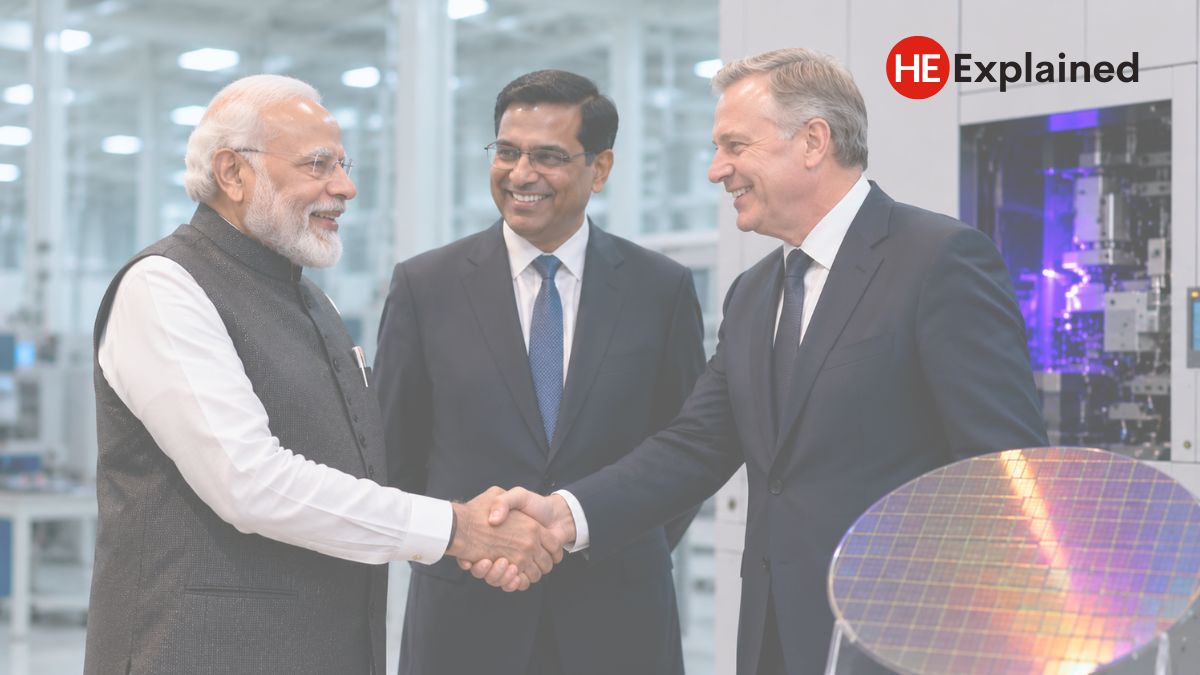
During his recent visit to the Netherlands, PM Modi has managed to give India a trump card that is expected to help India tide over the gloom due to the economic recession. On his two-day visit, PM Modi has personally helped boost India’s AI ambitions by getting Dutch semiconductor technology firm ASML to supply its machines to Tata Electronics’ upcoming $11 billion semiconductor fabrication unit in Dholera, Gujarat.
This remains perhaps the most significant technology development to date, as it means getting access to technology that is the most advanced in the world, with only a handful of semiconductor firms actually possessing it.
The game-changer deal
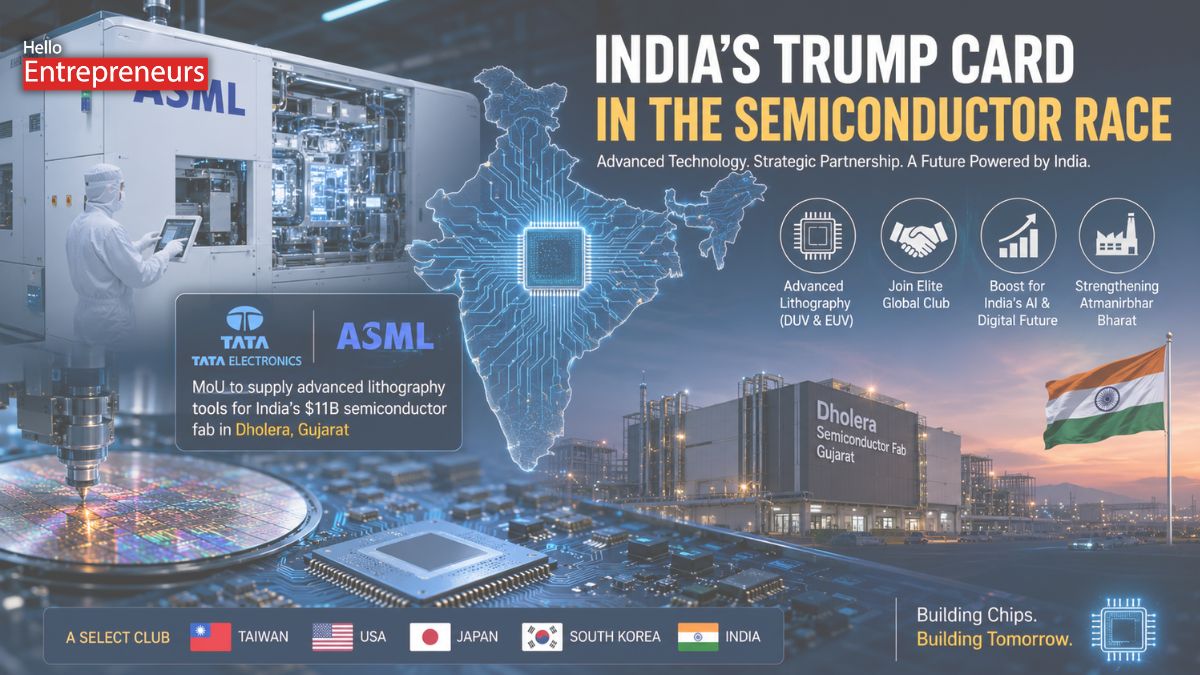
During his visit, PM Modi was present during the signing of a Memorandum of Understanding (MoU) between Tata Electronics and the Dutch semiconductor giant ASML (Advanced Semiconductor Materials Lithography) to supply advanced lithography tools and machinery required to create semiconductors.
ASML has a monopoly here, as it is the only company that manufactures these highly technical and complex machines required to produce semiconductors. With this, India joins a select club of nations that include Taiwan, the US, Japan, and South Korea which ASML has supplied these machines. China also does have them, but the US has restricted ASML from supplying its most advanced machinery to China.
With this, India can now produce the most cutting edge Logic and Memory semiconductor using Deep Ultraviolet (DUV) and Extreme Ultraviolet (EUV) light, which can print these features onto the chips on a nanometer scale. This can help us manufacture chips that power everything from smartphones and AI systems to advanced data centers.
The Semiconductor gold rush
With AI and data now powering most of our digital interactions, semiconductors have become crucial for expanding the backend infrastructure, even as demand far exceeds supply. India has been fairly late in the semiconductor gold rush, with Taiwan currently leading the pack, producing about 90% of the most advanced semiconductors used today, with Taiwan Semiconductor Manufacturing Company (TSMC) alone accounting for almost 50% of the world’s supply.
Current status
India is currently fairly behind in the semiconductor supply chain, with India just designing or packaging semiconductors to date and not manufacturing them. The MoU signed with ASML is expected to help India gain a foothold in the advanced semiconductor manufacturing space, with Tata Electronics spearheading the initiative.
Under the India Semiconductor Mission, the government has approved 12 projects, including full-scale fabrication units and OSAT (Outsourced Semiconductor Assembly and Test) or ATMP facilities across the country. This is in addition to the DLI scheme, under which the government has sanctioned ₹ 62,900 crore for 23 chip design investment projects.
Having said that, the government is actively seeking to become a leading player in the semiconductor manufacturing ecosystem, though this may take much longer to mature and develop our own Intellectual Properties as the economy shifts to a far more digitized and interconnected framework.

