



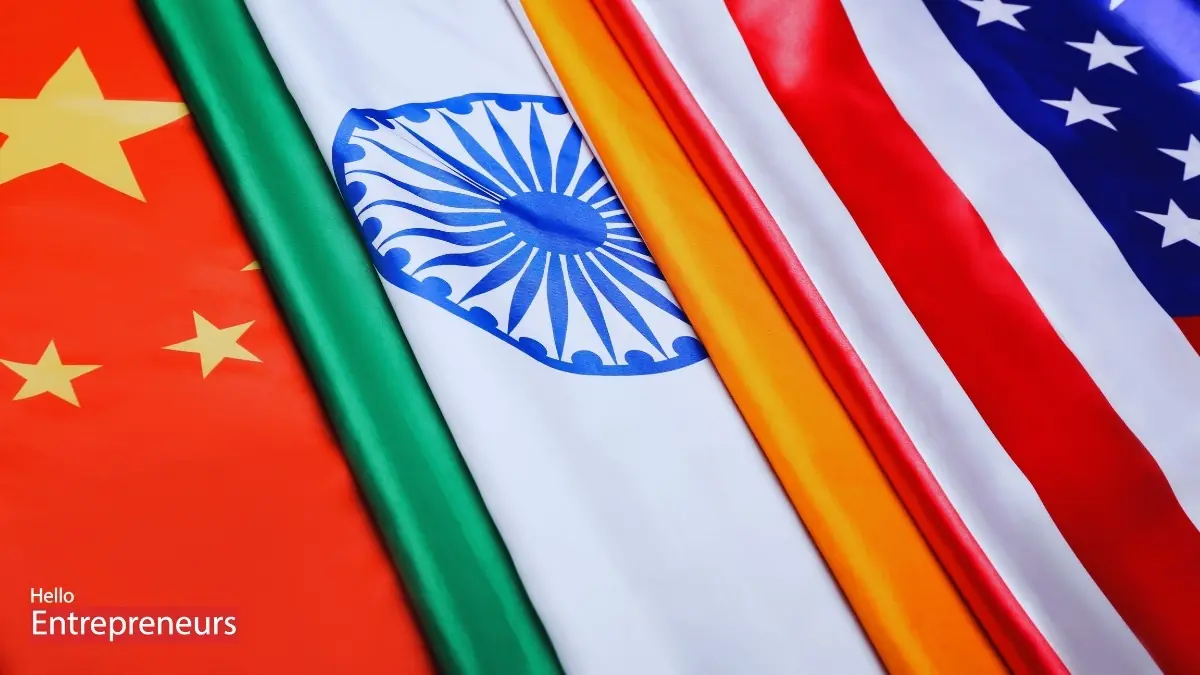
New Delhi: It has been a week of high-stakes chess across three continents. America is juggling two of its biggest trading partners at once, and the clock is ticking faster than a teenager’s thumbs on a smartphone. Fresh off a handshake with Beijing over rare earths and a tariff timeout, the White House is now burning the midnight oil to clinch a game-changing pact with India. Meanwhile, Press Secretary Karoline Leavitt is telling the world that the deadline is “not critical,” but everyone knows July 9 is circled on every diplomat’s calendar.
China and the Great Rare Earth Reset
The U.S. and China have spent months in a dance of tariffs, threats, and veiled insults. But this week, they stepped back from the ledge. Talks in London produced a shiny new framework built on May’s Geneva agreement. China will fast-track rare earth exports, the stuff that makes electric cars, smartphones, and military tech go vroom, and the two sides agreed to keep tit-for-tat tariffs on ice.
The White House says the deal is signed, sealed, and waiting for final nods from the big bosses.
Commerce Secretary Howard Lutnick hinted at more announcements soon, promising fresh deals with other countries who have been tiptoeing around America’s tariff threats like cats on a hot stove.
India: Big Promises, Bigger Issues?
Then there’s India, the giant market everyone wants but no one can quite figure out. President Trump got tongues wagging when he declared a “very big” deal with India was brewing. But as India’s negotiators landed in Washington, the champagne stayed on ice. Sources say talks are snarled over America’s love for lower duties on dairy, electric cars, and wines, while India wants easier access for textiles, shrimp, and bananas.
It’s not just about pride; it’s politics. India has never opened its dairy sector in any trade pact, and with farmers already squeezed, Prime Minister Modi’s team is wary of making moves that might cost the country in the long run. Still, with both sides desperate for a win, the negotiations are like a high-wire act in a gusty storm.
Enter Leavitt: The President’s Voice of Calm?
Press Secretary Karoline Leavitt, 27 and already wielding a megaphone that echoes across the world, says July 9 isn’t the apocalypse. Sure, the tariff pause expires then, but the president could extend it. Or he could slap tariffs so steep they’d give exporters vertigo. Either way, she says America will not hesitate to reward friends or punish laggards.
Leavitt’s rise to the podium is itself a plot twist. Barely a few years ago, she was a college student in New Hampshire. Now she’s fielding questions about global trade wars with the composure of a seasoned diplomat. Her words this week were both reassuring and ominous: “The deadline is not critical,” she said, adding the president “can simply provide these countries with a deal if they refuse to make us one by the deadline.”
What’s at Stake?
A successful deal with China will reopen rare earth spigots, cooling prices for everything from solar panels to F-35 jets. A breakthrough with India would reshape trade flows across Asia, helping Washington counter China’s influence while giving India a turbocharged path to its $500 billion trade target by 2030.
Failing to reach a deal would mean tariffs of up to 26 percent snapping back into place like a mousetrap, sending shockwaves through markets. Traders are already jittery, and industry groups are warning of layoffs if the talks collapse.
The Way Ahead
Negotiators are holed up in Washington conference rooms, fueled by coffee, catered sandwiches, and the fear of tariffs. Chinese officials await final sign-offs before a public announcement. Indian diplomats are racing against the July 9 buzzer. Meanwhile, everyone else is left to watch and wonder whether the world’s largest economy can pull off two trade coups in one frantic fortnight.
India stands resilient and deserves every bit of respect it commands; China, true to form, plays a cunning game with shifting goalposts; the United States remains the ringmaster of this grand trade circus. And why is Germany silent on all of this chaos? One wonders how this powerhouse can stay so inexplicably mute while the tectonic plates of global commerce are shifting right under its feet.
Also Read: Amazon Bets Big on India

