



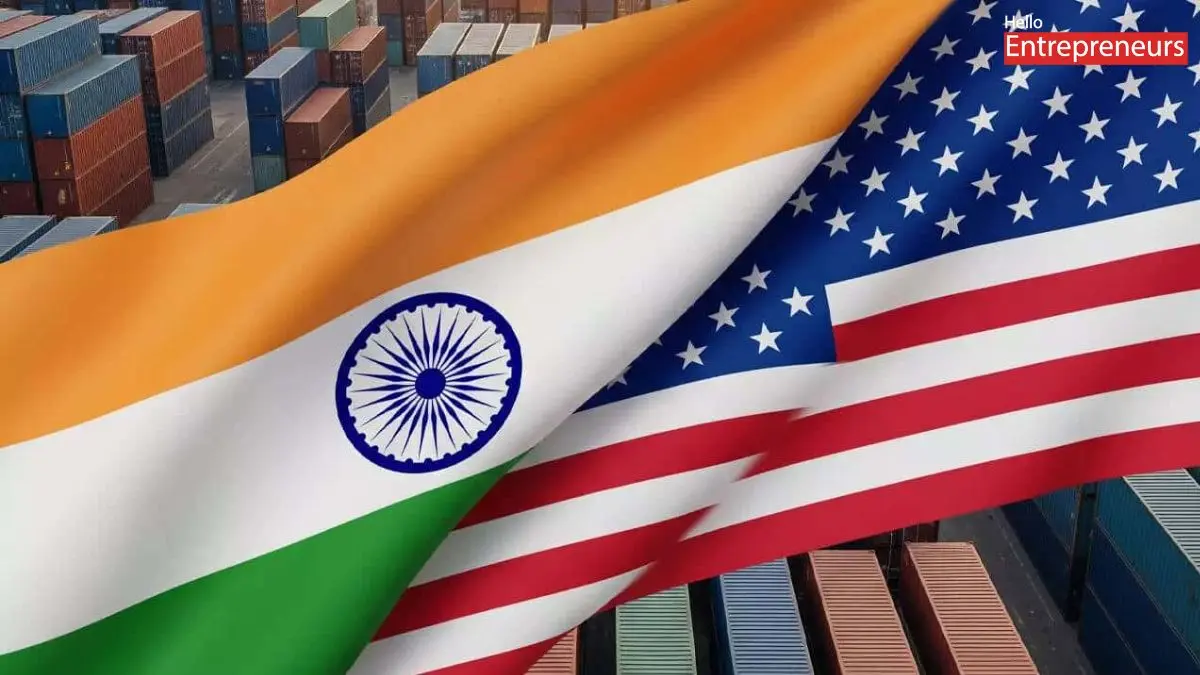
New Delhi: The India-United States trade deal is set to resume in the coming days, with negotiators heading to Washington as the government seeks to finalise an agreement without any deadline pressure. Days after President Donald Trump announced that the United States was close to making a deal with India, he stated, “We are not differentiating between an interim or the first phase of the bilateral trade agreement. We are negotiating a complete deal. Whatever is finalised, we can package it as the interim deal, and the rest of the talks will continue.
Earlier this year, Donald Trump and Prime Minister Narendra Modi set a deadline for finalising a trade deal by September-October. However, with the reciprocal tariffs announced, an interim tranche has been sent, and Donald Trump has been sending some letters about the trade deal with India. Countries are setting revised reciprocal tariffs effective August 1; India is so far not on the list.
However, by the month-end, it is evident that the latest deadline for offering concessions in areas of interest to the United States has passed. In India’s case, agriculture is of prime interest, along with American whiskey and automobiles, but the government is reluctant to lower tariffs on farm goods. Besides, Commerce Minister Piyush Goyal has said that deadlines will not bind the government and will ensure that India’s interest remains paramount.
On Monday, Rajesh Agarwal, India’s chief negotiator for the United States trade deal, said the government is trying to negotiate and finalise a trade agreement. Having implemented 14 free trade agreements with 26 countries, he said, “Now, we are integrating with major markets also… We just concluded the agreement stage of negotiations with the European Union, and we are trying to negotiate and finalise a deal with the United States.”
This will create enormous opportunities for India and also to become part of global value chains, he stated here at an event on export logistics. Rajesh Agarwal also listed New Zealand, Chile and Peru among countries with which talks were underway.
He also said that, “Our tariffs will be bilaterally cut… people will be able to make long-term investment decisions based on this predictability of the tariffs and the regulatory landscape. In this context, logistics will also be a significant determinant. Furthermore, he emphasised that the government was working towards reducing logistics costs.

