



New Delhi: When the Navy starts talking about ransomware, you know the oceans aren’t the only battlefield anymore. India’s maritime forces just drew a line in the digital sand, and they’re not playing defense anymore.
India Charts Its Digital Waters
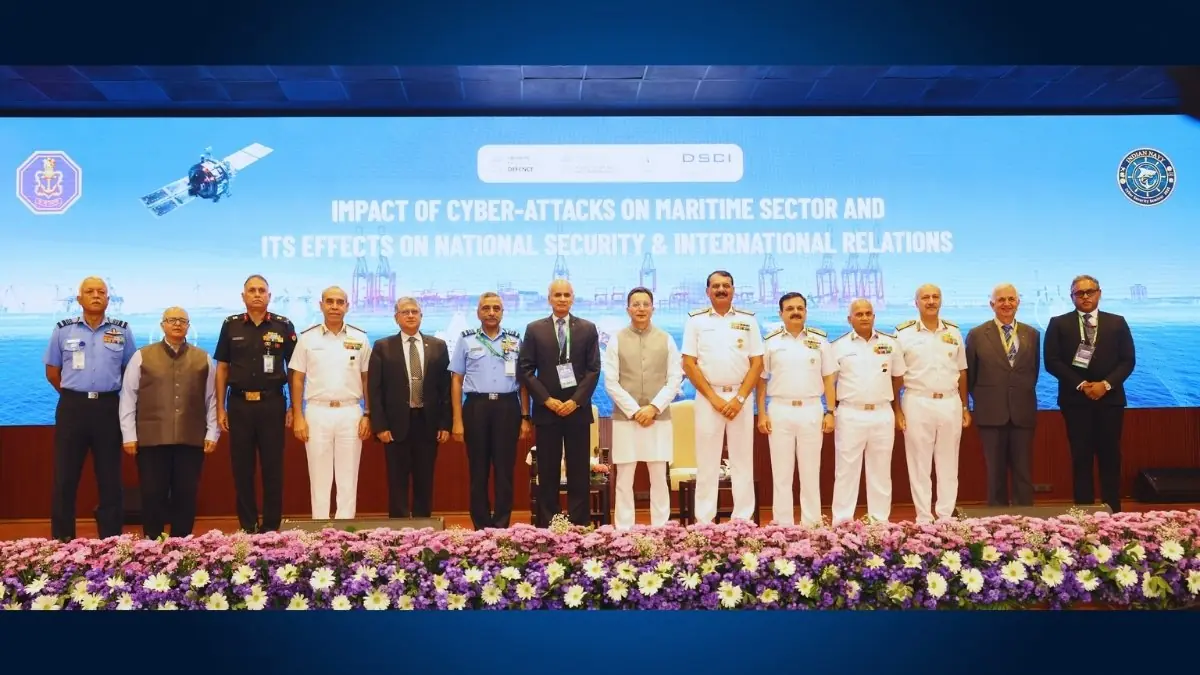
The Indian Navy isn’t just patrolling coastlines anymore; it’s guarding firewalls. On October 16, 2025, it hosted a sharp, forward-looking seminar titled “Impact of Cyber Attacks on Maritime Sector and Its Effects on National Security and International Relations” at Sushma Swaraj Bhawan in New Delhi.
The goal? To face the rising tide of cyber threats targeting the maritime ecosystem, from ports and oil terminals to shipping networks and satellite navigation systems, and to make sure India’s digital harbors are as secure as its naval bases.
The Brass and the Bureaucrats on the Same Page
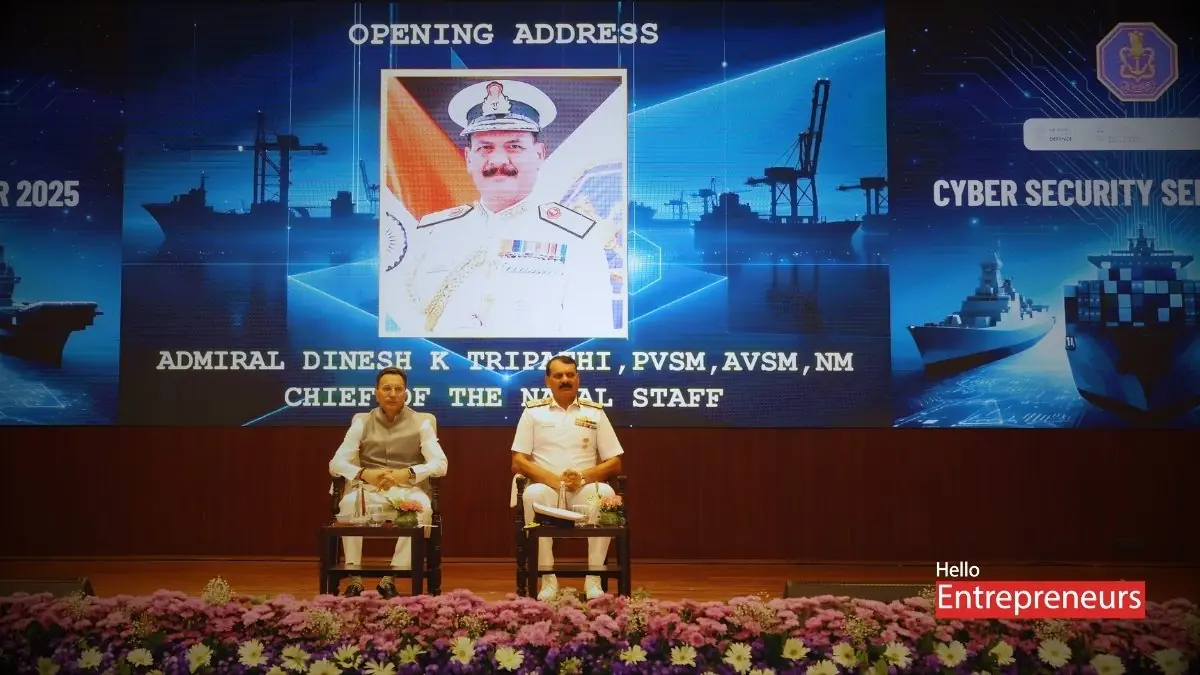
Admiral Dinesh K Tripathi, Chief of the Naval Staff, kicked things off by welcoming the Chief Guest, Jitin Prasada, Minister of State for Electronics and IT, and Commerce & Industry. Prasada delivered the keynote, laying it out bluntly: cybersecurity isn’t an “IT department problem” anymore; it’s national security, plain and simple.
He called for a “robust, resilient, and responsive maritime cyber defence architecture.” That’s bureaucratic language for: patch your systems, train your people, and stop pretending your port servers are safe because they have passwords like “1234.”
Tripathi matched that tone, reinforcing that India’s maritime strategy, powered by programs like Maritime Amrit Kaal Vision 2047, Sagarmala, and PM Gati Shakti, can’t afford weak digital links. Under the philosophy of “Samudra se Samriddhi” (Prosperity through the Oceans), the Navy is pushing for cybersecurity to be baked into maritime infrastructure from day one, not bolted on after a data breach.
Panels with Power and Purpose
Three heavyweight panels anchored the seminar, featuring a who’s who of India’s cyber, energy, and maritime establishments. Think the Ministry of Ports, Shipping and Waterways; the Ministry of Petroleum and Natural Gas; the National Security Council Secretariat; and players like GAIL, DGH, CERT-In, and NCIIPC.
Even the private sector showed up, a good sign, considering most cyber vulnerabilities hide in commercial systems, not warships.
The panels tackled three crucial fronts:
- Global Cyber Threats to Maritime Infrastructure: Mapping how ransomware and digital espionage are creeping into global ports, disrupting logistics, and threatening trade flow.
- Civil and Military Partnership: A candid look at how public and private sectors can actually talk to each other without drowning in red tape.
- Maritime Sector as Critical Information Infrastructure: The big pitch, recognizing maritime systems as independent Critical Information Infrastructure (CII) deserving of priority protection.
That last point is a big deal. In India’s cyber policy circles, CII status means the system gets top-tier government protection, monitoring, and funding. Elevating maritime systems to that level signals that India sees the cyber-ocean as strategic territory.
Showcasing India’s Cyber Firepower
No Indian tech event is complete without a dash of Aatmanirbharta, and the Navy made sure of that. On the sidelines, a tech exhibition curated by the Data Security Council of India (DSCI) brought startups and innovators into the spotlight.
The showcase featured homegrown solutions in cybersecurity, defense AI, and digital resilience, the kind of technologies that could one day defend both your bank app and a warship’s navigation system. The spirit was unmistakably Indian: innovate locally, defend globally.
It wasn’t just about flexing tech; it was about pushing India toward its Viksit Bharat 2047 vision, a future where the country doesn’t just participate in global cyber defense but leads it.
Identifying Weak Links and Fixing Them
The seminar didn’t stop at talking points. The working groups identified specific vulnerabilities in India’s maritime digital ecosystem, the networks that connect shipping lanes, fuel transport, port logistics, and offshore rigs.
The action points that emerged included:
- Tightening security protocols across public and private maritime systems.
- Formalizing information-sharing channels among naval, commercial, and government cyber agencies.
- Building domestic cyber response capabilities instead of relying on imported security solutions.
The message was clear: the oceans may be vast, but India’s cyber defenses must leave no blind spots.
Maritime Security Is Now Cybersecurity
If you still think “maritime security” means ships and submarines, you’re living in 1995. Today, it’s about protecting undersea cables that carry global internet traffic, satellite navigation networks guiding cargo ships, and the digital twins of ports managing billions in trade.
This seminar was more than a photo op; it was a pivot point. India’s Navy just told the world that cyber defense is no longer someone else’s job. It’s the new frontline.
The Bigger Picture: India as a Cyber Power
India’s digital security ambitions aren’t new, but the Navy’s leadership here adds muscle to the mission. For years, cyber discussions in Delhi floated between ministries. Now, the military’s taking charge, signaling that India’s cybersecurity strategy won’t just be reactive, it’ll be preemptive.
With initiatives like CERT-In and NCIIPC already playing watchdog, integrating the maritime sector gives India an advantage few countries have: a unified, national approach to cyber defense.
And make no mistake, this matters globally. With shipping accounting for 90% of world trade, one major cyberattack on port infrastructure could paralyze supply chains. India’s push for maritime cyber readiness puts it ahead of that curve.
Also Read: India US Trade Tariffs: Export Plunge Under Trump’s 50% Blow

