



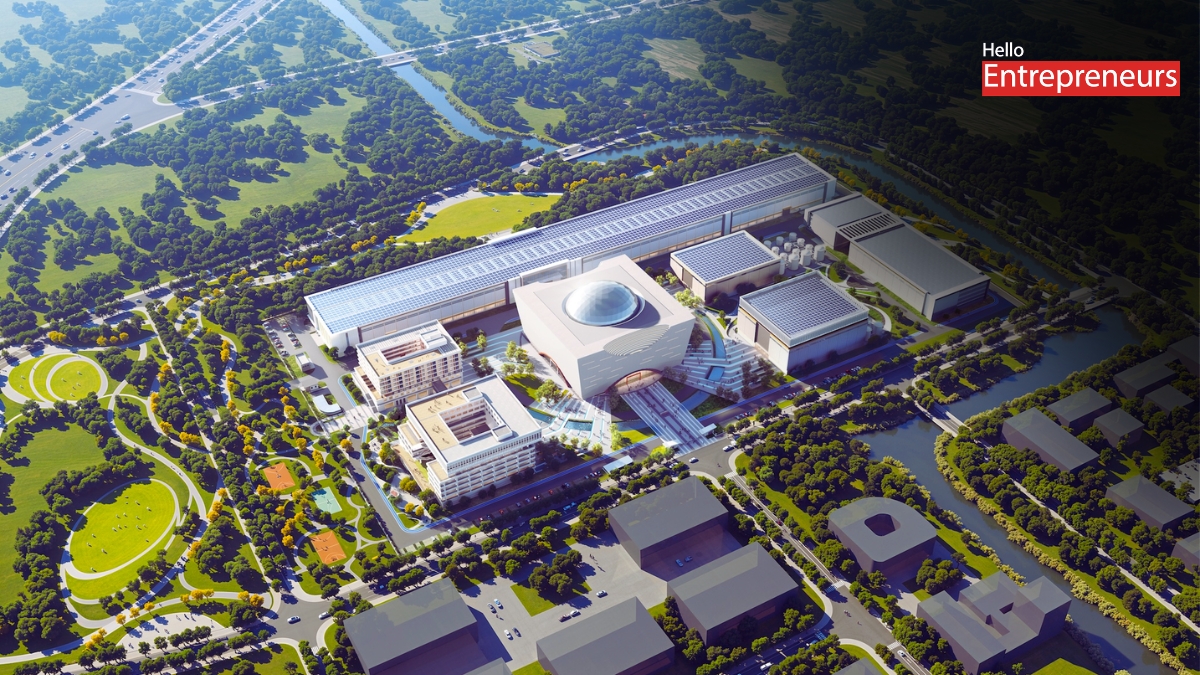
China just rolled out some big plans for its next-generation fusion energy project, HL-4, at the 2026 Nuclear Fusion Energy Conference in Shanghai. Alongside that, they laid out a roadmap to build a 25-tesla high-temperature superconducting magnet by 2030—which, if you’re counting, is pushing the boundaries of what’s been done with fusion tech.
So, what’s HL-4 all about? It’s supposed to be the world’s first steady-state burning-fusion experimental platform using these super-strong 25-tesla magnets. Basically, they want to see if these magnets can hold up under the wild combo of heat, radiation, and mechanical stress that goes on inside a genuine fusion reactor.
Here’s how they’re tackling it: a consortium of nine institutes—led by China Fusion Energy Co. Ltd—has banded together to develop those high field magnets specifically for HL-4. The roster includes everything from universities and big companies like Shanghai Electric, to superconducting tech startups. Their immediate goals are clear: set up China’s first 25-tesla HTS magnet development and testing line by 2028, and have a working prototype ready by 2030.
HL-4 isn’t coming out of nowhere. It’s the latest in a long line of tokamaks built by the Southwestern Institute of Physics, following earlier models like HL-1, HL-2A, and HL-3 out in Chengdu. HL-3 already made headlines by reaching ion temperatures of about 120 million degrees Celsius back in 2025—that’s almost eight times hotter than the center of the Sun, just for perspective.
While HL-3 was all about extreme temperatures and heating systems, HL-4 is switching gears and putting magnet technology front and center. High-temperature superconducting magnets are a big deal because they allow more compact, higher-field devices, but so far, nobody’s really proven they’ll hold up under continuous fusion conditions.
This isn’t China’s only ambitious fusion project. At the same time, work is ramping up on the Burning Plasma Experimental Superconducting Tokamak (BEST) in Hefei. As of mid-2026, the team there finished developing and testing two major components: a massive toroidal-field superconducting magnet and a high-temperature superconducting central solenoid coil. These D-shaped magnets are monsters—weighing over 500 tonnes each and stretching more than 20 meters across. They’re designed to last at least 60 years, running super cold at about -269°C, while channeling over 100,000 amperes.
BEST is on track to finish construction by the end of 2027, with the goal to generate fusion electricity by 2030.
All of this ties into Beijing’s wider strategy. Nuclear fusion now ranks as a top national priority, written directly into the 15th Five-Year Plan and marked as one of ten “future industries” getting serious backing from the government. Through 2030, China plans to pour over 300 billion yuan into fusion—fueling government labs and a wave of new startups.
While China is still a full participant in the international ITER project in France, its own domestic roadmap is aggressive: hit fusion ignition around 2027, generate electricity by 2030, and push toward grid-scale fusion power by 2050.
Here’s why all this matters: fusion reactors need powerful magnets to keep the ultra-hot plasma in check. The stronger the magnetic field, the smaller and more efficient the device—but that also means inventing magnet materials and engineering solutions that can take a real beating. HL-4’s 25-tesla magnets are a leap forward, and proving these can handle steady-state burning plasma is a must for moving from science to actual power plants.
When you look at HL-4 and BEST together, it’s clear China’s playing a long game—pushing both temperature records and magnet technology, and making sure they have more than one path to commercial fusion. With big experiments closing in on deadlines before 2030, the country is positioning itself right at the center of the world’s fusion race.
Nobody’s plugged a fusion reactor into the grid yet, though—that’s still the finish line everyone’s chasing. But with HL-4 focused on rugged engineering trials and BEST aiming for that 2030 target, China’s now entering a phase where the main question isn’t just about physics anymore—it’s about making sure the machines themselves are tough enough for prime time. If all goes to plan, the “artificial sun” may finally move from experimental halls to actual power plants.

