



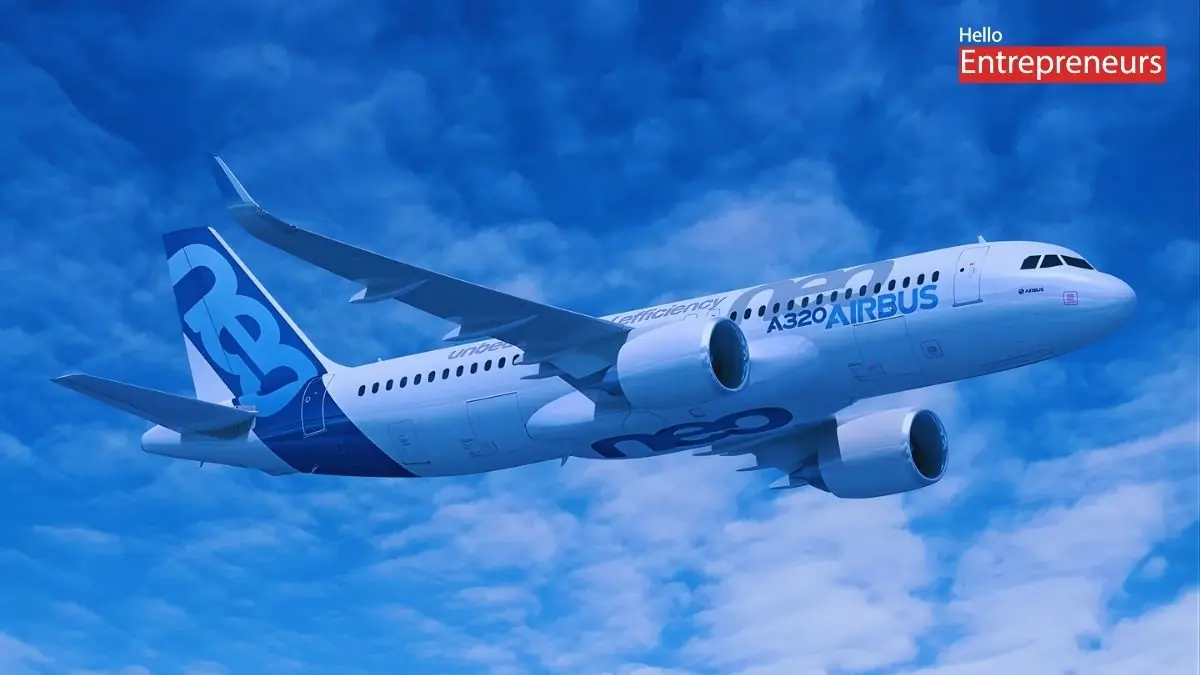
Mumbai: India’s aviation giants woke up to a rare scare this week. A burst of solar radiation spooked Airbus engineers and kicked off a nationwide scramble to update software on the country’s most common jetliner. Look, nothing like a cosmic glitch to remind us how fragile the skies can be.
India’s A320 Workhorses Hit a Sudden Curveball
If you’ve taken a domestic flight in India anytime in the last decade, odds are you were on an Airbus A320. These narrow-body jets carry more than 90 percent of the country’s passengers every single day. So when Airbus warned that intense solar radiation could corrupt data feeding the flight-control systems, the alert landed like a bouncer aimed at the helmet.
On November 28, the France-based aircraft maker said a recent incident involving an A320 family aircraft revealed that solar activity may scramble vital flight-control data. No drama, no theatrics. Just a clean, clinical warning. But for airlines, it meant one thing: act now.
The ripple effect was immediate. Airbus identified thousands of aircraft worldwide that needed emergency software and hardware realignment. Around 6,000 A320-family planes in service—roughly half the global fleet—fell into the risk window. India alone has between 340 and 385 affected aircraft across Air India group and IndiGo.
That’s practically the backbone of Indian aviation.
Regulators Step In. Hard.
The European Union Aviation Safety Agency (EASA) and Airbus issued mandatory directives demanding airlines carry out the updates by Sunday. The message was blunt: complete the work or ground the jet.
India’s civil aviation regulator DGCA didn’t wait. On Saturday, it ordered airlines to pause operating any A320 family aircraft until the Airbus-prescribed fixes were done. That’s rare. And serious.
“This is to be ensured that no person shall operate the product which falls under the applicability of this Mandatory Modification,” DGCA said. Translation: no update, no takeoff.
For an industry obsessed with on-time departures and tight turnarounds, the clock suddenly became the enemy.
Air India: Working the Night Shift
Air India jumped into firefighting mode the moment the directive dropped. The airline said its engineering teams were working round the clock and had already completed resets on more than 40 percent of its affected fleet.
The good news for passengers? Air India claimed zero cancellations and no major disruption to its schedules. A few delays here and there, sure, but nothing that sent passengers into meltdown mode at airport gates.
“We are confident of covering the entire fleet within the timeline prescribed by EASA,” the airline said. Confident Air India is always refreshing to hear.
IndiGo: Minimal Delays. Maximum Hustle.
Then there’s IndiGo, the undisputed heavyweight of Indian skies. With a fleet dominated by the A320 family, IndiGo had 200 aircraft hit by the issue. But it also moved fast.
By Saturday, its teams had finished the mandatory Airbus safety update on 160 aircraft. That’s 80 percent in the bag. IndiGo said it would get the remaining jets compliant well within the timelines.
Like Air India, it reported minimal delays and zero cancellations. For a carrier that lives and dies on punctuality, that’s no small feat.
So What Exactly Was the Risk?
This wasn’t some routine firmware tweak. It was a safety directive tied to flight-control integrity.
According to the US Federal Aviation Administration (FAA), the “unsafe condition” could potentially cause uncommanded elevator movement. If that sounds alarming, it is. Elevators control the aircraft’s pitch—the up-and-down motion critical for safe flight.
If pitch movement goes rogue, the aircraft could exceed structural safety limits. That’s a scenario every pilot trains to avoid, not confront.
Still, there’s no report of any incident in India. And to be fair, India’s airlines acted fast, making sure no such drama ever played out.
India’s Aviation Spirit: Hustle Hard, Fly Safe
The last thing India’s booming aviation sector needs is a confidence wobble. With record passenger numbers, expanding fleets, and new airports sprouting like IPL franchises, the focus on safety has been uncompromising.
This Airbus update saga showed the industry’s grit. Airlines mobilized engineers overnight. Regulators stayed sharp. Passengers stayed patient, or at least mildly annoyed, which counts as patience in Indian airports.
Solar radiation may have thrown an unexpected yorker, but the teams handled it like seasoned Test players: calm, methodical, undistracted.
What Flyers Should Know
Passengers don’t need to panic. This wasn’t a recall. It wasn’t a grounding due to a known defect. It was a preemptive strike—a “fix it before anything happens” approach.
Your IndiGo or Air India flight might be delayed by a few minutes. But the risk window is closing fast as updates finish across fleets.
And honestly? Better a bit of waiting near the chai stall than a mid-air surprise.
The Road Ahead for the A320 Giants
Airbus A320-family jets remain the workhorses of nearly every major airline, from India to Europe to the Americas. This incident won’t dent their standing. If anything, it highlights the seriousness with which modern aviation treats even potential anomalies.
India’s carriers have shown they can handle global-level crises with speed and maturity. As more updates roll out and regulators sign off on compliance, the A320 fleet will be back to business as usual.
Still, solar radiation messing with flight-control data? That’s one for the aviation textbooks.

