



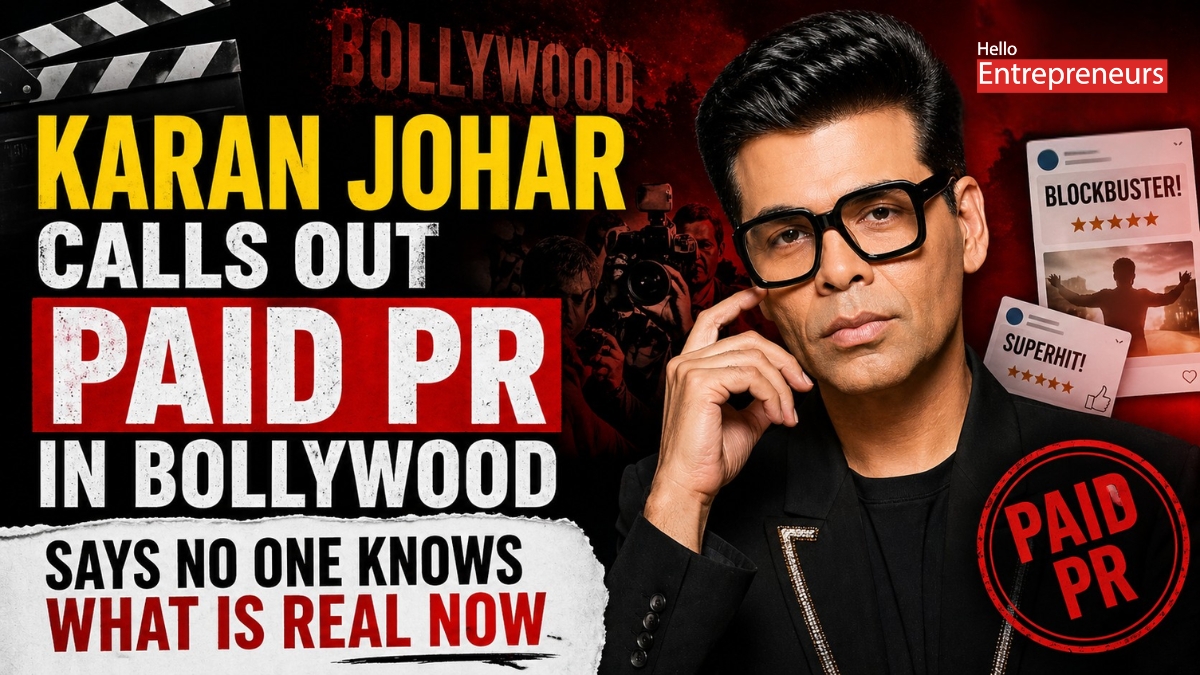
New Delhi: Director and Filmaker Karan Johar has again reignited a debate in the Bollywood industry with his comments on increasing paid promotion and marketing. In a recent interview he openly admitted that the industry must stop this practice as viewers can’t differentiate between what is genuine and what is being marketed as a publicity stunt.
Johar said that now everything in the film world can be “payed”, from comments on social media to reviews and even people’s opinions. He said this is becoming alarming as it gives the wrong idea of the film and actors. Once people lose trust in what they watch or read, it disturbs their relationship with film.
He also said that we are living in an era in Bollywood where the marketing is screaming over the movie. In the past, audience’s reactions were important in determining the success of a film. However, that is now formed even before the film is screened. So many times we don’t know if we are watching a great film, or a well marketed one.
While Johar is one of the biggest marketers (and producers) in the business, he agreed that this kind of marketing is “quite unsettling” He added that he’s not opposed to marketing. Marketing is necessary, particularly for large projects. But he feels they should be moderated. He says actors and producers should be more confident in their talent and less reliant on money to promote their films.
It is no small matter. Bollywood, a segment of the $2 billion entertainment industry in India, spends crores of rupees on promoting large-budget films. And sometimes, the cost of promotion is close to its production budget. Advertisements include “trending” on Twitter (now X), influencer “shares” on Instagram, and strategic appearances by the cast and crew. It’s all a matter of keeping the film in the limelight.
According to Johar, this process is also impacting actors, particularly newbies. Young actors are more interested in cultivating their brand than developing their skills. Their public personas are crafted via interviews, social and public relations, rather than resonating with the public through their work. And this distracts from talent, he argues.
The other issue he expressed was fake success stories. On occasion, even if a film is not doing well at the box office, it can become a success because of a successful PR strategy. Box office parties, positive reviews and word-of-mouth can give a false impression that all is well. However, the truth might be something else.
Bollywood is already facing a crisis with a lot of films not performing well and competition from OTTs. In this context, trust is crucial. Further, the audience is educated and alert. They can easily identify paid trends and endorsements, and they can be sceptical.