


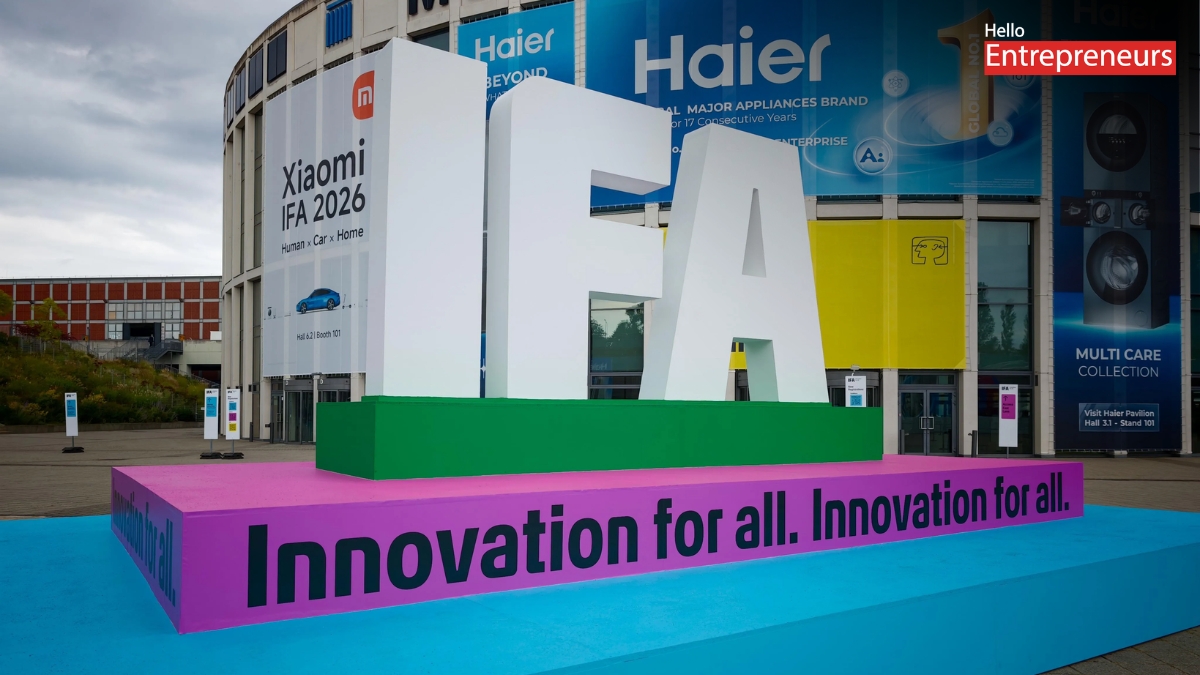
Xiaomi landed at IFA 2026 in Berlin with its biggest international showcase yet, filling more than 3,300 square meters with over 380 products and new tech from its “Human × Car × Home” ecosystem. This year’s event really marks Xiaomi’s boldest overseas push, highlighting just how serious the company is about connecting everything—from your phone to your car to your fridge—into one smart system.
At Messe Berlin, Xiaomi spread out across three exhibition zones: AI Tomorrow, AI Today, and the Human × Car × Home portfolio. There, visitors could check out seven main product categories, including kitchen gear, cleaning gadgets, air management, home entertainment, security, personal devices, and new smart mobility solutions. Everything runs on Xiaomi’s own HyperOS, tying together artificial intelligence with the usual gadgets and even electric vehicles.
One of the big crowd-pleasers was the CyberOne humanoid robot. Xiaomi talked up how this robot is already taking on real tasks at its EV plants, hinting at where the company’s robotics ambitions are headed. The other tech star was the new XRing O3 chip. Built in-house on a 3nm process, the chip powers several new devices and boasts a 10-core CPU and a massive bump in graphics muscle—up 85% over the last version.
Xiaomi also stole some of the spotlight with a sneak peek at the Xiaomi 18 Fold—a cherry-red foldable smartphone that takes a fresh approach with its mid-fold design and wide-aspect display. The 18 Fold won’t just look different; it’s the first phone to run on the XRing O3 chip and next-gen LPDDR6 RAM from CXMT. It’s expected to hit the market at around 12,000 yuan (about $1,650), swinging directly at Samsung’s top foldables. Xiaomi’s not just stopping at phones; it’s launching the Pad 9 Pro Max, several new smartphones, and even three electric SUVs alongside the foldable on September 7 in China.
The mobility side was just as packed, with the SU7 smart electric sedan taking center stage. This car hooks into the HyperOS ecosystem, syncing up with the rest of your Xiaomi gadgets at home. Xiaomi even brought the race-winning SU7 Ultra and a flashy Vision Gran Turismo hypercar concept straight out of the video game world. The company’s auto division delivered over 700,000 vehicles in China since March 2024 and plans to start selling cars in Germany and other parts of Europe by 2027.
IFA 2026 also marks the big European debut for Mijia, Xiaomi’s smart home brand. Mijia covers more than 2,000 products in over 130 categories, all managed through the Xiaomi Home app. The idea is that everything works together seamlessly, with users fully in control. By weaving in AI and IoT into classic appliances, Mijia pushes the boundaries of what a smart home can do.
On the investment front, Xiaomi expects to pour more than €24 billion into global R&D between 2026 and 2030, fueling advances in AI, chips, electric vehicles, robotics, and smart manufacturing. The company’s AIoT platform has already crossed 1.1 billion connected devices worldwide—and that’s not even counting phones, tablets, and laptops.
Xu Fei, Xiaomi’s Chief Marketing Officer, summed up the company’s vision at IFA, calling Europe a key market. After three years building the Human × Car × Home ecosystem, Xiaomi is ready to make Europe the next big playground for its interconnected AI world.
Xiaomi’s “The Surging Wave of AI” showcase runs at Messe Berlin from September 4–8. Visitors get a close-up look at how Xiaomi’s tech blends into everyday life, taking AI out of the screen and placing it right into homes and on the road. The timing couldn’t be better, either, with competition heating up—Apple is set to unveil its first foldable iPhone just two days after Xiaomi’s big 18 Fold launch, raising the stakes for what’s coming next in smart devices.