



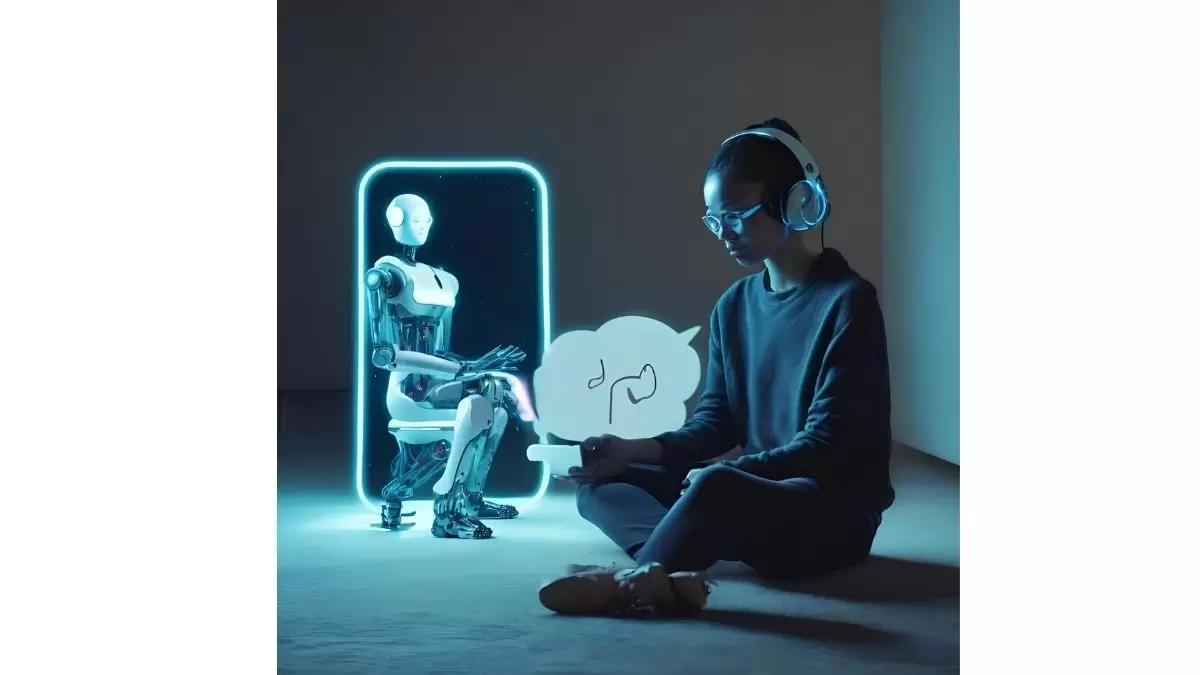
Surat: In today’s go-go startup scene, where clock speed measures your worth and one miscalculation can seem apocalyptic, entrepreneurs are quietly counting on an unsuspected ally: artificial intelligence. Born to accelerate productivity, AI (Artificial Intelligence) has become an intimate lifeline for startup entrepreneurs, assisting the founders in dealing with operations and their mental and emotional health.
But the bond isn’t simple.
AI: The Surprising Breathing Space
For most founders, bringing AI into their workflow is like bringing in a whole team overnight, without the hassle. Platforms such as ChatGPT, Canva AI, and Notion AI are radically reducing redundant work. What used to consume hours now only consumes minutes.
This transformation is not just about saving time. It’s about bandwidth in the emotional sense—freeing up space to think strategically, lead clearly, and build sturdy. Entrepreneurs also seek help from AI-driven wellness apps like Wysa and Youper for mental check-ins. Rather than running in circles late at night, they have guided, non-judgmental support at their fingertips.
When Efficiency Sows Seeds of Doubt, a stealthy price tag comes with this blessing: increasing self-doubt.
AI sets a bar higher and, unwittingly, creates a nervousness booster. The fact that one can achieve more with fewer resources convinces founders that they ought to accomplish more, and quicker. The competition for algorithmic perfection strips away at personal self-esteem and creates a not-so-obvious performance anxiety trap.
AI Isn’t a Replacement for Human Support
It’s important to recall—no matter how persuasive it may seem—AI can’t provide actual emotional support.
Conversational robots may be able to simulate empathy, but they lack the subtleties: the catch in your breath, the unspoken thoughts, the tired eye behind a “fine.” Real healing and insight still come from genuine relationships—with mentors, therapists, or pals who look past your productivity.
More Tech, Less Talk
There’s one other side effect of heavy AI reliance: loneliness. As more and more tasks fall to AI, human interaction is reduced. Meetings are shorter, collaborations are less frequent. And gradually, loneliness seeps into a founder’s day.
Decision-making becomes increasingly solitary as well. Rather than throwing ideas against a team or mentor, it’s frequently you and your analytics dashboard. That solitude can become profoundly disorienting, particularly in high-stress settings.
AI as a Mindful Companion
Regardless of its downsides, AI promises—neither as a human substitute, nor as a cure-all, but as a self-reflection aid.
A few visionary platforms are being built to track stress signs—studying tone, word choice, and behavior to indicate early warning signs of burnout. Your digital aide may eventually recommend breaks or mood refreshers, not merely reminders and assignments.
When built with compassion, AI has the potential to become a wellness ally—assist founders in pacing themselves, creating boundaries, and adjusting before burnout sets in.
Final Thought: Opt For Mindfulness Over Momentum
Entrepreneurs are by nature resilient, and in this age of AI, that strength is their best asset. The most successful founders will not be the ones that just scale most quickly, but the ones that approach AI with intentionality—understanding when to push forward, and when to hold back.
Because mental health is no longer a personal issue, it’s a business necessity.
And in a unicorn-pursuing world, maybe the real triumph is becoming a founder who not only wins, but does so with soul and sanity preserved.