



The endless war, which might never end, the most popular was Apple vs Samsung, which is the best company in the world, from devices to marketing strategy. In this case study, we will discuss who is more powerful, Samsung or Apple. Their battle started in 2014 when a leaked Samsung memo declared that its Number One priority was beating Apple. Samsung is trying to incorporate elements of the Apple business model, especially after the American technology giant passed Exxon Mobile Corporation as the world’s most valuable company in 2011.
Why this Samsung-Apple wars
It is fair to say that there is no love lost between Samsung and Apple; they are in a worldwide corporate battle that was started in 2010 when Samsung, then an Apple supplier, released a suspiciously iPhone-like product through its Galaxy lineup. Steve Jobs, Apple’s former CEO, was furious and went on the offensive. Samsung, in turn, dug in its heels. From a business model perspective, these two giant companies are constantly converging and modifying, although stark contrasts remain. Samsung has been a global force longer and has its hands in more industries. Apple’s rise has been comparatively meteoric and focused.
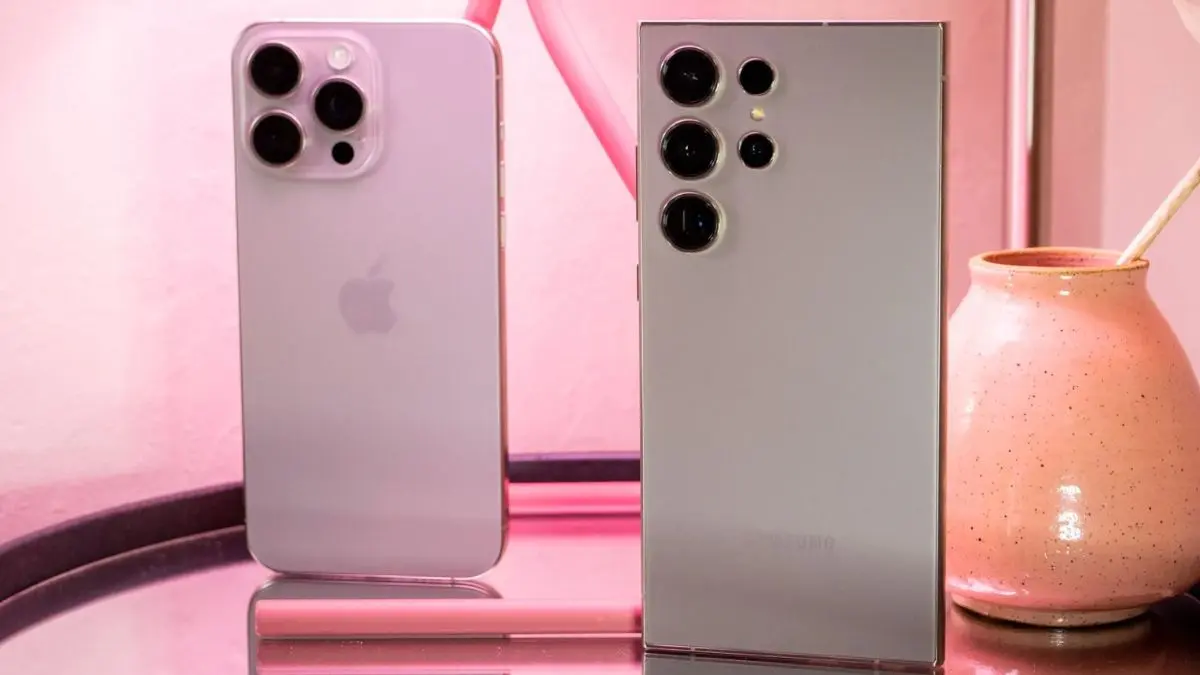
It is a telling example of the opposition between two of the world’s largest smartphone producers, who are clearly modifying their respective business strategies with each other in mind. Before targeting Apple, Samsung had competed with, and in many cases bested, Japanese technology companies throughout the 1980s and 1990s. The company spends a fortune on research and development and capital expenditures. Declining profit margins in 2014 and 2015 were basically focused on some introspective analysis within Samsung’s executive team. Then the company Chairman Lee Kun-hee saw his company’s global share of smartphone sales drop which was 35% in 2018 to 24% in the third quarter of 2015.
Apple’s products include programs that work very well with each other but not with any of its competitors’ products, which makes it easy for the customer to keep buying Apple’s products and difficult to switch to another brand. Almost half of Apple’s 2023 revenue came from the iPhone lineup, making the company highly dependent on a single product.
Endless Patent Lawsuits
Lawsuits are a common strategy from Apple, which is one of the most legally aggressive firms in the world. This legal battle over intellectual property began in 2011, when Apple accused Samsung of copying the iPhone’s design and software features. Samsung has countered this allegation by suing Apple for infringing Samsung’s software patents. This process continued with multiple cases being filed against multiple patents, and each company claiming billions of dollars in damages. In the year 2012, a United States jury ruled in favor of Apple, making Samsung pay more than $1.05 billion for copying various hardware and software of the iPhone and iPad.
Although the penalty was reduced to $600 million in 2013, the jury ruled that Samsung should pay Apple an additional $290 million for patent infringement. In a separate trial in 2024, a United States jury found both companies to be infringing on each other’s patents. Apple was awarded $120 million, and Samsung was awarded $160,000. By that year, both Samsung and Apple decided to drop all the patent cases outside the United States in 2025. Samsung agreed to pay $548 million to Apple to settle a patent infringement lawsuit from 2011.
Marketing Plans
By 2033, the smartphone market is expected to reach a mind-blowing $1,069.14 billion. In this gainful yet passionately competitive landscape, Apple and Samsung consistently outpace their rivals, each bringing their A-game in innovation, design and marketing. Customer knowledge is essential when users are trying to understand the marketing strategies of a particular brand. There are similarities between the audiences of both brands, but at the same time, there are also lots of differences in the way their target audience thinks. As a result, the way they communicate with their customers is also different.
Apple’s crowd is like that group of friends who always know what’s hot, or, much better, because they are young, more affluent and all about design and user experience. These users are often early adopters who prioritise privacy and security, and they’re not afraid to spend a little extra for better quality.
Samsung’s audience, on the other hand, is more diverse; it targets different types of people, including technology enthusiasts, budget-conscious buyers, and those who want the latest and greatest. Samsung users are more practical than Apple users and prefer devices with a straightforward system.
Samsung and Apple are two major multinational corporations with different business models and strategies, which are also worth noting, as Samsung is currently more profitable. Apple remains a much larger company overall. Samsung is valued at less than $290 billion, while Apple is the world’s most valuable company with a market cap of $3.57 trillion as of September 2024.
Mocking Many Times
Mocking Apple may be Samsung’s second biggest task after its smartphone business. Such is the rivalry between these two tech giants, though Apple has refused to bite back, that technology lovers wait for the ads with as much glee as they’d have a day before an iPhone’s launch.
Days before Apple was set to unveil its latest iPhone 14 model, Samsung released a video showing off fancy details like 100x space zoom and a 108MP camera in the latest Samsung Galaxy Z Flip 4 and Galaxy S22 Ultra models. On whose innovation, the brand went on to say, Not coming soon to an iPhone near you. A printout compared the features of the iPhone 5 with the Samsung Galaxy S III. The copy read, It doesn’t take a genius. In 2021, the battle of the specs was on as Samsung released three devices, comparing the features of its S21 Ultra 5G to those of the iPhone 12 Pro. “Your phone upgrade shouldn’t be a deal,” said Samsung.
Apple and Samsung Frenemies
According to some reports, Samsung has a critical role as a supplier of components for the iPhone and iPad. In 2013, Apple bought some $8 billion worth of parts from Samsung. Meanwhile, has benefited immensely from the market insight it gained from the Apple relationship, and from producing smartphones and tablets that closely resemble Apple’s. At the same time, these two companies compete fiercely in the high-end smartphone market, where they together control half the sales and virtually all the profits; their strengths and weaknesses are, in many ways, complementary. Samsung was an important partner, and they had a strong relationship on the supply side, but declined to elaborate.
Apple reaped the benefit of Samsung’s heavy investments in research and development, tooling equipment and production facilities. Samsung spent $21 billion on capital expenditures in 2012 alone, and plans to spend a similar amount that year. Samsung has publicly dismissed the iPhone’s success. Samsung has developed cheeky, memorable TV ads that mock Apple customers and dramatically ramped up spending on marketing and advertising, a cornerstone of Apple’s success. United States ad spending on the Galaxy alone leapt to nearly $202 million in the first nine months of 2012, from $66.6 million in 2011.
Apple spent approximately $10 billion on capital expenditures in fiscal 2012 and expects to spend a further $10 billion on product lines in total, while aiming to minimize variations and focusing on the high-end of the market.
This Apple vs. Samsung case not only reminds us of the importance of filing multiple design patents to protect a new product’s look, but also the significance of conducting a thorough patent search. In the ongoing battle between Apple and Samsung, regardless of who emerges as the winner, consumers will continue to lose unless the companies agree to maintain a healthy competition and offer their best products.

