



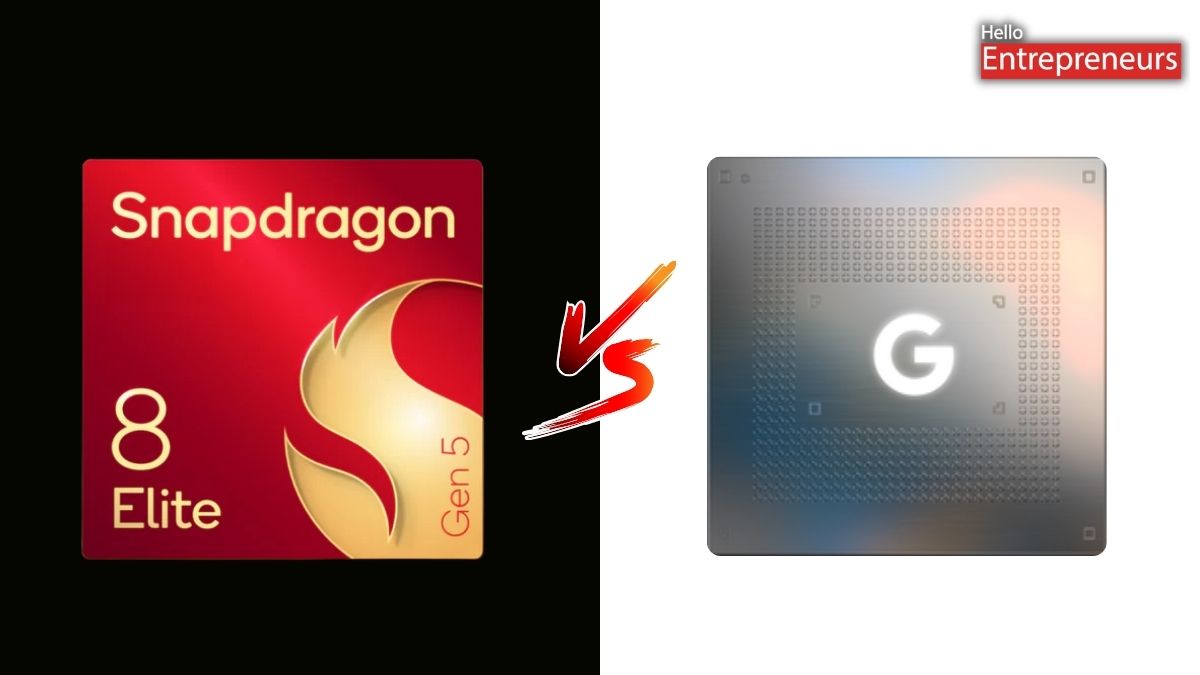
New Delhi: Qualcomm and Google are having their own battles when it comes to smartphone processors, and Snapdragon 8 Elite Gen 5 and Tensor G5 are examples of that. Google is making the Tensor AI chips and including smart software capabilities, while Qualcomm is going to aim for the best performance in both high-end games and intensive workloads. Below is a comparison of both chipsets in simple terms, along with their respective specifications.
Snapdragon 8 Elite Gen 5: Built for Speed
Qualcomm’s latest flagship mobile processor, the Snapdragon 8 Elite Gen 5, has been used in several flagship Android smartphones. It also enhances the CPU and GPU performance, making it perfect for gamers, multitaskers, and heavy users.
It is also believed to offer faster app startup, smoother graphics, and improved power efficiency compared to its predecessor. Additionally, it enables sophisticated AI processing, enabling faster image editing, more intelligent virtual assistants, and additional AI capabilities to enhance the on-device experience. Moreover, Qualcomm is still developing to achieve higher 5G speeds, improved camera processing, and battery preservation. The Snapdragon 8 Elite Gen 5 has every chance of delivering one of the best Android smartphone user experiences on a big-screen phone, if you like playing graphics-intensive games or editing video files on your mobile device.
Tensor G5: AI Comes First
The device, Google Tensor G5, takes a different approach. Whereas Google has made creating the chip with benchmark scores as a primary concern a major step away from the greater goal of improving the Pixel experience, using AI-driven features here.
Users can look forward to enhanced speech recognition, a smarter photo editor, more accurate language translation, and more helpful, in-device AI tools with the Tensor G5. The Magic Editor, Call Assist, voice typing, image processing and other features will be further speeded-up and improved to become slimmer and more responsive. Google also focused on ways to make the device more efficient and thermally manageable, cooler during everyday use, and with increased battery life. While the Tensor G5’s gaming performance may be slightly less than Qualcomm’s chipset, the goal is to offer a more refined user experience for everyday tasks and AI-enabled features that Pixel users have come to expect.
Performance Comparison
As far as raw power is concerned, the Snapdragon 8 Elite Gen 5 is ahead of the curve. It will most likely provide higher CPU and GPU clock speeds, enhancing its performance for gaming, multitasking, and heavy workloads. However, the Tensor G5 is dedicated to practicality. It’s all about the technology of AI processing, photography, voice recognition, and software optimization, and not necessarily pulp number, which isn’t actually as high. However, if you are looking for the best performance, you may opt for the Qualcomm chipset, whereas those seeking Google’s AI features and a seamless Pixel software experience will choose the Tensor G5.
Which One Should You Choose?
This depends on the things you want to do with your smartphone. Those seeking optimal gaming performance, better graphics, and robust multitasking will be better suited to the Snapdragon 8 Elite Gen 5. For those more interested in the AI capabilities of the bag and its various features, the smart photography, voice controls, and the as-is Android legacy of Google have a lot to offer.
The two chips are the latest in the mobile silicon world, but targeted at two slightly different audiences. The competition seems to underscore Qualcomm’s dominance in raw numbers and performance, while Google is demonstrating its commitment to using AI to make smartphones more efficient and intelligent, improving the user experience.

