



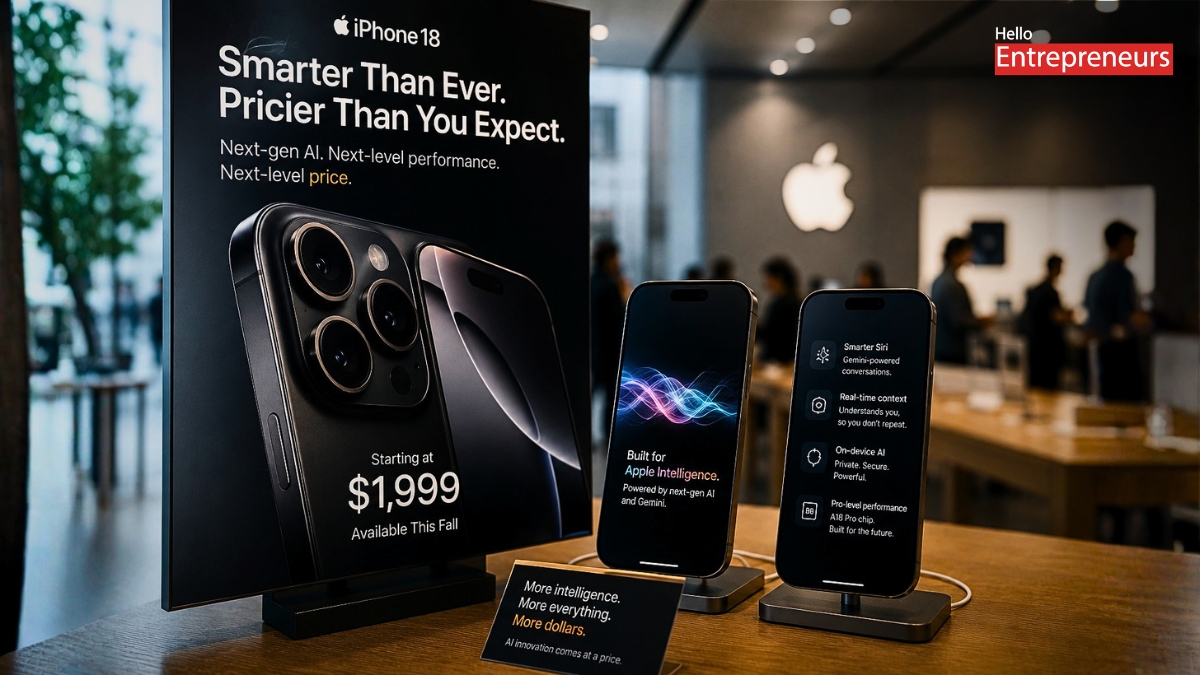
Mumbai: There was a time when buying a new phone felt revolutionary.
A better camera.
A sharper display.
A battery that survived longer than a dramatic relationship.
Now? The modern smartphone launch cycle increasingly resembles a luxury fashion season with processors.
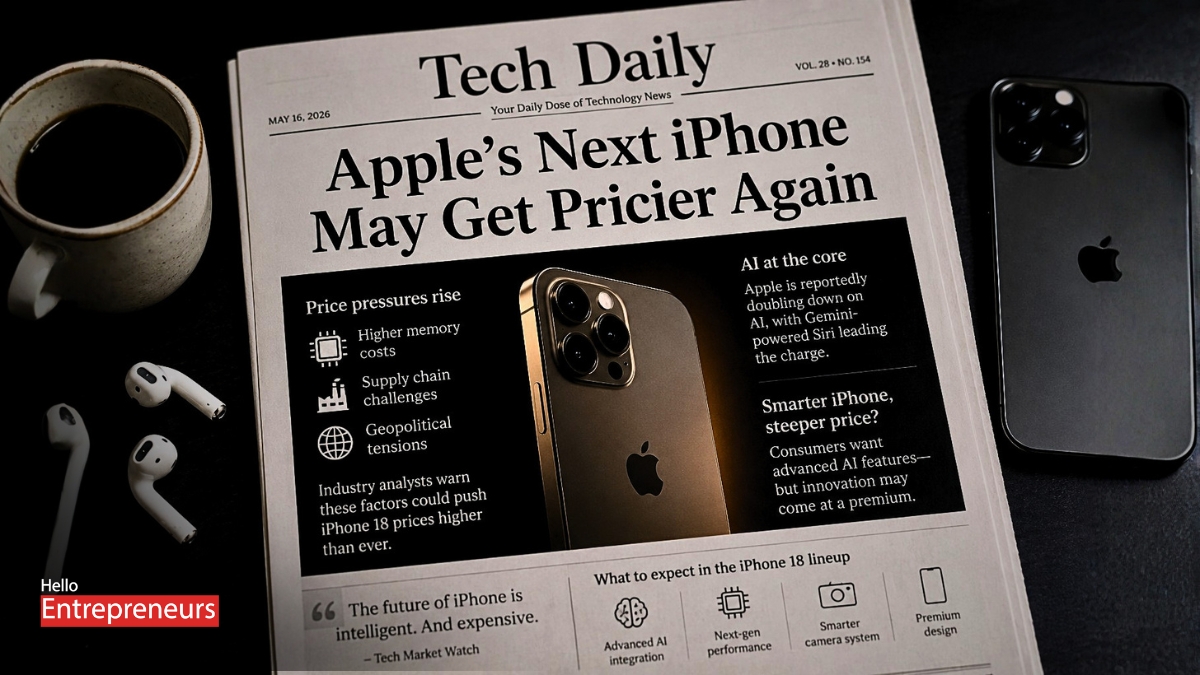
And according to fresh leaks surrounding the upcoming Apple iPhone 18 lineup, consumers may soon need deeper wallets just to keep up with the artificial intelligence arms race unfolding inside their pockets.
The reasons sound wonderfully corporate:
- Higher memory costs
- Semiconductor supply pressure
- Geopolitical instability
- Advanced AI integration expenses
Translation?
Your next phone may politely ask for more money so it can summarize your emails faster.
Civilization truly has peaked.
But beneath the sarcasm lies a very real transformation happening across the smartphone industry. Devices are no longer competing primarily on hardware. They are competing on intelligence, ecosystem control, and computational infrastructure.
And that shift is making phones dramatically more expensive.
The Smartphone Plateau Nobody Wants To Admit
Modern smartphones have a problem.
Most people already own devices that are “good enough.”
Cameras are excellent.
Displays are beautiful.
Performance improvements feel incremental.
The average consumer no longer wakes up spiritually transformed by slightly faster app loading times.
Which means companies like Apple and Samsung Electronics need a new reason to convince people that upgrading annually is still emotionally necessary.
Enter AI.
Conveniently mysterious. Expensive to develop. Easy to market.
Perfect.
Why The iPhone 18 Could Cost More
Recent industry leaks and supply-chain discussions suggest the next generation of flagship smartphones may face pricing pressure due to several converging factors.
Higher Memory Costs
AI systems require significantly more memory bandwidth and on-device processing capabilities.
That means:
- Larger RAM configurations
- Faster storage systems
- Advanced chip packaging
And advanced memory is expensive.
Especially as AI workloads increasingly rely on high-performance semiconductor components already under pressure globally.
The Semiconductor Problem Is Back Again
The chip shortage panic from earlier years never fully disappeared.
It evolved.
Now the biggest pressure point is AI infrastructure.
Companies like NVIDIA are prioritizing AI server demand, while high-bandwidth memory markets remain constrained.
The result?
Consumer electronics manufacturers face:
- Rising component prices
- Supply chain bottlenecks
- Increased production costs
Ironically, the same AI boom making phones “smarter” is also making their components more expensive.
Technology has a dark sense of humor.
Geopolitics Has Entered Your Pocket
Modern smartphones are no longer just consumer gadgets.
They are geopolitical products.
Manufacturing, semiconductor access, export controls, and global trade tensions increasingly affect pricing and production.
The United States–China technology rivalry continues to influence:
- Semiconductor supply chains
- Manufacturing partnerships
- Hardware sourcing strategies
This means your next phone price is partially determined by international diplomatic friction.
Which feels excessive for something primarily used to watch cooking videos at 2 AM.
The AI Push Inside Apple’s Ecosystem
The bigger story isn’t simply pricing.
Its direction.
Apple is reportedly pushing aggressively into AI-powered experiences, including deeper assistant integrations and expanded ecosystem intelligence.
Industry conversations around Gemini-powered Siri features and advanced AI partnerships suggest a future where smartphones become less like tools and more like continuously learning assistants.
Features reportedly being prioritized include:
- Smarter contextual assistance
- AI-enhanced productivity
- Real-time summarization
- Advanced voice interaction
- Predictive automation
The phone is evolving into a personalized computational layer constantly interpreting your behavior.
Comforting. Slightly invasive. Efficient.
The Real Shift: Phones Are Becoming AI Gateways
This is the deeper transformation happening beneath the hardware headlines.
Smartphones are no longer being positioned as standalone devices.
They are becoming:
- AI access points
- Cloud ecosystem connectors
- Personal data interfaces
- Subscription-driven intelligence hubs
The hardware matters less than the ecosystem surrounding it.
And ecosystem dominance is extraordinarily profitable.
The Positive Side Of The AI Smartphone Era
To be fair, the improvements are not meaningless.
Advanced AI features can genuinely improve:
- Accessibility tools
- Productivity workflows
- Language translation
- Photography enhancements
- Voice assistance
For many users, smarter software experiences may matter more than raw hardware innovation.
Especially as AI becomes more seamlessly integrated into daily tasks.
The Slightly More Uncomfortable Reality
Of course, intelligence comes with trade-offs.
- Rising Device Costs: Flagship phones are increasingly approaching luxury pricing territory.
- Ecosystem Lock-In: The smarter devices become, the harder it becomes for users to leave ecosystems.
- Privacy Concerns: AI-driven personalization requires enormous amounts of user data.
Because, naturally, convenience and surveillance continue their disturbingly successful relationship.
The Luxury Tech Era Has Officially Arrived
Premium smartphones are no longer mass-market technology in the traditional sense.
They are becoming status ecosystems.
And the pricing reflects that reality.
Top-tier devices now compete less with older smartphones and more with:
- Luxury accessories
- Lifestyle branding
- Premium subscription ecosystems
The modern flagship phone is increasingly sold as identity.
With a processor attached.
The Sarcasm The Industry Accidentally Deserves
There’s something wonderfully absurd about modern smartphone marketing.
Consumers spent years asking for:
- Better battery life
- More durable devices
- Affordable upgrades
The industry responded:
“Excellent. Here’s an AI wallpaper generator and a higher monthly payment.”
Innovation truly listens.
Why AI Is Driving Hardware Costs Higher
Artificial intelligence requires serious computational resources.
Even on-device AI systems demand:
- More powerful chips
- Enhanced neural processing units
- Greater memory efficiency
- Improved thermal management
In short:
AI is computationally expensive.
And companies are passing those costs directly to consumers.
Because why absorb expenses internally when branding can make them sound aspirational instead?
The Industry-Wide Pattern
This trend extends far beyond one company.
Across the smartphone industry:
- AI features dominate product launches
- Hardware differentiation is shrinking
- Ecosystems are becoming central
Meanwhile, actual groundbreaking hardware innovation has slowed considerably.
Foldables exist, certainly.
But most upgrades today are evolutionary rather than revolutionary.
Which is why software intelligence has become the new battlefield.
The Innovation Trade-Off
As always, technological progress arrives carrying both advantages and complications.
Pros
- Smarter user experiences
- Better accessibility and automation
- Improved AI-powered productivity
- Enhanced device ecosystems
Cons
- Higher device costs
- Increased dependency on ecosystems
- Privacy concerns
- Shorter perceived upgrade cycles
The future isn’t necessarily worse.
Just significantly more subscription-shaped.
The Bigger Truth: Smartphones Have Matured
This may be the most important reality of all.
The smartphone industry has matured.
The revolutionary phase is over.
Now the business revolves around:
- Ecosystem retention
- AI integration
- Premium pricing strategies
- Service expansion
Phones are no longer trying to change your life dramatically.
They’re trying to understand it deeply enough to monetize it continuously.
Subtle distinction.
The Final Thought: Intelligence Has A Price Tag
The upcoming iPhone 18 discussion represents more than another hardware cycle.
It reflects the transformation of consumer technology itself.
Artificial intelligence is no longer experimental.
It is becoming embedded infrastructure.
And embedded infrastructure costs money.
A lot of it.
Consumers wanted smarter phones.
Now the industry is responding with:
- Bigger AI models
- More powerful chips
- Heavier cloud integration
- Higher prices
Because apparently, the future of intelligence comes with monthly installments.
And somewhere inside sleek marketing campaigns and cinematic launch videos sits the quiet truth of the modern tech industry:
Your next smartphone probably won’t revolutionize your life.
But it will learn enough about it to become impossible to leave behind.
Read More: AI Drug Discovery Gold Rush

