



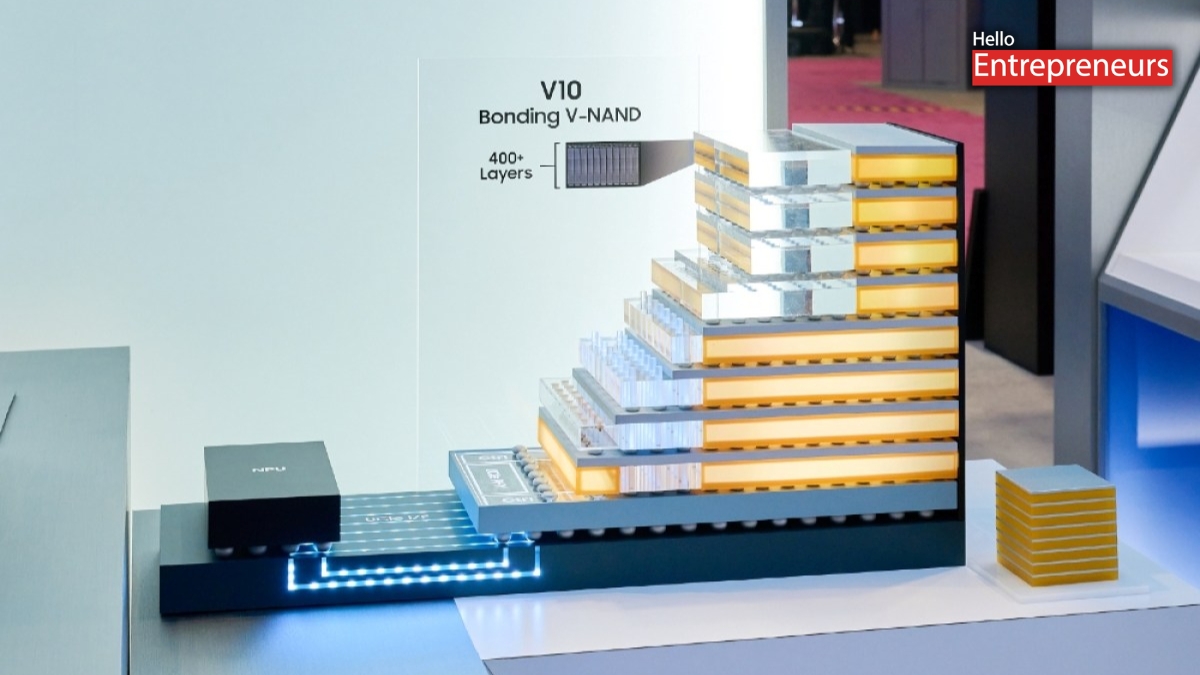
New Delhi: Samsung’s bid for a bigger share in the fast-expanding AI market has been bolstered by its newest memory technology, called BVNAND V10. The company has presented the new technology for storing data, particularly for use with AI accelerators, which marks a crucial leap beyond Samsung’s former status as a smartphone king to reach great heights in technology.
It is believed that the new BVNAND V10 technology will boost Samsung’s credibility of the company not only in the semiconductor sector, but in the AI sector. The rapid advancement of AI application is creating a demand for enterprise’s to utilize faster, bigger, and more energy-efficient storage solutions. Samsung’s new innovation aims to solve these challenges by offering improved performance and higher storage capacity.
A Big Move Towards AI Future
Artificial Intelligence is turning into one of the most crucial and thriving tech sectors across the planet. Whether it’s AI chatbots, smart assistants, or self-driving cars, or advanced data centers, all AI systems demand robust memory and storage options.
Samsung’s BVNAND V10 caters to meet such new demands. The technology adopts a new wafer-bonding architecture, and boasts over 400 layers, enabling a higher storage density than in previous generations. The new solution is said to increase the memory density by approximately 58% over its prior V9 NAND solution.
This innovation could facilitate Samsung’s partnership efforts with AI firms, cloud service providers, and chipmakers. The growing market share in the hardware segment of artificial intelligence could help tarnish Samsung’s reputation and generate investors trust.
Strengthening Samsung’s Semiconductor Reputation
Samsung is already one of the world’s biggest memory chip manufacturers. But the semiconductor sector has become fiercely competitive as firms strive to out-innovate one another by creating more powerful AI-powered devices.
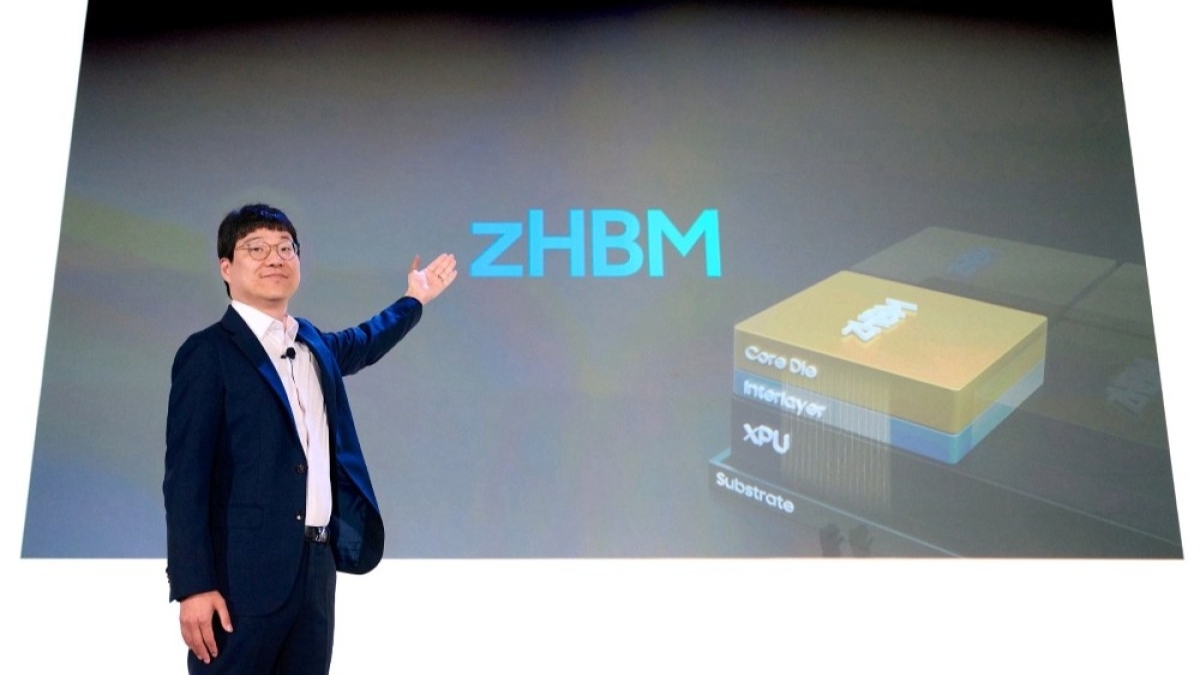
But Samsung is proving that it’s not just about smartphones and consumer electronics in its quest to invest in new technologies via BVNAND V10. The company has also been continuing to build its memory family for AI, featuring a line of advanced solutions with HBM technologies geared towards next-generation AI systems.
It’s an AI focus that may well help Samsung become more of a tech brand, and less of a phone brand.
Impact on Samsung’s Popularity
The Galaxy smartphones, televisions and home appliances resonate best with the company’s day-to-day consumers. But new innovations such as BVNAND V10 can help to build the company’s name among businesses and technology professionals.
If Samsung makes a success of this technology in real-world AI systems it might further fortify its reputation as a leader for the future of computing. New business growth potential may also be provided by other AI cooperation and semiconductor development projects.
The Road Ahead
As companies shift from simple AI models to more complex AI services, which demand higher processing speeds, the demand for AI hardware will likely persist. This trend is expected to make Samsung a winner with Next Generation Storage technology.
The fact that BVNAND V10 is not immediately part of users’ experience with their smartphones is a notable accomplishment for Samsung’s technology vision for the long-term future. Samsung’s strategy on AI chips and new memory solutions is pushing it to become an integral part of the development of AI.
In summary, BVNAND V10 has the potential to be a breakthrough company that not only gains recognition for Samsung’s global technology but also solidifies its standing in the age of AI.

