



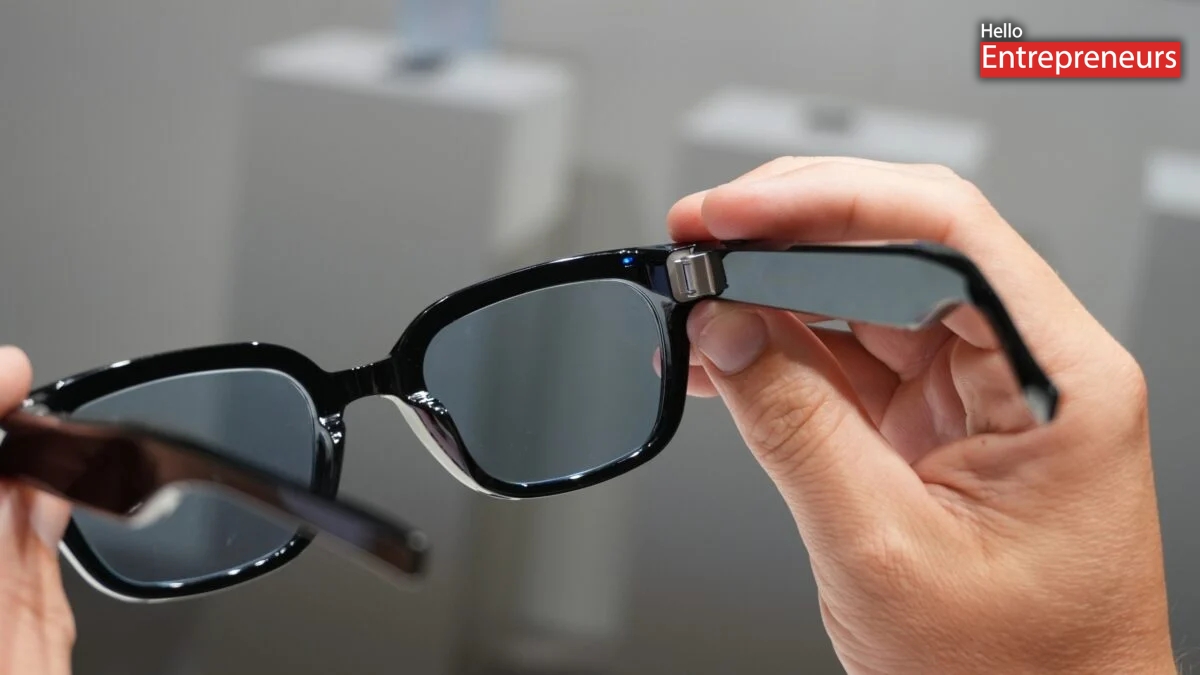
New Delhi: Samsung’s smart glasses just passed an important checkpoint. Several versions of the company’s Intelligent Eyewear have shown up in the US Federal Communications Commission database, and that’s usually a sign a product is weeks from shelves, not months.
SamMobile spotted the filings. Two base models, SM-O200J and SM-O200P, are listed, and the certification covers a range of styles across both families: five under the J line and four under the P line. So Samsung isn’t launching one pair of glasses. It’s launching a lineup of frames.
One small detail from the documents: the power button sits on the inside of the broad temples. That’s an odd place to put it, though a hidden button probably helps keep the outside of the frames looking like normal glasses, which is clearly the goal here.
The wireless specs are the surprising part. Both models support Wi-Fi 6E and Wi-Fi 7. That’s a lot of connectivity for something this small. Gadgets with tiny batteries usually make do with Wi-Fi 5 or Wi-Fi 6 because the newer standards can be hungrier. Both also carry Bluetooth 5.3 with Low Energy support and transfer speeds up to 2Mbps. Why Samsung wants Wi-Fi 7 in a pair of glasses isn’t clear from the filings, and I wouldn’t guess too hard. Faster pairing with a phone, maybe, or room to grow in later software updates.
Battery life is where things get practical. Samsung has said the glasses last up to nine hours per charge, and the charging case holds up to seven more. Fully topped up, that adds up to roughly a week before you need a wall outlet. Those are the company’s own numbers, though, and real-world use with cameras, voice assistants and a screen-free display could look different once reviewers get hold of them.
What we don’t have is a date or a price. An earlier report suggested Samsung planned to release its first smart glasses later this year, and the FCC approvals make that timeline look a lot more believable. Certification doesn’t guarantee a launch, but companies rarely pay for it unless they’re ready to sell.
Samsung hasn’t commented on the filings. With a nine-hour battery, a week of case charging and serious wireless hardware already on paper, the next thing to watch for is an invite to an actual launch event.

