


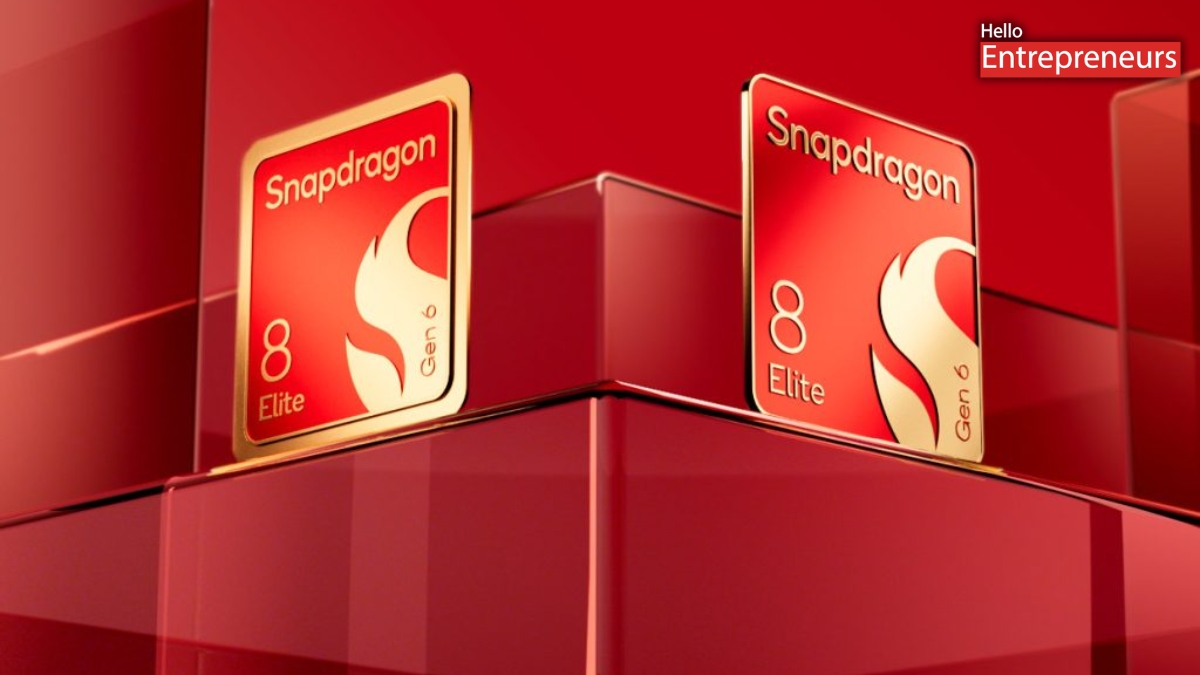
New Delhi: Qualcomm has recently used its annual Snapdragon Summit this week to introduce it two latest flagship and most powerful mobile chips, the Snapdragon 8 Elite Gen 6 and a beefed-up Snapdragon 8 Elite Extreme Gen 6, and the pitch is crystal clear: more of the AI work should happen on the device, not in the cloud.
The headline number is the mixture‑of‑experts model. The Extreme chip can reportedly run this 30‑billion‑parameter mixture‑of‑experts model. MoE architecture means that the full 30‑billion‑parameter mixture‑of‑experts model is huge but only a slice of those parameters actually fires for any given task. This keeps things fast without needing a data center on the end. The 30‑billion‑parameter mixture‑of‑experts model can reportedly run locally. MoE architecture means that the full 30‑billion‑parameter mixture‑of‑experts model is huge but only a slice of those parameters actually fires for any given task keeping things fast without a data center.
For context, Apple’s most advanced foundation model, announced at WWDC in June, topped out at 20 billion parameters. Qualcomm’s leapfrogging that, at least on paper.
There’s a practical angle here too. Both chips get a new sensing hub built to run small models up to 200 million parameters dedicated to personalization. Qualcomm says this lets a phone run something like a personal scribe that can tell speakers apart, build a picture of how you actually use your device, and get better over time at suggesting what to automate. The company also says a full voice-in, voice-out AI agent can run through the chip without leaning on the cloud.
Camera and video got attention too. The new silicon offers pixel-level control aimed at more “pro” shooting, along with sharper stabilization and motion tracking. The Extreme version can handle 8K video at 60fps, plus 4K at 240fps for slow motion, and supports Qualcomm’s Advanced Professional Video codec. On the audio side, both chips lean on AI for vocal clarity and noise reduction, including a new “voice bubble” feature meant to isolate a caller’s voice from background noise.
Motorola wasted no time putting the Extreme chip to work, announcing its Signature 27 phone at the event, with general availability expected later this year.
The bigger story is where Qualcomm thinks this is all headed. The company has said it’s working on more than 40 AI-focused devices, but there’s a growing consensus echoed recently by Nothing co-founder Carl Pei and new Apple CEO John Ternus that the smartphone itself, not some new dedicated gadget, will end up being where most people actually use AI day to day.

