



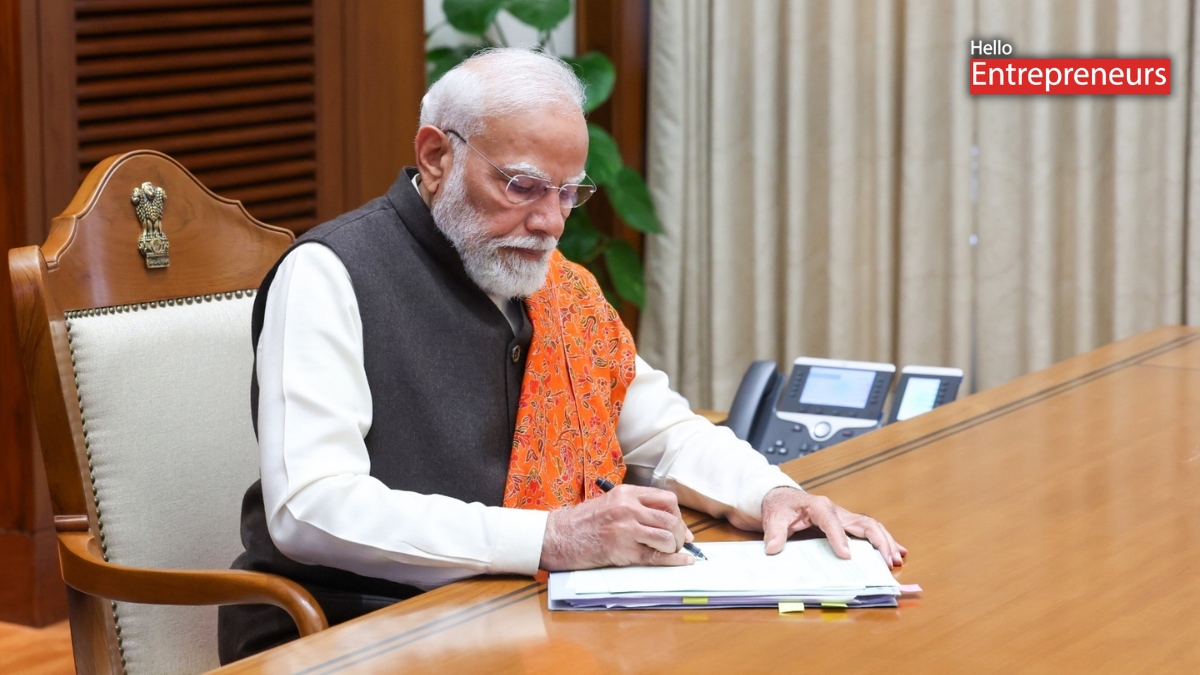
New Delhi: India is heading towards a significant shift in the approach, methodology and growth of defence and space development and utilization. In the recent past there has been a clear shift from the Prime Minister Narendra Modi government towards involving Indian private companies, startups and industries in the sectors which were largely dominated by government entities.
The most significant point is that India wants to shift from imports of defence technology to the development and production of the same in the country.
A major breakthrough came on 25 August when Defence Minister Rajnath Singh gave approval for “transfer of technology” of all conventional missile systems developed by Defence Research and Development Organisation (DRDO) to Indian Defence companies. This will enable the qualified private companies to produce such systems in India.
India’s defence sector may see a transformation in a few ways due to this. The armed forces may be able to benefit from quicker production and more competition, while private companies may have more opportunities to work on advanced systems. The government also anticipates that it will lead to a lesser reliance on foreign defence equipment and more technology and value being developed within the country.
Space sector gets a similar push
The private sector is also gaining access to the space sector. India’s space policy changes have already fostered a thriving start-up ecosystem focused on rockets, satellites, propulsion, space intelligence, weather technology and much more.
Recently, Prime Minister Narendra Modi in his meetings with 20 Indian space startups urged them to explore beyond conventional space applications. He urged the industries to explore and utilise space technology in the field of agriculture, environment, livestock production and other sectors which have direct implication on the life of the people.
The numbers indicate the rate at which this sector is developing. As per government statistics, India currently has approximately 440 registered space startups, whereas there were only about 10 in 2014. The space economy in India is estimated at $9 billion and could reach $40–45 billion in the next decade.
What does this mean for India’s future?
The larger vision is to develop more defence and space-based firms. Indian Government is pushing for creating an ecosystem where Indian Companies own technologies, provide solutions to global problems by developing IP and compete globally.
For defence it could be greater self-sufficiency in manufacturing, speedier supply chains and less reliance on foreign elements. For space it could be a world of greater private rockets, satellites, data services and applications available to international markets.
With effective implementation of these reforms, India can slowly transform from being a significant defence and space technology buyer to being a global developer and manufacturer and exporter.
The next big challenge will be execution. Indian companies will require long-term investments, skilled talent, research facilities, and a stable government backing. When these pieces fall into place, the opening up of these key sectors may prove to be a vital step in developing India’s technology-driven economy and national security capabilities.

