



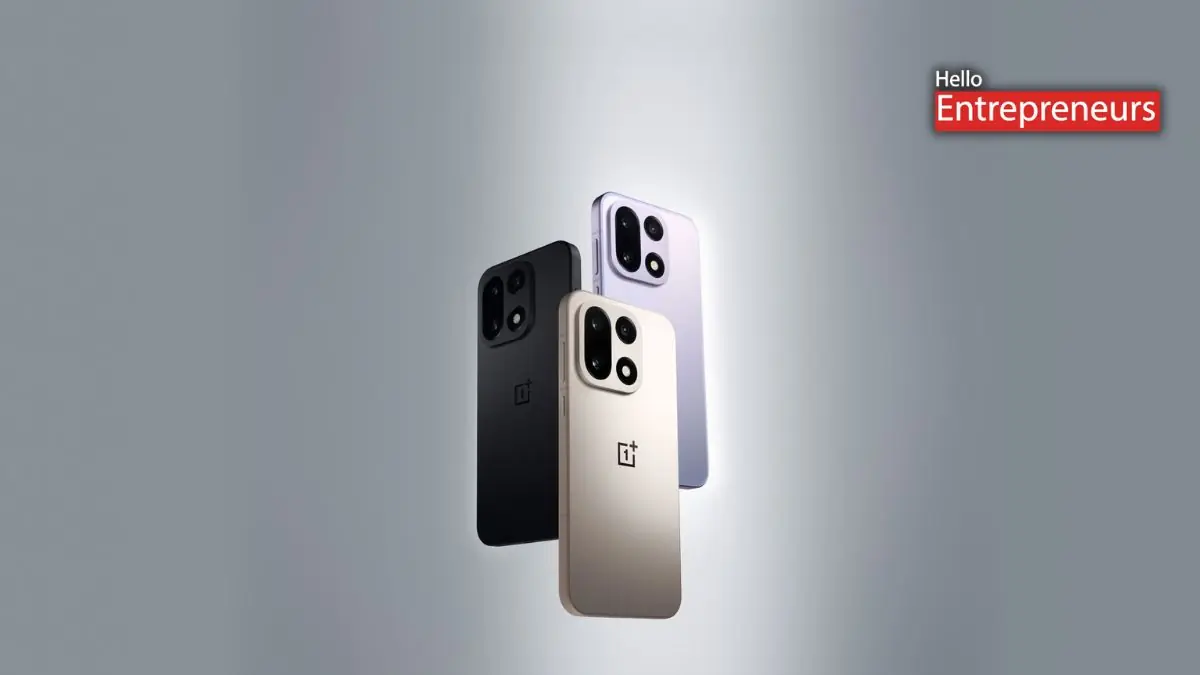
New Delhi: So we all know that OnePlus has recently announced its upcoming flagship smartphone, OnePlus 15, but recently, OnePlus has unveiled its latest Gaming technology, a suite of hardware and software innovations designed to improve the performance and stability during mobile gaming. The company has added that these features will debut with the upcoming launch of the OnePlus 15 series. This latest system will include the three major components, which are: OP Gaming Core, OP Performance Tri-Chip, and OP FPS Max, which are all aimed at enhancing frame rates, touch response and thermal efficiency.
Now let’s talk about these three major components. OP Gaming Core: at the centre of the announcement is the OP Gaming Core, a chip-level optimisation platform which is developed by OnePlus itself. The company has also claimed it has been built using more than 20,000 lines of code, and it is supported by 254 patents. It also introduces a custom CPU Scheduler that will analyse gaming workloads and redistribute processing tasks to reduce the CPU strain by nearly 23%. This latest system also integrates a self-developed energy consumption model for gaming, replacing Android’s default scheduler. This report helps to reduce the power draw and maintain 120fps gameplay with fewer frame drops.
The upcoming #OnePlus15 introduces #OPGamingCore at the OnePlus Gaming Technology Event!
OP Gaming Core is a full hardware–software integration layer that connects three dedicated chips working in sync:
🔹 Performance Chip (Snapdragon 8 Elite Gen 5) for stable FPS
🔹 Touch… pic.twitter.com/KKCl4Riwoc— OnePlus Club (@OnePlusClub) November 3, 2025
The Next-Gen HyperRendering features will enhance GPU performance by redesigning the rendering pipeline at the driver level. OnePlus also stated that it will improve per-frame rendering efficiency by 80% and lower latency by integrating frame interpolation directly into the main chipset, instead of relying on a separate chip. The second component is a Performance Tri-Chip hardware system, consisting of the Performance Chip, a dedicated Touch Response Chip, and the latest Wi-Fi Chip G2. The setup supports up to 165Hz touch sampling, improved network stability, and prioritised gaming data transmission in weak signal areas.
The third component is the OP FPS Max ecosystem, which has been developed over three years to enable 165fps gaming on compatible titles. It combines hardware, software, and display technology to offer higher frame rates than the current 120fps standard.

