



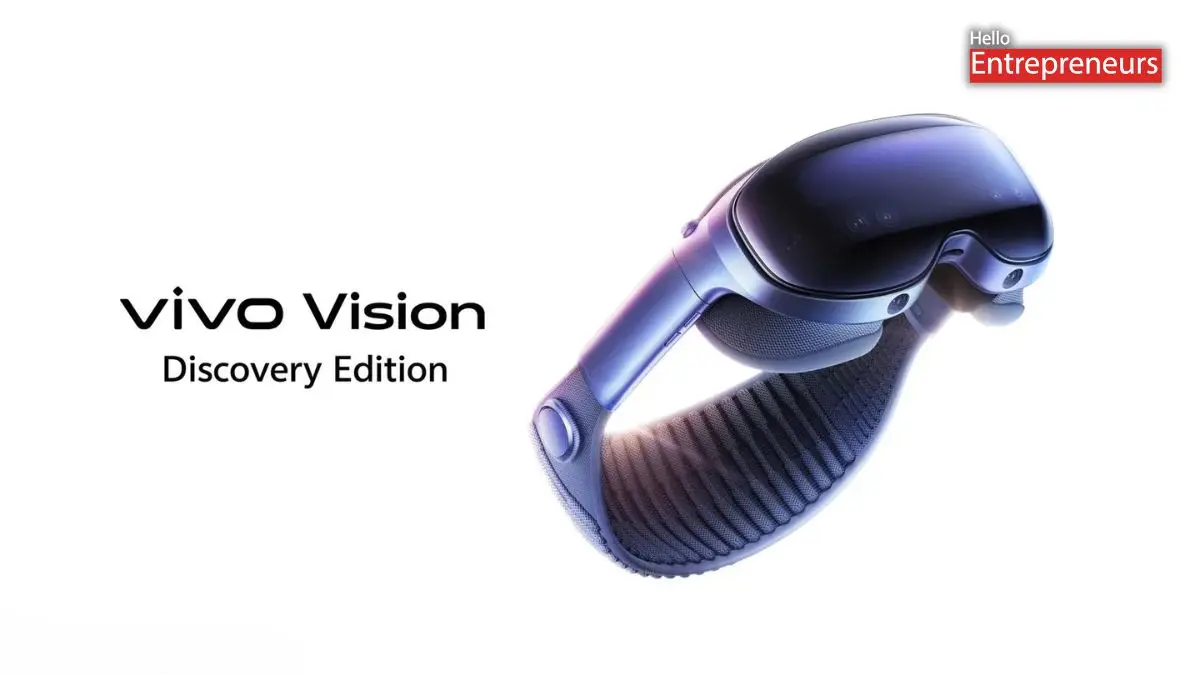
New Delhi: Vivo has officially announced their latest mixed-reality headset to make an intense competition to beat Apple and Meta, because Meta and Apple are growing for this technology, much and Meta is becoming an powerful player in technology industry, with their latest and some of the upcoming features they might get into the global market, so by focusing on this, Vivo has also decided to make their impressive move in this MR headset technology. This device will come with the name of Vision Discovery Edition, and Vivo has answered something to Apple’s $3500 Vision Pro and Samsung’s soon-to-be-introduced Project Moohan headset.
Vivo’s 30th anniversary has now become a top technology rival for the MR headset, and is directly targeting Meta, Samsung, and Apple. This anniversary event was in Dongguan, a city which is popularly known as a central manufacturing hub. Vivo is referring to the device as its first mixed-reality headset, which utilises both augmented reality and virtual reality, which are known in the short form of AR and VR. The Headset bears an uncanny resemblance to Apple’s Vision Pro, and this is made from a metal frame and has plastic, glass, and fabric.
#vivoVisionDiscoveryEdition takes you to a new level of entertainment, gaming, and productivity.
Can’t wait for the vivo Vision Launch Event & Imaging Grand Ceremony on August 21! pic.twitter.com/rBCt7YEiOr
— vivo Global (@Vivo_GLOBAL) August 20, 2025
And if we discuss the weight and or things, Vivo’s Headset weighs only 398 grams, with a height of 83 mm and a thickness of 40 mm, and Vivo has also claimed that their Headset is 26% smaller than the industry average. This Headset has an eye tracking system that allows users to control the interface by looking at and tapping with their fingers. This Vivo Vision uses tiny microOLED displays with high pixel density and resolution. This will allow the users to record 3D videos and capture spatial images, but the users will need to select a Vivo smartphone to use this Headset.
These headsets are helpful for watching movies and web shows, and Vivo also claims that the screen can appear as large as 120 feet wide. It is powered by Qualcomm’s Snapdragon XR2+ Gen 2 platforms. Vivo has also developed its proprietary operating system called OriginOS, which is especially designed for its headsets. But there is one more thing which the challenges they wanted to face, that is technology rapidly advancing from the displays to chips, mixed and extended reality is poised to benefit in the upcoming phase of computing, with the companies pouring billions into the technology. However, it will depend much on how quickly they enter the market, which develops for these impressive devices, while they want to improve their displays and the chips for better competition.
There is another major challenge in how companies can develop compelling immersive applications and productivity suites that truly convince consumers to purchase these headsets, moving beyond occasional productivity applications and random games. Companies also need to figure out how well these headsets integrate with existing smartphones and computers, especially as a technology firm continues to emphasise that consumers will rely on multiple devices at the same time.
But as companies continue to experiment with the standalone mixed-reality headsets and augmented reality glasses, simple glasses which are equipped with cameras, and the artificial intelligence built in, they have gained popularity. Meta has found success with its Ray-Ban smart glasses, which don’t have a display, but they can handle tasks like recording videos and making phone calls.

