



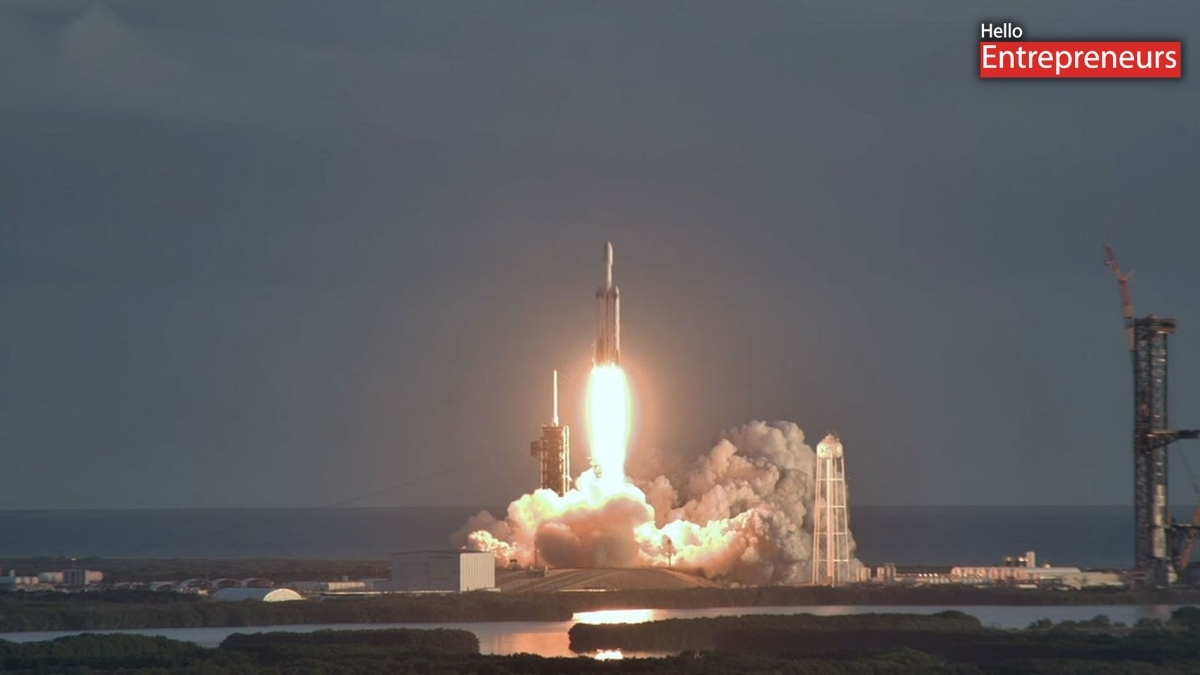
New Delhi: NASA’s Nancy Grace Roman Space Telescope has officially been unveiled into space successfully, by making a significant achievement in the agency’s work to address some of the universe’s greatest mysteries.
The introduction of the telescope was on August 30th on a SpaceX Falcon Heavy rocket from Launch Complex 39A at NASA’s Kennedy Space Center, in Florida. Following the launch, the Roman, spacecraft was successfully separated from the second stage of the rocket, thus embarked on its independent flight.
After the separation was successful, NASA stopped broadcasting the launch. The agency also was preparing a post-launch news conference to be led by NASA Administrator Jared Isaacman, NASA’s Science Mission Directorate (SMD) Director of Research Programs Nicky Fox, Jackie Townsend, NASA Roman project manager, senior project scientist Julie McEnery, and launch director Denton Gibson.
Roman begins its journey into deep space
The Roman Space Telescope is now moving towards the second Sun-Earth Lagrange point, or L2 point, 1 million miles away. The teams will go through deployments, system checks and other commissioning activities as the spacecraft works its way to its final orbit, which will take approximately three months as expected by NASA.
When it is running at full capacity, Roman will provide a broad and comprehensive perspective of the universe to scientists. It will be able to scan vast amounts of space much faster than the Hubble Space Telescope with the added advantage of a field of view at least 100 times greater.
Telescope will study dark energy and exoplanets
One of Roman’s main objectives will going be to shed light on dark matter and dark energy, two of the most intriguing mysteries in contemporary astronomy. Telescope will also going to hunt for planets beyond our solar system and examine billions of galaxies, stars and other objects.
NASA expects Roman to provide a huge amount of scientific data during its five-year primary mission. This knowledge will help scientists all over the world gain a better understanding of the creation of the universe, galaxy evolution, and the cause of its ongoing expansion.
With the successful completion of the launch, NASA’s attention will shift from the launch operations to the travels of the telescope, its deployment and preparation for science operations. The Roman mission will provide astronomers a completely new perspective of the universe in the years to come.

