



Mumbai: For years, the AI boom has looked like a race to build bigger models, faster servers and increasingly expensive data centres. Now, another contest is becoming impossible to ignore: who controls the chips underneath the AI empire?
Microsoft appears ready to take another serious step in that direction. The company is reportedly preparing to unveil its Maia 300 AI accelerator as early as September 2026, while negotiating manufacturing capacity with TSMC for more than 300,000 chips targeted for delivery in 2027. Longer term, Microsoft is reportedly aiming for capacity exceeding one million units.
The message is rather simple: renting someone else’s intelligence hardware forever is expensive. Building your own is merely complicated. Much more complicated.
The Chip War Is Becoming A Cost War
Microsoft is not trying to erase Nvidia from existence. At least, not yet.
Instead, its strategy appears to be about creating another option for the enormous AI infrastructure running inside Azure. Microsoft already uses Nvidia and AMD hardware alongside its own silicon, while its Maia programme is designed to optimise particular workloads from the chip level through the cloud stack.
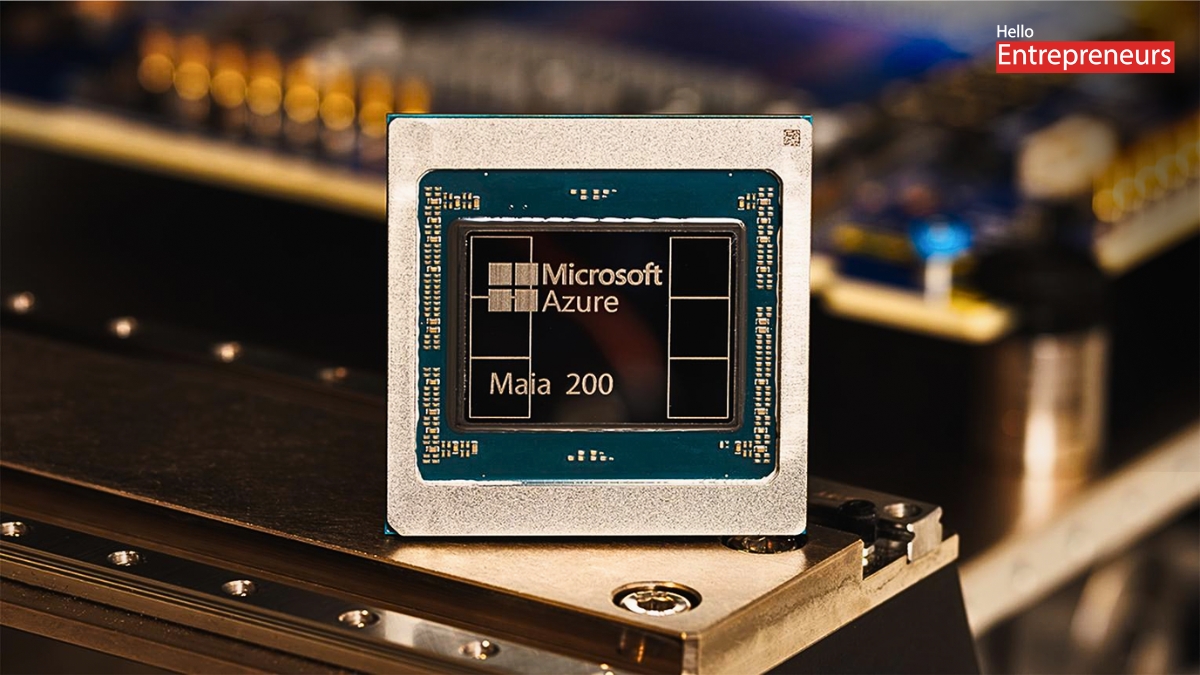
The approach has already produced Maia 200, introduced in January 2026. Built using TSMC’s 3nm process, Maia 200 includes more than 140 billion transistors and was designed primarily for AI inference. Microsoft says it delivers 30% better performance per dollar than the latest-generation hardware previously deployed across its fleet.
That matters because AI economics are changing. Training a frontier model gets the headlines, but running that model millions of times for users is where costs can quietly become monstrous.
Microsoft Wants More Control Over The AI Bill
Custom silicon gives Microsoft something valuable: control.
A purpose-built accelerator can be designed around the exact workloads Azure expects to handle rather than paying for a general-purpose solution and adapting everything around it. That could eventually help Microsoft manage energy consumption, performance and the cost of serving AI applications at enormous scale.
There is another advantage. Microsoft can coordinate chips, software, cloud infrastructure and AI models instead of treating them as separate businesses.
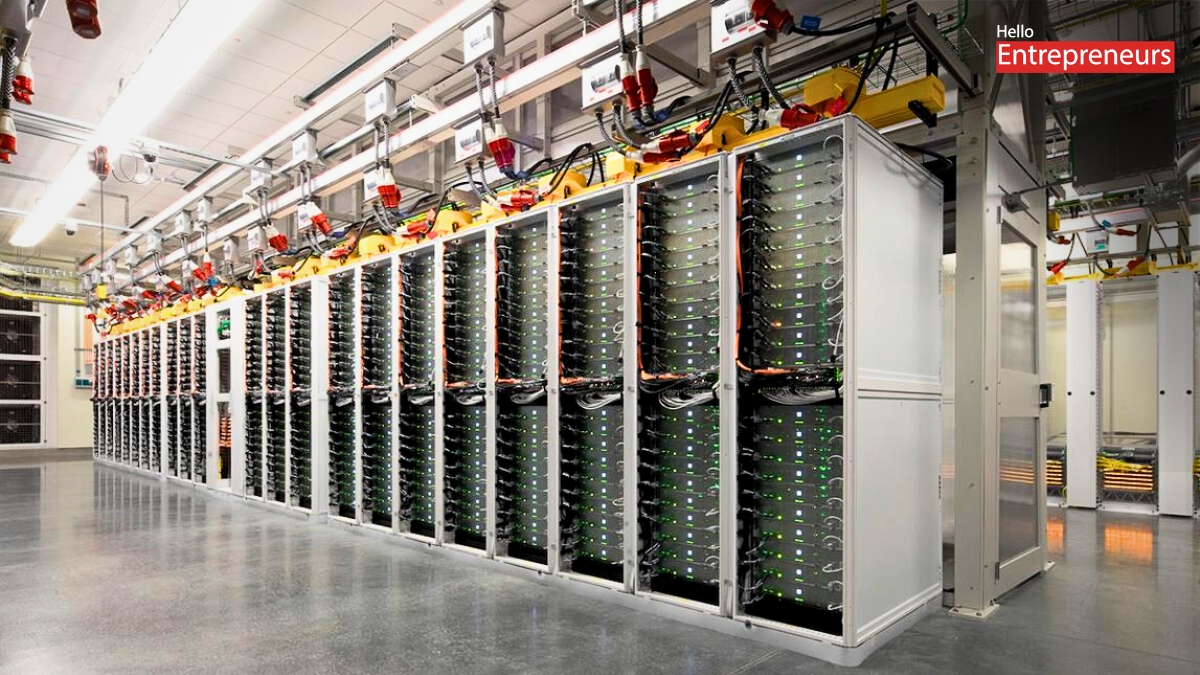
Its Maia 200 is already deployed in U.S. data centres, including regions in Iowa and Arizona, while Microsoft has developed a dedicated SDK to help developers optimise workloads for the hardware.
The Nvidia Escape Route Has A Catch
There is, however, a rather inconvenient detail hiding beneath the shiny silicon.
Designing an AI chip is not the same as replacing Nvidia.
Nvidia’s advantage extends beyond processors into networking, software, developer tools and an enormous ecosystem built around CUDA. Microsoft therefore needs Maia to perform well not just on paper, but across real-world workloads at massive scale.
There is also the manufacturing bottleneck. Advanced AI chips require sophisticated fabrication and packaging capacity, and Microsoft remains dependent on TSMC for production. The reported negotiations for hundreds of thousands of Maia 300 processors therefore do not mean Microsoft has suddenly become independent of the global semiconductor supply chain.
And then there is the software question. A chip can be spectacularly engineered and still become an expensive ornament if developers cannot use it easily.
The Bigger AI Battle Is Moving Downstairs
Microsoft is hardly alone in this pursuit.
Google has its TPU family. Amazon has Trainium. Microsoft has Maia. The pattern is unmistakable: hyperscalers increasingly want to own more of the machinery behind the AI services they sell.
That makes Maia 300 important even before its specifications are public. The reported launch represents another stage in the industry’s transition from AI model competition to full-stack competition.
For Microsoft, the prize is potentially enormous: lower infrastructure costs, greater control over supply and the ability to tailor hardware to Azure’s rapidly expanding AI workloads.
The downside is equally clear. Custom silicon requires colossal investment, long development cycles and constant iteration. In AI, yesterday’s breakthrough has a nasty habit of becoming today’s expensive paperweight.
Still, Microsoft appears willing to take the gamble.
The company is not abandoning Nvidia. It is building bargaining power.
And in an industry where every AI query consumes computing power, bargaining power may turn out to be one of the most valuable chips of all.
Read More: India Wants 1 Crore Youth to Learn AI

