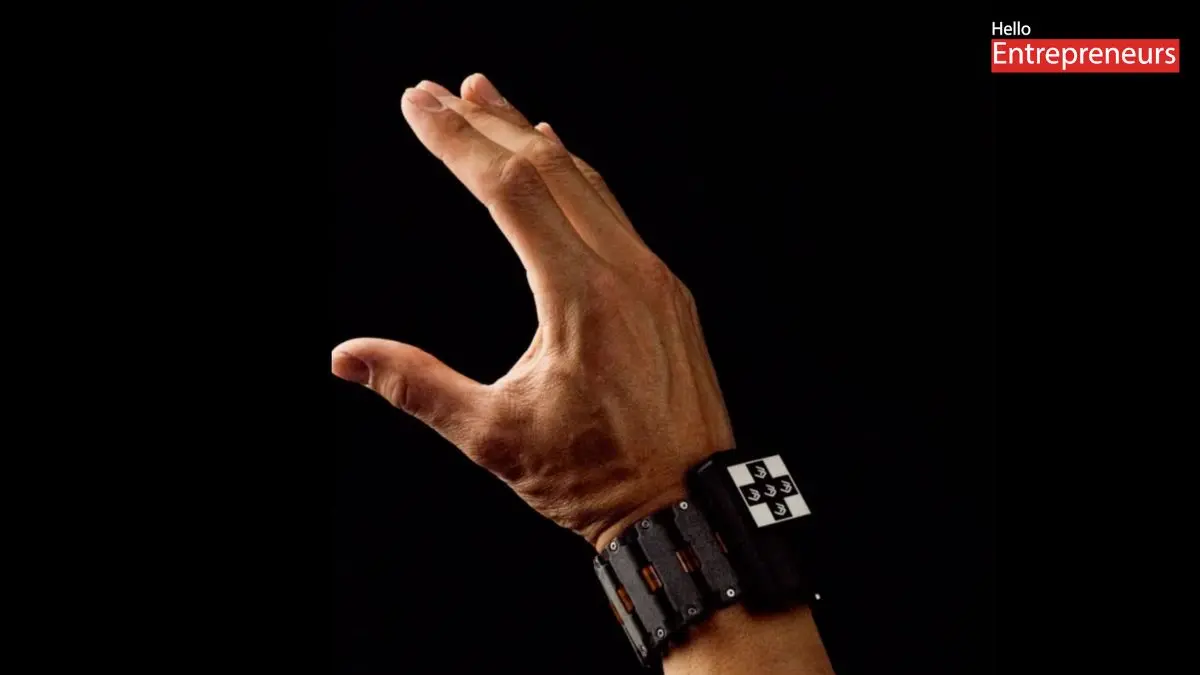








New Delhi: A most sci-fi invention has been unveiled by the engineers from Facebook’s parent company, Meta. They created a bracelet that translates hand gestures into computer actions. This will include fine motor movements like dotting a lowercase I, and translating handwriting into computer text is something the interface is particularly good at. This was designed inside Meta’s Reality Labs; it’s one of the first major offerings from the in-house moonshot department since the collapse of the company’s Metaverse concept, which was once expected to define the future of social connection, according to CEO Mark Zuckerberg, who renamed his company in its honor.
Imagine controlling your devices with a subtle hand or finger gesture. Our cutting-edge research turns intent and muscle signals into seamless computer control. This breakthrough wrist technology is redefining how we interact with computers—intuitive, precise, and ready for the… pic.twitter.com/2dXERZYqkY
— Meta (@Meta) July 23, 2025
The Metaverse ultimately proved to be less of a future-defining technology and more of a damp squib, with Meta’s Reality Labs division losing $14 billion in 2022 and $15 billion in 2023. Reality Labs was on the chopping block during Meta’s Year of Efficiency, with perhaps as many as 10,000 layoffs taking place in advance of a direction shift to what almost anyone would admit is a more exciting and marketable business direction, one that resembles Star Trek.
This device will translate the electrical signals generated by muscle movements at the wrist into computer commands without the need for personalised calibration or invasive procedures. This bracelet slips on and off as easily as the other one. Technical engineers Patrick Kaifosh and Thomas Reardon, who oversaw its development, then utilised deep learning to create generic decoding models that accurately interpret muscle movements across different individuals without requiring individual calibration. The more participants who used it, the more accurate the deep learning decoding model became.
However, accuracy and performance were further increased with personalisation, offering a recipe for building high-performance biosignal decoders for various applications. The bracelet operates via Bluetooth connection, and among the various tasks it proved capable of carrying out, its translation of human handwriting movements into text could be done at a speed of 20.9 words per minute, approximately 16 words per minute slower than the average mobile phone user’s speed.
As to exactly who benefits most from the device, a variety of disabilities and paralysis situations immediately come to mind, as well as the obvious benefits for below-the-elbow amputees, or someone using multiple computers and monitors at the same time.