



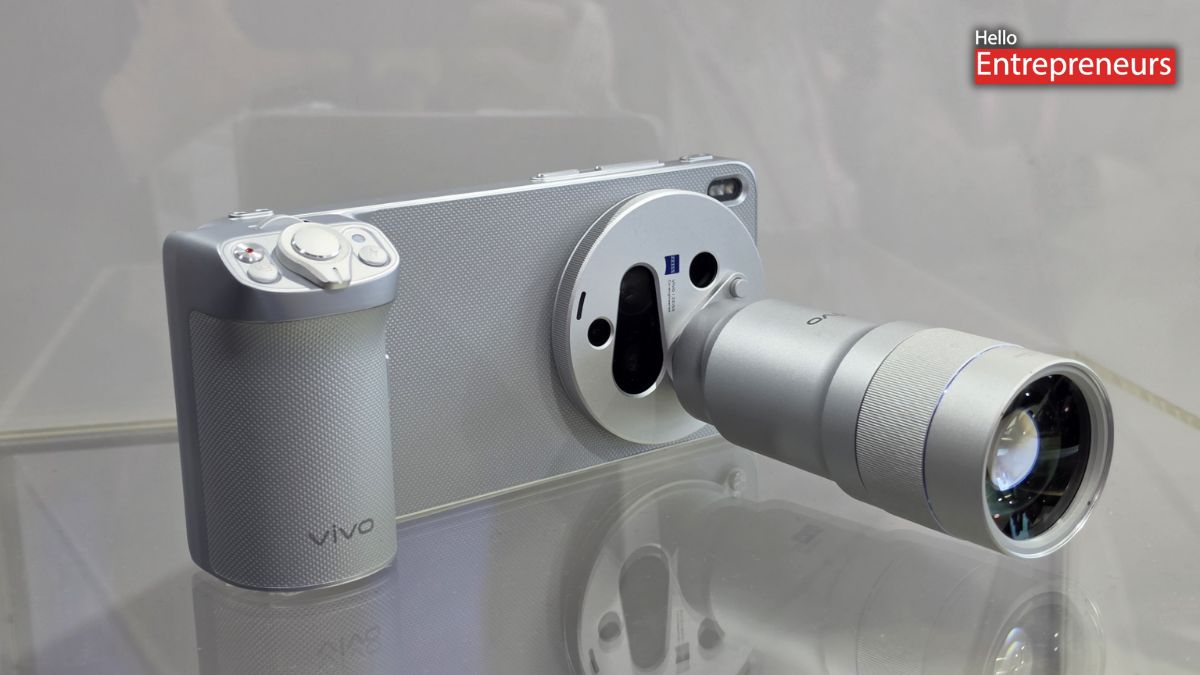
New Delhi: There are smartphones, but there’s also the Vivo X300 Ultra. You’ll have to trust us when we say that’s not hyperbole, it’s true and we’ve spent weeks with what could well be the camera phone we’ve ever had in our hands. Watching the incredibly cool photographs being captured by those mobile phones and waiting for a camera phone without the fat belly, this is the thing.
Display
This year, Vivo took a different approach, with a more streamlined design that lacks the curves present in the X200 Ultra on the front and rear of the phone, and instead features a wider middle frame. Hand feel is solid and purposeful, but it’s definitely a big phone. It’s a massive piece of equipment, and one of the largest camera islands ever found on a phone a round camera module that really stands out an eye-catching. It’s a matter of preference and it’s all about your taste. Once you see the bold aesthetic, though, there’s a lot more sense in all of those cameras.
The phone has a gorgeous 6.82 inch AMOLED screen that’s really bright and shows things at an incredibly smooth 144Hz. And in fact, Vivo have stepped up to 144Hz for this version of the phone and you absolutely can tell, when you’re doing everyday scrolling or in the middle of a game. When you’re enjoying a movie, or even just browsing your photos, the screen is brilliantly clear, and it has Dolby Vision and HDR10+ to prove it. It’s a screen that will very quickly make all others seem slow in comparison.
Performance
It’s now powered by the latest Snapdragon 8 Elite Gen 5 chipset, so there’s no effort required to get the best performance. It’s capable of handling everything from intense gameplay to AI tasks, video shooting and editing, and photo editing, making it all the easier to do with 12GB of RAM and up to 1TB of storage. This is the type of chip that should make you forget any performance concerns altogether, and that’s what it should do on any flagship for the amount of cash you’re spending.
Cameras
It’s equipped with a new 200MP Sony Lytia LYT-901 main camera, a 200MP custom Samsung ISOCELL HPB telephoto lens and a 50MP Sony Lytia LYT-818 wide-angle lens. The 35mm focal length of the main camera is a fascinating option, as it can offer more interesting compositions and pleasant portraits than standard 24mm cameras.
The camera is generally quite good with lots of detail and Vivo has made noise reduction a science on this lens. The 200MP tele lens is definitely the top of the bunch in this class, making it possible to capture usable images at up to 10x zoom.
The X300 Ultra really outshines the rest in the video arena. All rear cameras record 4K120 Dolby Vision video, while the 50MP front camera can record video in 4K60 Dolby Vision. There is 10-bit Log video and a Pro mode which allows you to import custom LUT’s with on-the-fly preview. There’s really nothing out there that’s better than it is right now, if you’re into mobile videography anyways.
The partnership between Vivo and Zeiss provides some of the finest lens performance and image tuning for Android if not the world.
Battery
This year, the battery capacity has increased from 6,000 mAh last year to 6,600 mAh and that’s evident in real-world use. The X300 Ultra can charge in 100W mode and fills up the battery in no time; this is perfect for heavy users who don’t have to carry a charger around. This is easily one of the best battery life in any flagship at the moment.
Software
OriginOS 6 represents the Vivo company’s significant strides in improving its software experience on the global market, as it ousts the older FuntouchOS releases in terms of being modern, clean, and packed with the features. However, there remains a number of unpolished features and speaker performance is just good, not class-leading. Not perfect, but it’s a step forward.
Final Thought
The Vivo X300 Ultra is bold, it’s costly, it’s an extremely camera-oriented smartphone and in truth, Vivo should be able to be bold here given that it delivers for just about every flagship-forward aspect that’s important in a modern smartphone.

