



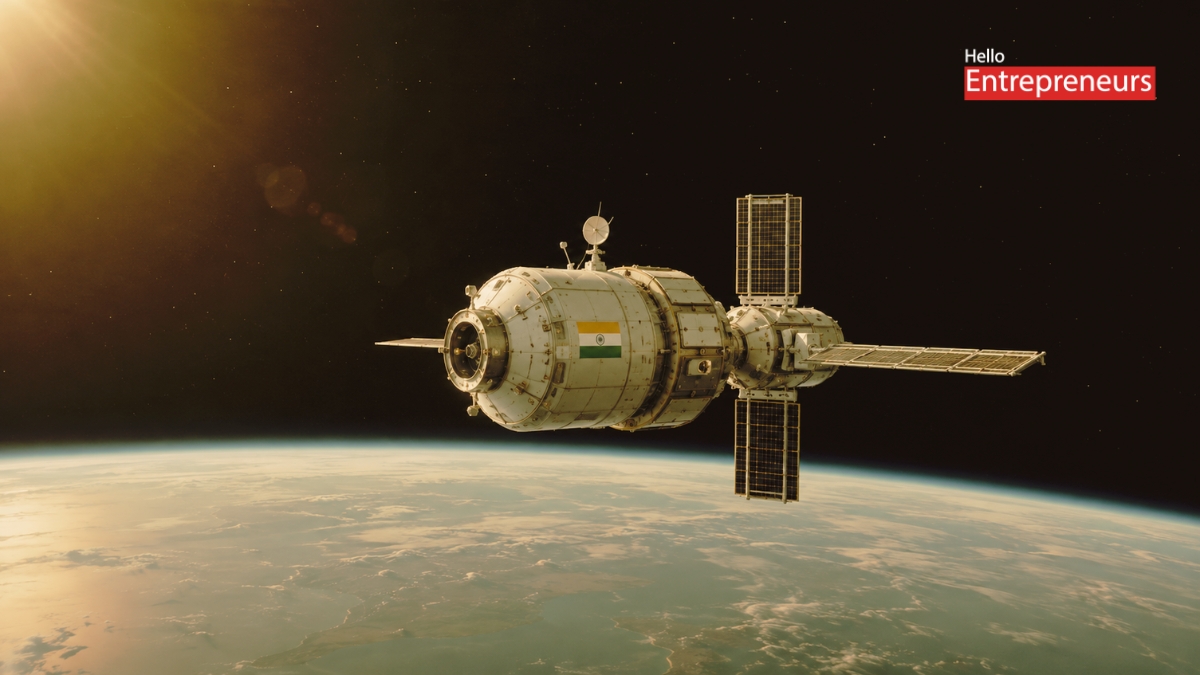
With subsystem design underway and the first module set for 2028, the Bharatiya Antariksh Station is quietly inching closer to becoming India’s own address in orbit.
This station isn’t just a talking point anymore—not just a slide in a PowerPoint or a punchline in a patriotic speech. The BAS project is now deep in the weeds: engineers wrangling with technical drawings, specifications, stacks of paperwork—the stuff that actually gets things built.
According to the latest update to Parliament, ISRO has wrapped up the Baseline Design Review and system engineering for BAS-01, the first of five planned modules. An expert committee went over the design, 31 key documents have been released, and as the government put it—no fanfare—“Design of subsystems have commenced.”
Basically, those thick files on government desks could turn into something real, floating above our heads.
Honestly, there’s some neat symbolism here. A country often teased for shuffling papers from desk to desk is now, at least in spirit, getting ready to launch them into space.
India’s Space Date: 2028
The plan calls for the first BAS module to launch in 2028. The full five-module station should be up and running by 2035. The government has pegged the cost of developing and launching BAS-01 at ₹1,763 crore between 2025 and 2028.
That’s big money, no doubt. But when you think about what’s on the line—a structure that needs a rocket for every delivery, escape hatches leading to the empty black, and “sea view” swapped for “planet view”—it actually feels almost modest.
And ISRO isn’t starting from scratch. Gaganyaan, India’s human spaceflight mission, has done a lot of this legwork already.
The tech behind Gaganyaan—the launch vehicle, mission operations, recovery, life-support, and comms—sets the foundation for BAS. ISRO has already clocked a successful TV-D1 test and two Integrated Air Drop Tests. They’re getting close to G1, the first uncrewed Gaganyaan flight. Docking interfaces are sorted out, and they’ve even demoed an in-orbit refueling tech.
The government calls BAS the “next logical step” in India’s manned space journey. It’s logical, sure. Easy? Not even close.
No Handyman Coming to the Rescue
Think about it. A space station isn’t like sending up a lone satellite. It’s more like running an apartment block where the plumbing can’t spring a leak, the lights can’t flicker, the air can’t go stale—and if a door jams, nobody’s calling for help.
Every normal need turns into a wild engineering challenge.
That’s why ISRO’s push for indigenous flight suits, crew seats, viewports, and docking systems really counts. Some of this tech was imported for Gaganyaan, but now the government wants it built at home. Prototypes are in the works.
India’s Atmanirbharta slogan just got a whole new suit—this time, it’s pressurized.
And honestly, BAS isn’t just about national pride.
If it stays more or less on track, the project could spark a local industry around life-support, robotics, space medicine, advanced manufacturing, new materials, microgravity research, and crew-rated electronics.
The station is expected to host research in life sciences, pharma, materials, and more. You can’t script scientific breakthroughs, but tech spinoffs from this scale often stick around for years and change how industries work.
From Guest to Host
There’s a bigger play here too.
Owning an independent orbital station lets India control its own research schedules, astronaut training, technology demos, and prep for longer missions. Sure, international collaborations will still matter, but it’s a whole different ballgame when you show up with your own lab instead of just your badge.
ISRO’s aligning with international standards for better compatibility and looking at partnerships with other space agencies. So BAS isn’t meant to stand alone—think of it as an Indian-led platform built for working with the world.
That said, 2028 isn’t that far away—at least, not by space program standards.
Hardware has to be built, stress-tested, broken, fixed, and then fit together with other systems that just can’t be hacked together last-minute. Gaganyaan’s progress matters for BAS, too, so slowdowns there could knock things off schedule for the station.
But here’s the thing: delays aren’t failure. In human spaceflight, it’s safer to be late and thorough than fast and reckless. Space doesn’t care about your deadlines, and gravity isn’t fooled by press releases.
Chasing Something Bigger
For a lot of Indians, space is about those moments—watching Chandrayaan touch down, cheering a perfect launch. BAS will be something different. Not one single, spectacular achievement, but the slow, steady effort of actually building a place to live in orbit.
Imagine this: a kid who watched Chandrayaan-3 land in 2023 could walk into a university lab ten years later and design an experiment for an Indian space station.
Yes, it’s still a dream. But these are the dreams big science programs are supposed to make real.
Right now, BAS-01 is engineering drawings and test rigs, not a shining station in the sky. But the work matters. Blueprints are turning into prototypes, funding is lining up, and deadlines are getting set.
India has spent decades asking if it can earn a place in space.
Now ISRO’s tackling a grittier question—can India actually build the place itself?
If all goes well, by 2028, we’ll start getting answers—one module at a time.

