



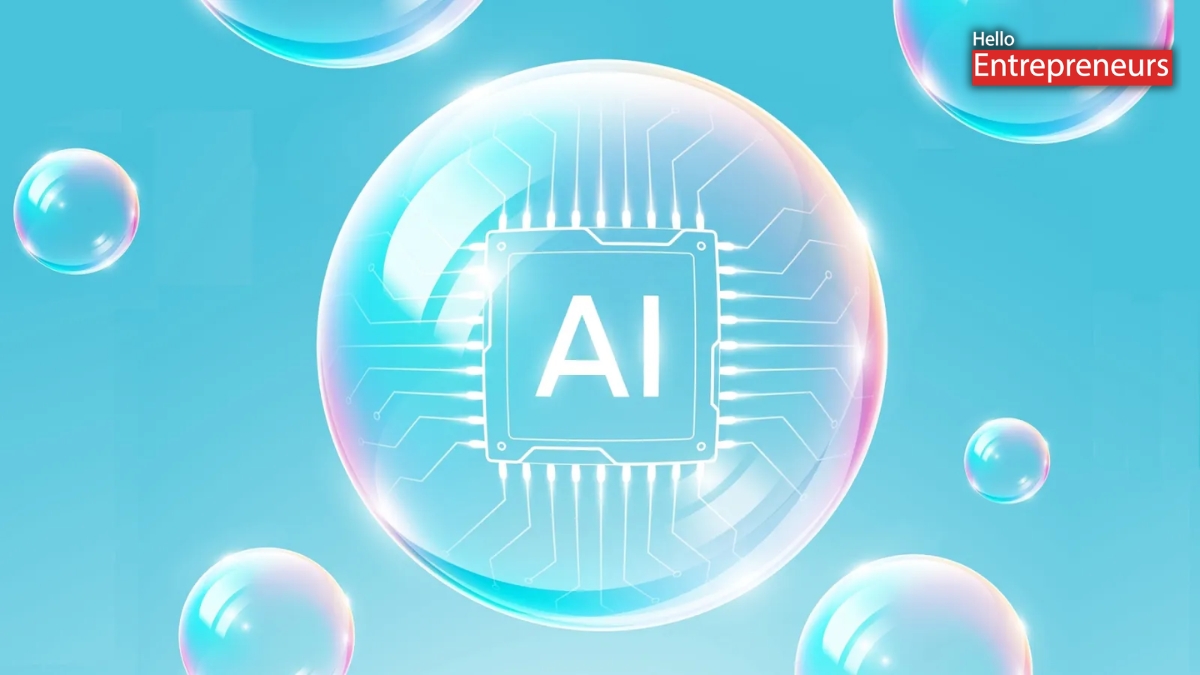
New Delhi: The world of AI has rapidly evolved from a trend to one of the largest investment stories. Companies are spending hundreds of billions of dollars on AI chips, data centres and computing power. However, as investment increases, questions begin to arise regarding the potential for this AI market to be a bubble and what the implications are if it is.
There is no worry about AI being fake. AI is already making its presence known in smartphones, search engines, customer service, software, healthcare, and in education. More importantly, investors could be over-allocating to AI businesses and infrastructure investments during a period where the technology isn’t generating sufficient profits to support such valuations. The chief economic adviser of the Indian government, V Anantha Nageswaran, has also flagged a “bubble” in AI era valuations of stocks.
What could happen to Indian consumers?
To the people of India, a market correction for AI shouldn’t spell the wholesale end of their ability to access AI products. In fact, numerous AI services might even be less expensive.
When companies cut spending in response to the correction, that could lead to greater competition for customers for AI companies. This might cause lower cloud charges and cheaper smartphone and other device AI capabilities as well as lower subscription costs.
But there could be negative effects as well. If that happens, start-ups might be less likely to hire and expand, as the market slows down. If global businesses cut back on technology investments, Indian IT and software firms reliant on AI-based work may experience an even slower growth.
Indian consumers may also be adversely affected via the capital markets. A sharp fall in prices of the US tech stocks may impact investor confidence and result in foreign investors withdrawing investments from emerging markets like India.
India could face the shock differently
But when the world’s AI craze slows down, India may be in with a chance. India can’t compete with the big AI investments by U.S. tech giants. That might prove to be a good thing, however, if the market shifts its focus from spending more money to actual results achieved.
In the first half of 2026, India’s AI industry saw more investments than in all of 2025. But analysts have also stated there are some overvaluations which are ahead of commercial revenues.
If the world’s bubble bursts then Indian companies with good products in right customers, cost reasonable might live on and the not-so-good might perish. Lower valuations also may enable Indian businesses to access technology and talent at more sensible valuations.
What happens to the global market?
Most or all risks are the likelihood of a chain reaction. Technology stocks could decline significantly if investors all at once determine that AI-related firms are too expensive. Expensive data centres and massive investments in AI chips by companies may actually cut costs.
This week, the European Central Bank (ECB) issued a warning that a correction in the technology sector of the United States may have far-reaching global economic ramifications.
However, a correction doesn’t end the use of AI. In the early years of the twenty-first century, the dot-com bubble burst, and many Internet-based businesses were lost, yet the Internet itself lived on, and eventually would change the world of business.
It could happen with AI, too.
When will the AI bubble settle?
No one knows when the AI boom will come to an end or will there be a dramatic crash? What is more likely is that it’s a progression of extreme expectations to a more realistic market.
There will be failures among some of the AI companies, falling valuations, and they will want more profits. Meanwhile, there will be useful AI businesses that will be continuing to grow.
Therefore, the AI fad isn’t going away for good, and may even cool off. While AI is undoubtedly poised to be a significant player in the global economy, the present frenzy of investment and expense, which seems to have taken place at any cost, can’t go on. Whether AI can transform vast investments into profitable, productive, and benefits to the average user will be another crucial question.