



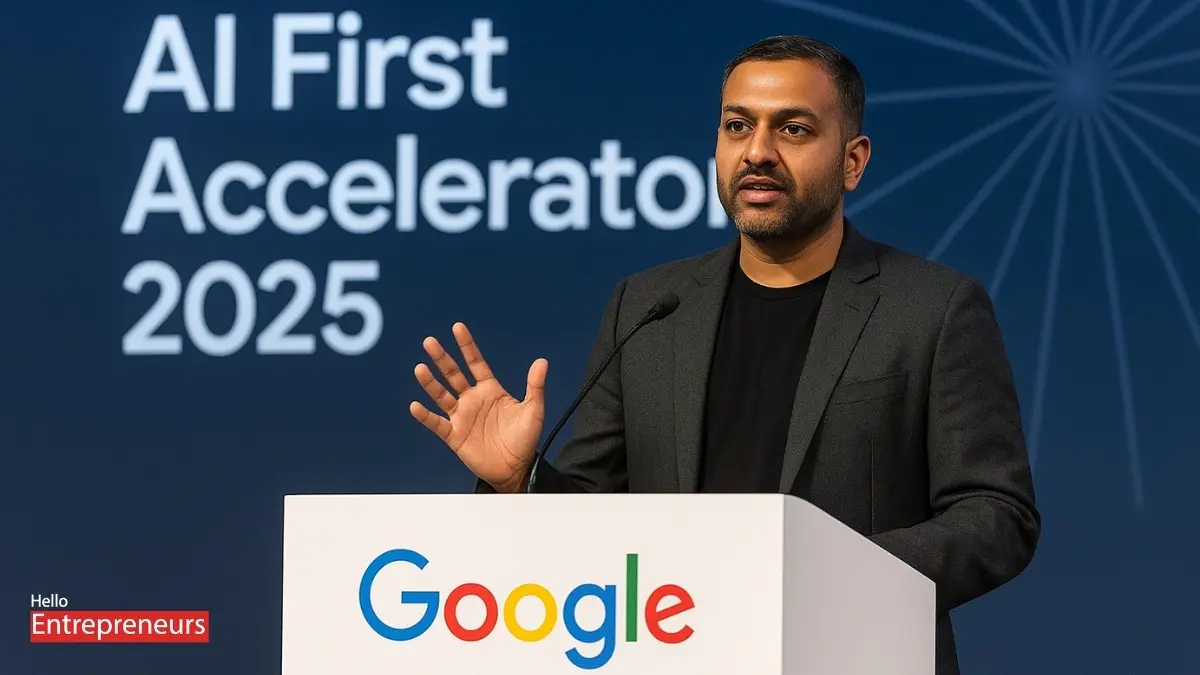
New Delhi: India’s startup ecosystem has once again found itself in the global spotlight, thanks to Google’s AI First Accelerator 2025. Twenty homegrown startups, carefully hand-picked by the tech giant, are now the proud torchbearers of what could either be the next big leap in artificial intelligence, or yet another season of India outsourcing ambition to Silicon Valley boardrooms.
The program, which is designed to foster nascent AI innovators, has been sold as a chance for Indian entrepreneurs to leverage Google’s technical heft, guidance, and global network. On paper, it reads like the ideal union of brains and infrastructure. But as with every Bollywood romance, there is always a nagging doubt in the background—will this be a happily-ever-after or a heartbreak over fine print?
A Booming AI Stage in India
India’s AI market, projected to touch nearly $17 billion by 2030, is buzzing with ideas ranging from healthcare to fintech, education to agriculture. Google has hand-selected startups working across these sectors, betting on India’s demographic dividend and relentless entrepreneurial spirit. These chosen few include companies experimenting with AI-driven climate tech, financial literacy platforms, voice-based assistants for non-English speakers, and even ed-tech platforms designed to bring personalised learning to villages.
The narrative being built is clear: India is no longer just a back office for AI coding. It is slowly positioning itself as a thought leader. And with Google’s “seal of approval,” investors and corporates are already circling like hawks over fresh prey.
The Rose-Tinted Side
For the optimists, this is a dream come true. Imagine being a startup founder with a fledgling team, limited resources, and a brilliant idea. Then suddenly, you have access to Google Cloud credits, workshops from AI scientists, global visibility, and even a PR push that money alone can’t buy.
Some of the cohort’s founders have already expressed excitement on social media. “This programme puts us on the map,” one noted, while another quipped, “It feels like AI school, except the teacher is Google.”
There’s also the undeniable prestige. Being on this list isn’t just about technical mentorship; it opens doors to venture capital and collaborations that smaller firms can only dream about. Expect LinkedIn posts from these startups to quadruple in the next few months.
But Let’s Get Real
Of course, it’s not all roses and unicorn emojis. Critics argue that programmes like this risk making Indian startups too dependent on Big Tech. Sure, you get free cloud credits now, but what happens when those credits expire? The same founders who are cheering today could find themselves locked into costly infrastructure tomorrow.
There’s also the cultural concern. Will these startups continue building for India’s unique needs, or will they end up tailoring their products for markets that investors in Silicon Valley find “sexier”? It wouldn’t be the first time we’ve seen Indian innovation lose its desi flavour after global exposure.
And let’s not forget the eternal brain drain problem. Some fear that the best of this talent pool will eventually be poached—not by Indian corporates, but by global tech giants who see the accelerator as a recruitment fair in disguise.
Sarcasm Break: Free Lunch or Long-Term Loan?
It’s hard not to roll one’s eyes at the PR messaging. Every press release waxes lyrical about Google “empowering startups” and “accelerating innovation.” Translation? “We’ll help you grow, as long as you’re growing inside our ecosystem.” It’s like being offered free Wi-Fi at a café—great while you’re sipping coffee, but the moment you stop paying, good luck.
Why This Matters for India
Still, cynicism aside, the accelerator is undeniably a milestone for India’s AI journey. For one, it signals trust. A global giant betting on Indian entrepreneurs adds credibility to the country’s startup story. Second, it could help plug gaps in expertise—AI talent in India exists, but structured mentorship at this level is rare.
Policymakers are also keeping an eye. With NITI Aayog having recently estimated that AI may add as much as $600 billion to India’s GDP by 2035, efforts such as these serve as proof-of-concept. If even a few of these 20 startups scale successfully, the ripple effect could be enormous.
Latest Buzz & Early Reactions
Social chatter around the announcement has been lively. Reddit threads and X (Twitter) posts are full of excitement, with many hailing it as a “watershed moment” for Indian AI. A few skeptics, however, have raised concerns over whether such accelerators overshadow local incubators and universities that have been nurturing talent without flashy logos attached.
Some industry veterans have also chimed in. One Bengaluru-based VC remarked, “Google’s accelerator is like a magnifying glass—what it shines on will grow. But we should also ask: what about the 1,000 other startups that deserve the same chance?”

The Balancing Act Ahead
For now, the spotlight is firmly on these 20 startups. Their challenge will be to absorb everything the programme offers without losing their independence. After all, true innovation doesn’t come from being a Google clone; it comes from solving uniquely Indian problems in uniquely Indian ways.
Whether these startups become unicorns or cautionary tales is yet to be known. What is certain is that they’ve been provided with a platform—and India’s tech space is ready with popcorn, watching anxiously.
Conclusion: A Win, With an Asterisk
So, is Google’s AI First Accelerator 2025 good news for India? Absolutely. But is it a silver bullet for all the challenges facing Indian startups? Hardly. It’s an exciting boost, but one that comes with strings attached.
The months to come will show us if this group proves a shining example of AI-fueled advancement—or a cautionary tale that not all shiny things are gold. In the meantime, the tale is just what all good startup tales are: high stakes, high expectations, and just a dash of doubt.
Also Read: Global Auditors’ Summit