



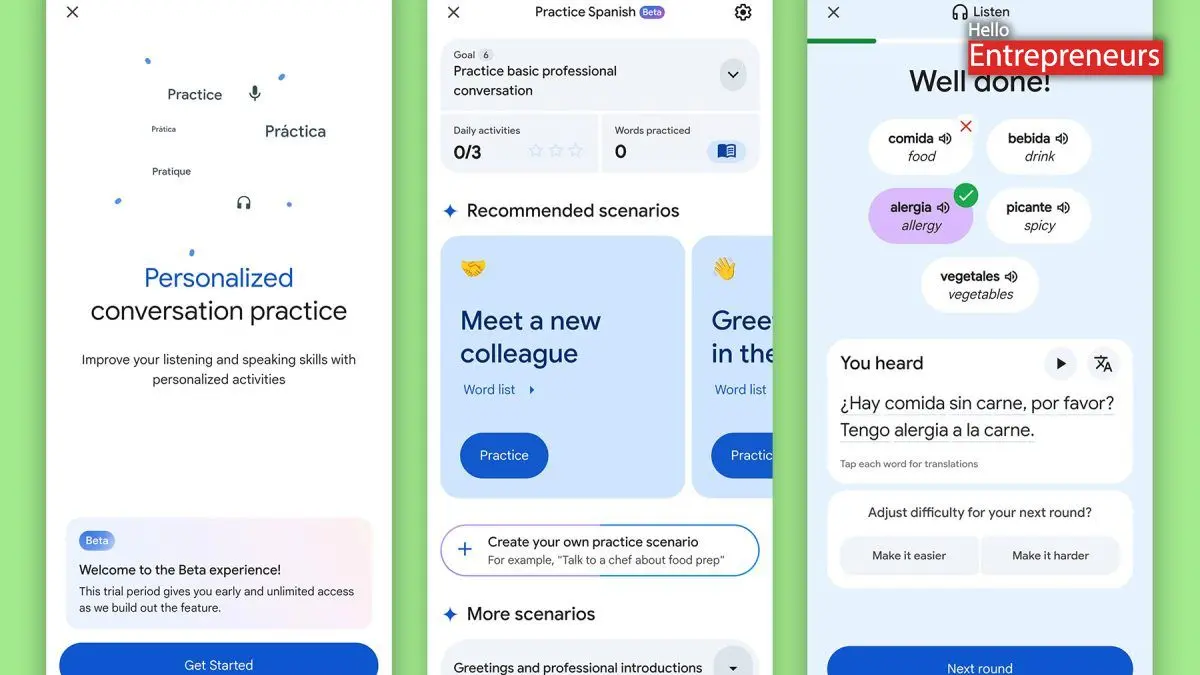
New Delhi: Google is might to takeover the Duolingo’s jobs, and we not just say to for words, this is confirmed news that because Google Translate is now much better than anyone expected, now the users can practice over 70+ languages in a real conversation, and by this we can say that Duolingo’s job is in danger, because on Google Translate there are over 500 million daily users who are using this platform, and now they are offering this feature to their users in terms of practice various languages. This latest feature is aimed at helping users with live conversations and language learning and is backed by the advanced reasoning and multimodal capabilities of the Gemini models.
Every month, people use Google to translate around 1 trillion words. Today, we’re introducing a new AI-powered live translation experience in the Google Translate app, plus a new beta feature to help you practice new languages. Rolling out now on iOS + Android. pic.twitter.com/0DvKYqbSTV
— Sundar Pichai (@sundarpichai) August 26, 2025
Google’s advanced AI models are now making it even easier to have live conversations in over 70 languages, including Hindi, Arabic, French, Korean, Spanish, Tamil, Russian, Telugu, and many other languages. Users can learn on this platform. This latest live translation capability is now available in the US, India, and Mexico. Users will hear the translation aloud and also see the transcript of the conversation in both languages on their device.
This feature effortlessly switches between two languages, making conversation feel much natural. According to Google, Translate is now capable of identifying conversational pushes, accents, and intonations. This is pretty possible as Translate’s live capabilities are backed by Google’s advanced voice and speech recognition models that are trained to help isolate sounds.
When users open the application, they can use these features. They can see a tab like practice, where they can select the goals and skill level, and then translation will generate customised scenarios. In each scenario, a user can either listen to conversations and tap on the words they hear to build comprehension, or they can even practice speaking with those helpful hints. This feature has been developed with the learning experts based on the latest studies in language acquisition.

