



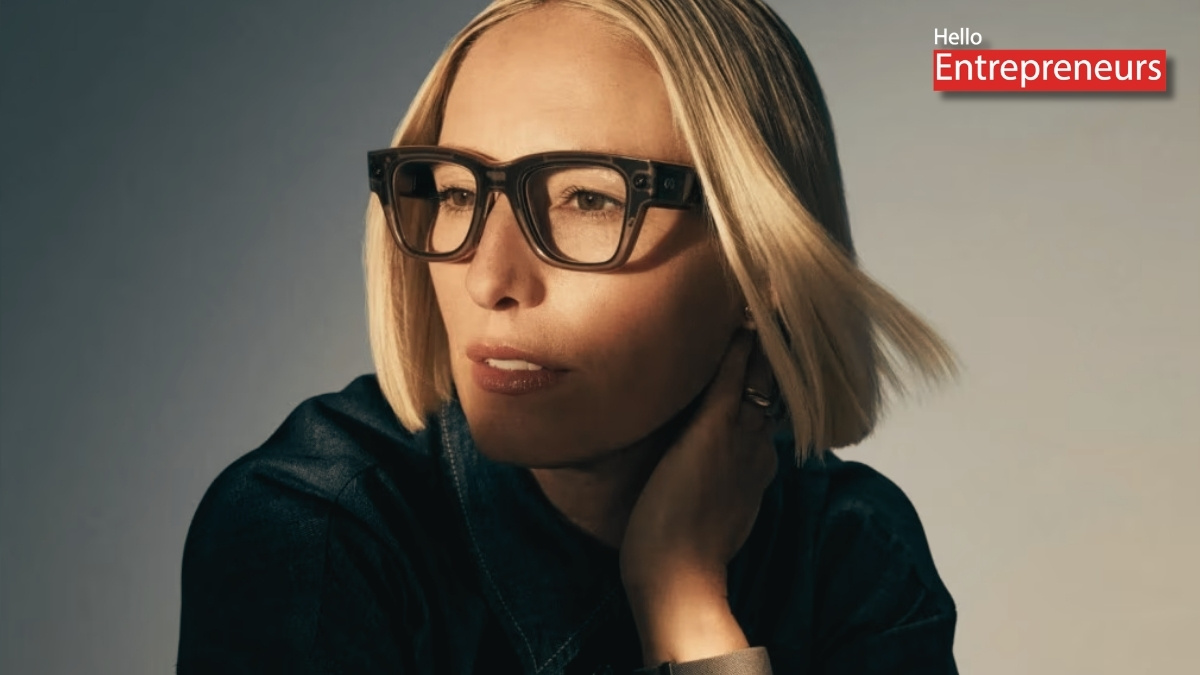
New Delhi: Smart Glasses had struggled for years in the technology world, a nice idea but not one that got integrated easily into daily life. The initial products were sometimes too novel or too finicky, and users were unsure about the need for another connected device besides the smartphone and smartwatch.
But that’s starting to change. Wearable technology is making a comeback thanks to the advancements in AI, voice control, and lightweight hardware. Businesses are more interested in finding devices that provide information in a more natural way, rather than having to routinely look down at a screen. Google is trying to make a comeback to a space it pioneered and then walked away from in that full reset.
During its annual Google I/O 2026 developer event, Google introduced a fresh lineup of AI-enhanced smart glasses featuring its Gemini AI assistant. The new Google Glass isn’t just marketed as futuristic hardware the one that made headlines in the past for public complaints—but rather as an AI assistant.
The glasses will be created in collaboration with Samsung Electronics, glasses company Warby Parker, and Gentle Monster. The initial models, mainly an audio interface, are likely to be available later this fall, Google said.
The most notable thing about the company’s attempt is that they’re trying to sidestep a few of the pitfalls of their previous attempt. Google Glass was released in 2013, but was criticized for social awkwardness, cost, and privacy concerns. Its visible camera and weird design drew everyone’s attention as an object that could be photographed without their knowledge, and it was hard to see how it would benefit most people in day-to-day life.
Google seems to be going a little more conservative this go-around.
Google’s executive, Shahram Izadi, says the new specs will help ensure that users remain “hands-free and heads-up.” The first versions will not have displays that turn on automatically. Rather, they use speakers, microphones, cameras, and Gemini-enabled voice interaction to guide, communicate, receive alerts, translate dialog, etc., without having to pull out their phones.
Google also stated that an improved version with display support is in the works. Those glasses would display text and visual information directly in the user’s line of sight, but the company hasn’t provided any dates for commercialization.
The re-launch, in many respects, is an indicator of the transformation of the technology landscape since the launch of Google Glass. Current Generative AI capabilities allow for real-time conversations, contextual search, translation, and multimodal interactions that were not possible ten years ago. Hardware is also becoming more energy-efficient and smaller, so companies can try out less obtrusive wearable designs.
Meanwhile, there is no longer a vacuum in the competitive environment. Through its partnership with Ray-Ban on smart glasses, Meta has already carved out a niche for itself in consumer AI eyewear. However, as Meta has publicly reported, the company has already sold millions of units worldwide, suggesting that the public may now be more receptive to lightweight wearable devices that seamlessly combine communication, photography, and AI support.
Big techs are also scoring in the category. There are further reports that Apple is developing its own smart glasses platform and that Snap Inc. plans to launch new smart eyewear.
Partly it is a strategic renewal of interest. Smart glasses are emerging as a potential interface layer for AI assistants, which is why tech firms are increasingly interested in the technology. Users would be able to communicate across applications as if in a conversation – and would be able to do this with a device that is always open during the day.
It’s also interesting how Google’s partnerships have shifted to reflect a growing emphasis. In the Google Glass era, the company took a mainly technology-focused approach. The new one balances design and wearability equally. Partnering with fashion-forward brands like Gentle Monster and eyewear company Warby Parker suggests Google has recognized that consumers may buy based on comfort and style rather than technology.
Warby Parker is a well-known company in the eyewear retailing sector, with over 275 retail stores and a 2024 revenue of approximately $771 million. Meanwhile, Gentle Monster has already established a loyal international clientele for its fashion-focused eyewear vision and has a presence in several international markets.
However, the privacy issues that bedeviled Google Glass haven’t gone away. When it comes to recording, consent, and data usage, AI-powered glasses with cameras remain a concern. The same concerns have been raised before about Meta’s smart glasses, specifically what footage it might collect and/or review.
That could be one of the largest challenges the category will have to face. Consumer technology adoption may be influenced not only by functionality but also by the evolution of social norms surrounding its use. Over time, there was acceptance of smartphones and wireless earbuds in society, which was driven by changes in behaviours around them. Smart Glasses are not there yet.
The return, for Google, is a signal of something important, however: They think that the underlying conditions are finally more favourable than a decade ago. AI has advanced, wearable tech has evolved, and people have grown more accustomed to engaging with technology via their voice and by relying on ambient computing.
It is unclear if smart glasses will be commonplace. Unlike 2013, though, Google isn’t attempting to create the category by itself.

